




Carbon Fiber vs Aluminum Hiking Poles: The Ultimate 2025 Guide
Choosing the right hiking poles is crucial for comfort, safety, and performance on the trail. The debate between carbon fiber and aluminum is a classic one, and understanding the strengths and weaknesses of each material will help you make the best investment for your hiking style. This guide breaks down the key differences to consider.
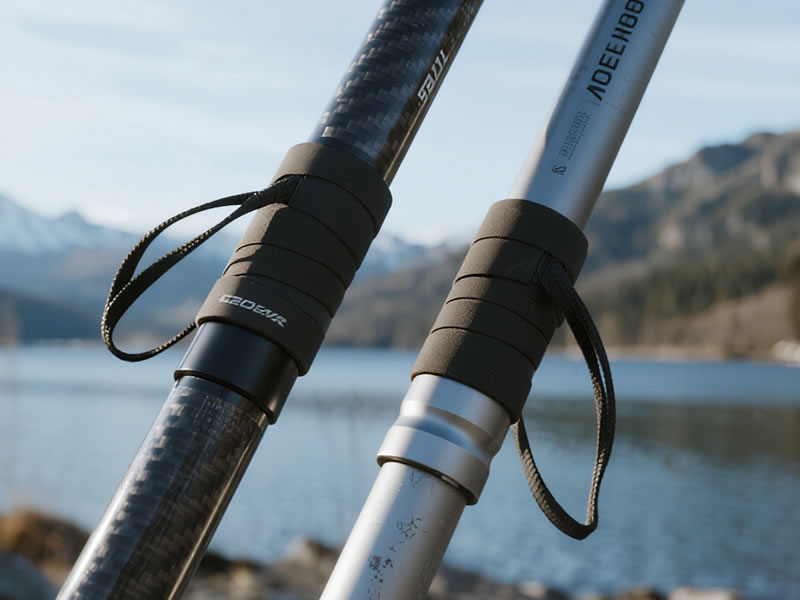
Recommended trekking pole purchase link: https://s.click.aliexpress.com/e/_c4M7OWaN
⚖️ Weight and Packability
When every gram counts, carbon fiber often has the advantage.
- Carbon Fiber: Known for its exceptional lightness, carbon fiber is a favorite among ultralight hikers, trail runners, and fastpackers. For instance, the Black Diamond Ultra Distance Carbon Z Poles weigh a mere 265 grams for a pair, making them almost unnoticeable in your hands or on your pack -2. This reduced weight can significantly decrease overall fatigue on long days and multi-day trips.
- Aluminum: While modern aluminum alloys have become very lightweight, they are generally heavier than their carbon fiber counterparts. A premium pole like the FIZAN COMPACT, made from ALU 7001 aluminum, weighs 158 grams per pole (316 grams a pair) -6. For context, the aluminum Black Diamond Distance Z poles weigh 344 grams for a 120cm pair -9. While still light, the difference is noticeable over many miles.
Verdict: Carbon fiber is the clear winner for minimizing weight.
🛡️ Durability and Impact Resistance
This is where the core debate lies, and the "better" material depends on the type of stress.
- Aluminum: The key strength of aluminum is its ductility. When subjected to extreme stress—like being jammed in a rock or a heavy lateral impact—high-quality aluminum poles (such as 7075 or 7001 series) are more likely to bend rather than snap -3-6. This gives you a chance to repair or at least safely retreat. This predictable failure mode and ability to withstand strong impacts makes aluminum poles incredibly reliable and robust -6.
- Carbon Fiber: Carbon fiber is a composite material known for its high strength and stiffness -4-7. However, it can be brittle. While it excels under vertical pressure, a sharp, lateral impact against a rock can cause it to crack or break suddenly -3. It's worth noting that carbon fiber can exhibit a "rebound effect," flexing and returning to its original shape under load, but if its stress limit is exceeded, failure can be catastrophic -4.
Verdict: Aluminum wins for overall toughness and impact resistance, especially in rough terrain or when used by heavier individuals. Carbon fiber is strong but less forgiving of misuse.
🧘 Shock Absorption and Comfort
How a pole feels in your hand matters.
- Carbon Fiber: Carbon fiber has natural vibration-dampening properties -4. This means less trail buzz is transferred to your hands and arms, which can reduce fatigue on long, rocky descents.
- Aluminum: Aluminum tends to transmit more vibration -1. While some hikers don't mind this, others may find it contributes to hand and arm fatigue over time.
Verdict: Carbon fiber provides better shock absorption, leading to a smoother, more comfortable feel.
💸 Price and Value
Your budget plays a significant role.
- Aluminum: More affordable is a major advantage of aluminum poles. You can get a high-quality, durable pair of aluminum poles for a fraction of the cost of carbon fiber models -3. This makes them an exceptional value, especially for beginners or those on a budget.
- Carbon Fiber: You pay a premium for the lightweight performance and vibration damping of carbon fiber. The advanced materials and manufacturing processes make it a more expensive option -3-10.
Verdict: Aluminum offers the best value and is the most budget-friendly choice.
🎯 Who Should Choose Which? A Quick Guide
| Feature | Carbon Fiber Poles | Aluminum Poles |
|---|---|---|
| Best For | Ultralight hiking, fastpacking, trail running, seasoned hikers who prioritize weight savings | Rough terrain, bushwhacking, backpacking with heavy loads, beginners, value-focused hikers |
| Key Advantage | Lightweight and reduces vibration -2-4 | Durable, impact-resistant, and affordable-3-6 |
| Main Disadvantage | Higher cost and can crack under sharp, lateral force -3 | Heavier and transmits more vibration -1 |
💡 Other Factors to Consider
- Locking Mechanisms: Lever locks are generally considered more reliable, easier to adjust with cold hands, and less prone to slipping than twist locks -3.
- Grip Material: Look for foam (sweat-absorbing and comfortable) or cork (molds to your hand and performs well in wet conditions) for the best comfort -3.
- Fit Matters More Than Gender Labels: While some brands offer gender-specific models with slightly different grips or lengths, the most important thing is that the pole's length, grip size, and weight feel comfortable to you -6.
✅ The Final Verdict
There is no single "best" material—only the best material for you.
- Choose Carbon Fiber if you are a weight-conscious hiker, cover long distances quickly, and primarily stick to established trails where extreme impacts are less likely. The investment is worth it for the performance gains.
- Choose Aluminum if you traverse rugged, off-trail terrain, carry a heavy pack, are a beginner, or are budget-conscious. Its proven durability and lower cost make it the most versatile and reliable choice for the majority of hikers.




