




How to Use Lighten Up Trekking Poles Correctly: A Master Guide
Trekking poles are more than just fancy walking sticks—they're sophisticated tools that can dramatically improve your hiking efficiency, stability, and joint health when used correctly. Lighten Up trekking poles, with their lightweight design and reliable construction, are particularly well-suited to proper technique. However, many hikers never unlock their full potential. This comprehensive guide will walk you through everything from initial setup to advanced techniques, ensuring you get the maximum benefit from your poles on every trail.
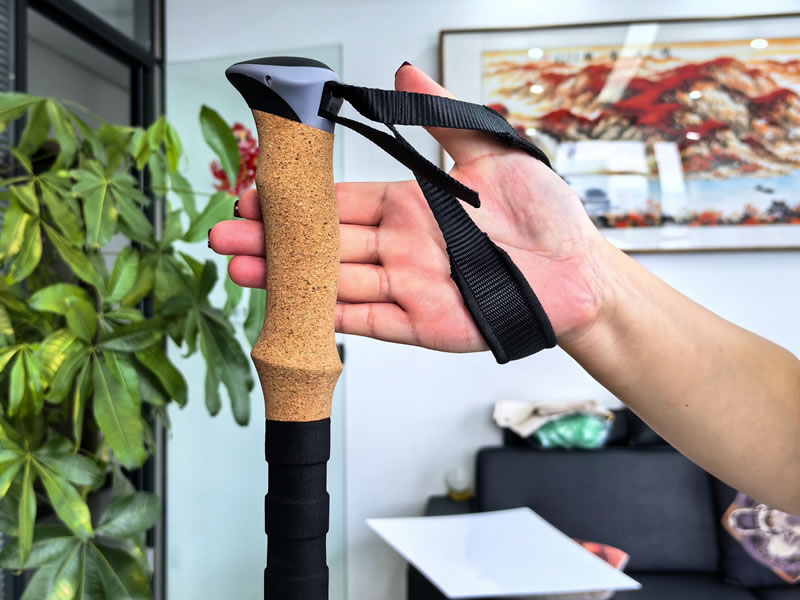
Recommended trekking pole purchase link: https://s.click.aliexpress.com/e/_c4M7OWaN
Step 1: The Foundation - Proper Setup and Adjustment
Before you take a single step, correct setup is crucial.
- Determining Correct Length: A standard starting point is to adjust the poles so that when you're standing upright with the tip on the ground, your elbow forms a 90-degree angle. For Lighten Up's adjustable models, loosen the flick-locks to find this sweet spot.
- Wrist Strap Mastery: This is one of the most common mistakes. Don't simply slide your hand through the strap and grab the grip. Instead, slide your hand up through the bottom of the strap first, then bring it down to grip the pole, allowing the strap to cradle the back of your hand. This creates a supportive platform that lets you transfer weight through your bones and ligaments, not just your muscle strength, significantly reducing grip fatigue.
Step 2: Mastering the Basic Technique and Rhythm
The goal is a fluid, natural motion that complements your stride.
- The Opposite Arm/Leg Rule: The fundamental rhythm is simple: plant the pole opposite your forward foot. As your right foot steps forward, your left pole should plant, and vice versa. This creates a stable, rhythmic tripod with every step.
- Proper Planting and Swing: Don't "stab" the ground out front. The pole tip should plant at a natural point slightly behind your forward foot, roughly in line with the mid-foot of your back leg. Your arm should swing comfortably from the shoulder, not the elbow, in a relaxed, pendulum-like motion.
- Pressure and Grip: Maintain a relaxed grip. You shouldn't be white-knuckling the handle. On flat terrain, use a light touch. The real power of the push comes into play on inclines.
Step 3: Adapting to Different Terrain
This is where adjustable Lighten Up poles truly shine.
- Uphill: Shorten your poles. This allows you to maintain an upright posture and get better leverage for pushing yourself up the slope without overreaching and straining your shoulders. A reduction of 5-10 cm (2-4 inches) is a good starting point.
- Downhill: Lengthen your poles. This is critical for saving your knees. Longer poles allow you to plant the tip well ahead of you, letting your arms and the poles absorb the impact instead of your knees and quads. Increase the length by 5-10 cm (2-4 inches) from your flat-ground setting.
- Sidehills and Uneven Ground: On a traversing slope, shorten the pole on the downhill side. This helps you stay upright and balanced, preventing you from leaning into the hill.
Step 4: Advanced Uses and Common Mistakes to Avoid
- Stream Crossings and Obstacles: Use your poles for a third and fourth point of contact. Test the depth and stability of the stream bottom or unstable ground before committing your weight.
- Bushwhacking: In dense brush, shorten the poles and carry them in a more vertical position to avoid getting tangled.
- Common Mistakes:"Pole Vaulting": Planting the pole too far in front of you, which breaks your natural rhythm.Dragging the Poles: Not lifting them clear of the ground on the backswing, which wastes energy.Death Grip: Holding the grips too tightly, leading to rapid forearm fatigue.
Conclusion: From Tool to Extension of Your Body
Using Lighten Up trekking poles correctly transforms them from a simple accessory into a seamless extension of your body. The initial focus on setup and rhythm might feel deliberate, but with practice, it becomes second nature. You'll find yourself moving with greater confidence, experiencing less fatigue at the end of the day, and preserving your knees for countless future adventures. By mastering these techniques, you fully honor the Lighten Up philosophy—not just carrying lighter gear, but hiking in a smarter, more efficient, and ultimately more enjoyable way.




