




Locking vs Non-Locking Carabiner: A Comprehensive Guide to Safety and Application
In the world of climbing, rigging, and safety, the choice between a locking and a non-locking carabiner is not merely a matter of preference—it is a fundamental safety decision with potentially life-altering consequences. Understanding the critical differences in their design, intended use, and inherent risks is essential for anyone who relies on these tools, from the weekend climber to the professional rope-access technician.
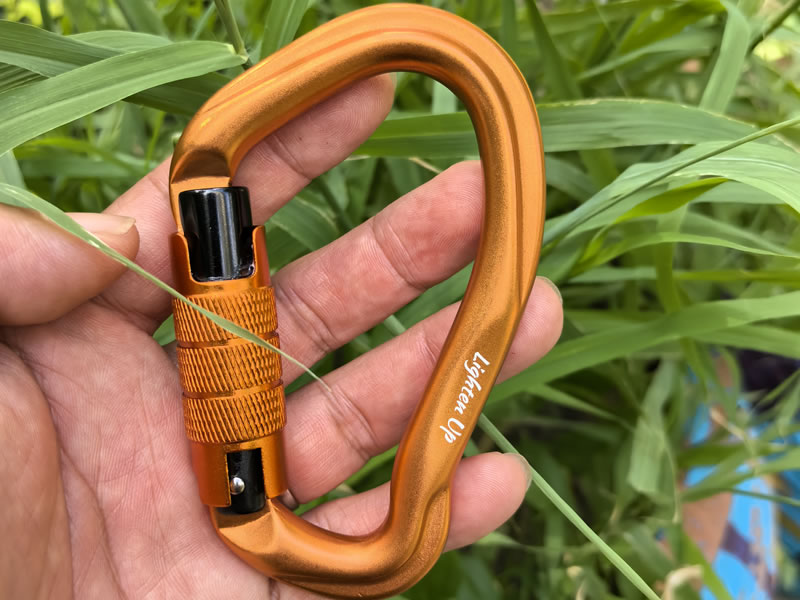
Core Design and Mechanism
The primary distinction lies in the gate mechanism, which dictates the security of the connection.
- Non-Locking Carabiner: Features a simple, spring-loaded gate that snaps shut when released. This design allows for quick, one-handed operation. The gate can be opened accidentally through impact, snagging on a rock or rope, or even through a phenomenon called "gate flutter" during a dynamic fall.
- Locking Carabiner: Incorporates a secondary mechanism that physically prevents the gate from opening unintentionally. There are two main types:Screw-Gate (Manual Locking): Requires the user to manually thread a locking sleeve over the gate. It demands a conscious safety action but can be accidentally left unlocked or cross-threaded.Auto-Locking (e.g., Twist-Lock, Triple-Action, Magnetic): These mechanisms lock automatically when the gate closes. Unlocking requires a deliberate, often multi-step action (e.g., pushing, twisting, and then pulling), making them highly secure against accidental opening.
The Golden Rule of Application
This rule is absolute in safety-critical environments: Use a locking carabiner for any connection where an unintentional gate opening would lead to a fall, injury, or catastrophic release.
When to Use a Locking Carabiner (Life-Support Connections):
- Belaying and Rappelling: Directly connecting the belay device to your harness.
- Anchors: Connecting yourself to an anchor point or linking components of an anchor system.
- Critical System Points: Anywhere the carabiner is the sole point of attachment between you and safety, or where a dropped item could cause serious harm.
- Industrial Rope Access & Rescue: All primary connections in fall arrest and positioning systems.
When to Use a Non-Locking Carabiner (Ancillary/Non-Critical Connections):
- Sport Climbing Quickdraws (rope end): The rope's movement naturally opens the gate for clipping; a locker here would be cumbersome.
- Racking Gear: Clipping cams, nuts, and other protection to your gear loops.
- Organizational Tasks: Attaching items like water bottles or backpacks where a failure is merely an inconvenience.
- Secondary Points in a Redundant System: Where another carabiner or piece is the primary load-bearer.
Key Differences and Considerations
| Feature | Non-Locking Carabiner | Locking Carabiner |
|---|---|---|
| Primary Trait | Speed & Convenience | Security & Safety |
| Gate Security | Low; can open if snagged | High; designed to stay closed |
| Weight & Bulk | Generally lighter, less bulky | Heavier, more complex design |
| Operation | Instant, one-handed | Requires deliberate action (screwing/ unlocking) |
| Cost | Lower | Higher |
| Mental Check | "Is this connection critical?" | "Is it LOCKED?" |
Critical Risks and Common Mistakes
- Substitution Error: The gravest mistake is using a non-locker where a locker is required (e.g., at the master point of an anchor). This is a fundamental safety violation.
- Incomplete Locking: With screw-gates, failing to screw the sleeve down fully ("finger-tight") or having it cross-threaded creates a false sense of security. Always do a visual and tactile check.
- Cross-Loading and Gate Loading: Both types are drastically weakened if loaded across the minor axis (sideways) or with the gate open. A locking mechanism does not compensate for this misuse.
Selection and Best Practices
- For Your First Rack: Start with several robust locking carabiners (including one HMS/pear-shaped for belaying) and a set of non-locking carabiners for quickdraws and gear.
- The "Which One?" Test: Before clipping, ask: "If this gate opens by itself right now, what happens?" If the answer is "I fall" or "someone gets hurt," you must use a locking carabiner.
- Inspection is Universal: Regardless of type, regularly inspect every carabiner for cracks, gate wear, corrosion, and smooth operation. Retire any damaged piece immediately.
In conclusion, the choice between locking and non-locking is a clear exercise in risk management. Non-locking carabiners are tools of efficiency for controlled, non-critical tasks. Locking carabiners are instruments of security, designed to provide fail-safe connections where the stakes are highest. By respecting the intended role of each and applying the Golden Rule without exception, you build not just a safer system, but a mindset of disciplined safety that is the hallmark of a competent practitioner. Your gear choices directly reflect your commitment to security—choose wisely.




