




Carabiners for Kayaking: The Essential Link for Safety, Utility, and Organization on the Water
In the dynamic and often unforgiving environment of kayaking, gear is not just about comfort—it’s about safety, accessibility, and efficiency. Among the array of paddling equipment, the humble carabiner stands out as a disproportionately vital tool. Far more than a simple clip, a well-chosen carabiner serves as a critical safety connector, a versatile organizational aid, and a reliable piece of marine hardware. Understanding its specific applications, types, and the non-negotiable features for marine use is key to a safer and more streamlined experience on the water.
The Safety Imperative: Your PFD’s Best Friend
The single most important role for a carabiner in kayaking is as a secure, immediate, and reliable connection point on your Personal Flotation Device (PFD). Most modern PFDs feature a robust webbing loop on the chest specifically designed for this purpose. Here’s why this setup is crucial:
- Tow Line Attachment: In a peer rescue scenario, a swimmer recovery, or when assisting a fatigued paddler, a tow line is deployed. The carabiner provides the swift, one-handed clip that connects the tow line from your boat to your PFD, allowing you to tow effectively while keeping your hands free for paddling and balance. This connection must be instant and fail-safe.
- Throw Bag Deployment: For river kayaking, a throw bag is essential safety gear. Clipping the bag’s end to your PFD via a carabiner ensures you don’t lose the entire bag during a rescue and allows you to brace and manage the force once the line is caught by a swimmer.
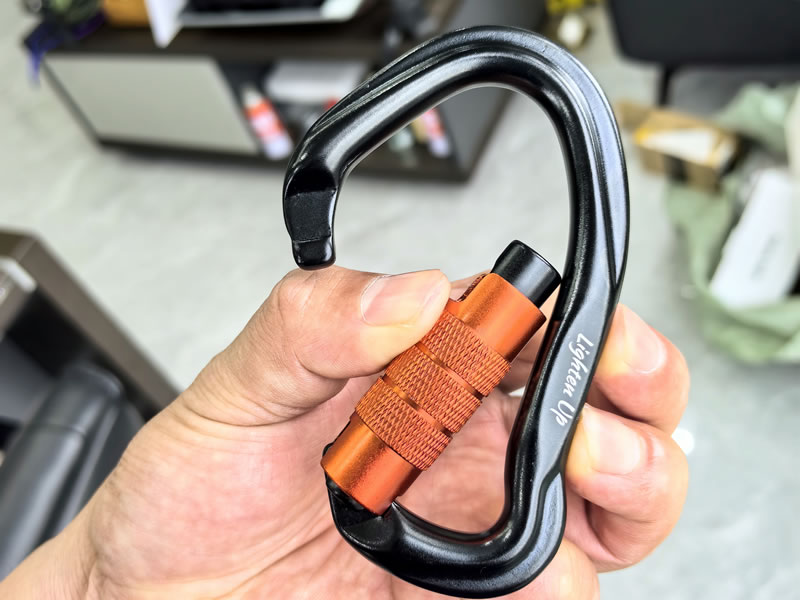
- The Non-Negotiable Rule: For these critical life-safety functions, only locking carabiners are acceptable. A standard snap gate or wire gate can be accidentally opened by pressure from the tow line, deck rigging, or during a capsize. A screw-gate, twist-lock, or auto-locking carabiner ensures the gate stays securely closed under load and in chaotic conditions.
Beyond Safety: The Organizational Workhorse
Once the critical safety role is covered, carabiners become indispensable for general utility and organization:
- Gear Security: Securely clip dry bags, water bottles, fishing gear, or a bilge pump to your kayak’s deck lines or bungee rigging. This prevents loss in the event of a capsize or in choppy water.
- Quick Access: Use a small carabiner to attach a knife or a pair of fishing pliers to your PFD shoulder strap for immediate, one-handed access—a vital feature in emergencies.
- Improvised Solutions: They can be used to tension loose deck lines, create a temporary attachment point, or even help in gear-repair scenarios.
Choosing the Right Marine-Grade Carabiner
Not all carabiners are suited for the kayaking environment. Key selection criteria include:
- Corrosion Resistance: This is paramount. Saltwater and even freshwater will quickly corrode standard materials.Stainless Steel: The gold standard for marine use, especially in saltwater. It is highly corrosion-resistant and extremely strong, though slightly heavier.Anodized Aluminum: A lighter-weight option. Look for marine-grade anodization (like type III hard anodize) for better corrosion protection. Ensure any load-bearing aluminum carabiner is floating or brightly colored so it doesn’t disappear if dropped in the water.
- Size and Shape:A medium-sized, pear-shaped (HMS) or large D-shaped carabiner is often ideal. The larger gate opening makes it easy to clip with cold, wet hands or while wearing gloves, and accommodates thick webbing from tow belts and PFDs.Smooth, rounded profiles prevent snagging on ropes, clothing, or the kayak itself.
- Gate Mechanism (Reiterated for Emphasis):For PFD Attachment: Always Locking.For Non-Critical Gear: A simple snap gate can suffice for clipping a water bottle, but be aware of its potential to open accidentally.
Safety Practices and Maintenance
- Pre-Dip Check: Before every trip, visually and manually check your primary safety carabiner. Ensure the gate opens and closes smoothly and the locking mechanism functions without grit or corrosion.
- Rinse and Dry: After every saltwater use, and periodically in freshwater, rinse your carabiners with clean water and dry them thoroughly to prevent corrosion and salt crystal buildup in the mechanism.
- Inspect and Retire: Regularly inspect for cracks, sharp burrs (which can cut webbing), excessive play in the gate, or internal corrosion. A compromised carabiner must be replaced immediately.
- Understand the Limits: Never use a kayaking carabiner for rock climbing or any other load-bearing terrestrial activity where it may have been damaged by impact or grit. Its certification (if any) is for different standards.
Conclusion: A Small Investment for Significant Security
In kayaking, where conditions can change in an instant, the ability to make secure, rapid connections is a foundational element of both safety and practicality. A dedicated, marine-appropriate locking carabiner on your PFD is as essential as the PFD itself. By choosing a corrosion-resistant, locking model and integrating it into your safety and organizational systems, you add a vital layer of preparedness. This small, robust piece of gear ensures that when you need to clip in—whether to save yourself or assist others—the connection will hold, allowing you to focus on managing the situation, not the equipment. It’s the definitive link between preparedness and action on the water.




