




Carabiner kN Ratings Explained for Beginners
If you're new to climbing or gear, the strange "kN" numbers stamped on a carabiner can be confusing. Understanding them is not about complex physics—it's about grasping a simple, crucial language of safety. Let's break it down from the very beginning.
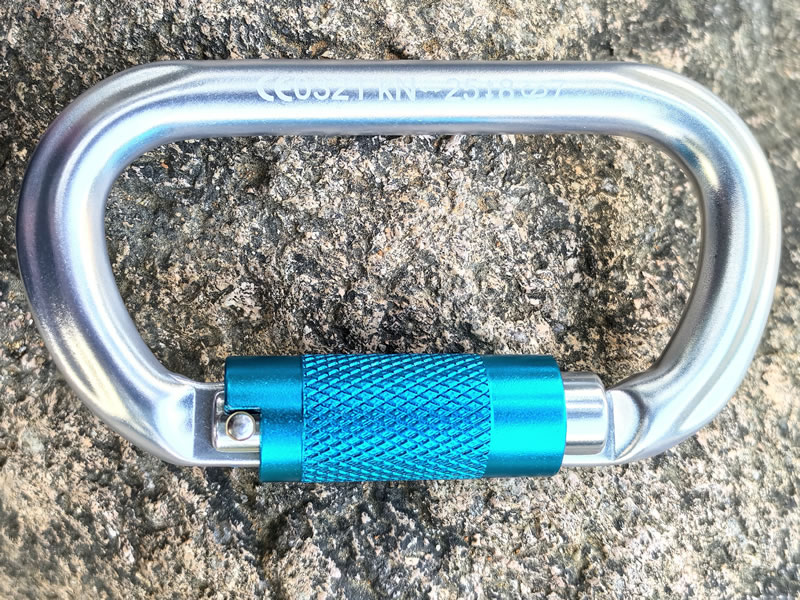
What Does "kN" Even Mean?
kN stands for kilonewton, a metric unit of force. Think of force as a push or a pull. It's different from weight (mass), though they are related by gravity.
- The key conversion to remember: 1 kN is approximately equal to 225 pounds (lbs) of force.
- So, a 22 kN carabiner can theoretically handle a static force of about 22 x 225 = 4,950 lbs.
Your first question is likely: "I only weigh 150 lbs! Why do I need a carabiner rated for thousands of pounds?" This is the most important concept for beginners.
The "Safety Margin": Why the Numbers Are So High
Climbing isn't about holding your static body weight. It's about managing the dynamic forces generated in a fall. These forces can multiply your weight several times over due to the physics of falling and stopping abruptly.
The high kN rating is your engineered safety margin. It accounts for:
- The shock load of a fall.
- Wear and tear on the gear over time.
- The fact that multiple carabiners and pieces of gear share the load in a system.
In short, the rating ensures that the carabiner is the strongest link in your safety chain.
The Three Numbers: A Carabiner's Full Report Card
Look closely at a certified climbing carabiner. You'll see three ratings (e.g., 24 kN, 8 kN, 9 kN). Each describes strength in a different, realistic scenario.
1. Major Axis Strength (The Big Number: e.g., 24 kN)
- This is the carabiner at its BEST. It's the strength when loaded perfectly along its long, curved spine with the gate closed and locked.
- This is how you should always aim to use it.
2. Minor Axis Strength (The Smaller Number: e.g., 7 kN)
- This is the "Cross-Loaded" rating. It's the strength if force is applied sideways across the carabiner's narrow width.
- This scenario is dangerous and can happen if the carabiner twists in an anchor. Notice how it's about 70% weaker than the major axis strength.
3. Open Gate Strength (The Smallest Number: e.g., 8 kN)
- This is the carabiner at its WORST. It's the strength when loaded along the spine but with the gate accidentally open.
- This highlights the critical importance of locking carabiners for critical connections. An open gate can reduce strength by over 65%.
A Practical Beginner's Guide to kN Ratings
| Rating (Example) | What It Means | The Beginner's Takeaway |
|---|---|---|
| 22 kN - 28 kN | Major Axis Strength. The carabiner's optimal power. | Ensure your carabiner is loaded straight along its spine. |
| ~7 kN - 9 kN | Minor Axis (Cross-Loaded) Strength. A dangerous weak spot. | Be mindful! Don't let carabiners in anchors twist sideways. |
| ~6 kN - 9 kN | Open Gate Strength. The greatest vulnerability. | ALWAYS lock your carabiner when belaying, rappelling, or at anchors. |
How to Use This Knowledge as a New Climber
- Look for Certification: Before anything else, ensure your carabiner has a UIAA or CE stamp. This means it has been independently tested to these standards.
- Respect the Weaknesses: The ratings teach you that a carabiner isn't magically strong in every way. Its strength depends entirely on how you use it. Proper orientation and locking are not just good habits—they are what activate the carabiner's full strength.
- Start with the Right Gear: For your first belay/rappel carabiner, get a large locking carabiner (often marked HMS or Pear-shaped). Its size helps prevent cross-loading with a belay device.
Conclusion: It's About Building Safe Habits
You don't need to be an engineer. Just remember this: The kN ratings are a map of your carabiner's safety. The high major-axis number is the safe zone you want to operate in. The much lower cross-load and open-gate numbers show you the cliffs to avoid.
By choosing certified gear, locking carabiners when it counts, and being mindful of their orientation, you're using these ratings exactly as intended. They empower you to turn a simple metal clip into a reliable, life-saving tool. Now go climb—and clip—with confidence




