




Carabiners for Slacklining: The Critical Choice for High-Tension Systems
Selecting the right carabiner for slacklining is a matter of physics, not preference. Unlike dynamic climbing falls, slacklining subjects gear to immense, sustained static tension that can easily exceed 10 kN (over 2,200 lbs) for even a moderately tight shortline, and far more for longlines or tricklines. This force relentlessly pulls on the carabiner's gate, seeking the weakest point of failure. Using standard climbing carabiners in this context is not just incorrect—it is dangerously unsafe.
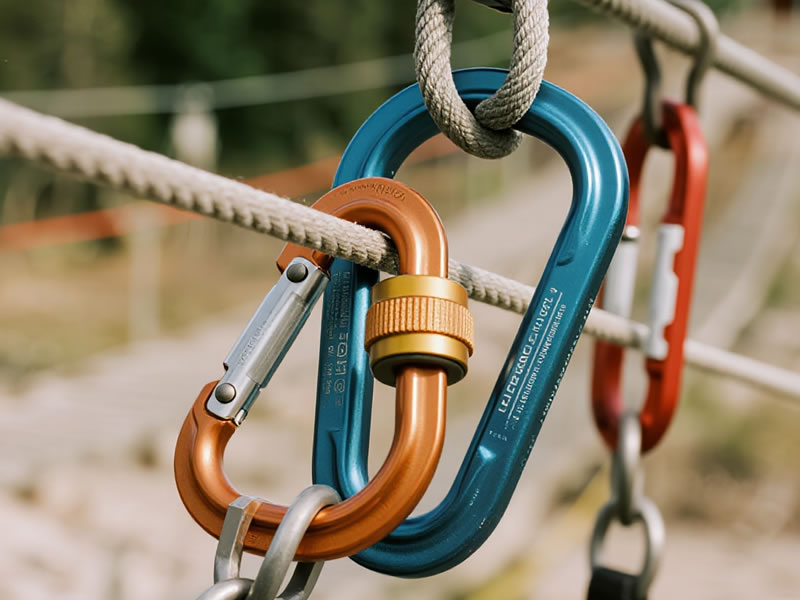
Why Climbing Carabiners Are the Wrong Tool
The fundamental mismatch lies in the type of force and failure mode:
- Climbing Carabiners: Designed for brief, high-impact dynamic loads along the spine. Their primary safety mechanism (a screw or auto-lock) prevents accidental snagging, but the gate is not engineered to resist constant, high-pressure prying from webbing under mega-tension.
- Slacklining Carabiners: Designed for massive, sustained static loads. The greatest risk is the webbing's tension acting as a lever to pry the gate open. Therefore, the gate and its locking mechanism must be exceptionally robust.
Mandatory Requirements for a Slackline Carabiner
- Material: Forged or Machined Steel.Why: Steel provides the necessary rigidity to resist gate deformation under load. Aluminum, while strong for its weight, can flex and deform under constant high tension, potentially compromising the lock.
- Shape: Oval.Why: The symmetrical shape prevents the webbing from bunching and creating a pinch point. It allows the webbing to lie flat and distribute pressure evenly across the carabiner's interior, which is crucial for both safety and webbing longevity. A D-shape can concentrate stress incorrectly.
- Locking Mechanism: A Secure, Positive Lock.Screw-Gate: A standard choice, but must have a full-threaded, heavy-duty sleeve. The screw must be long enough to fully capture the gate pin.Triple-Action or Auto-Lock: Often preferred for their foolproof design. Once closed, they cannot be opened without a deliberate, multi-step action, eliminating the risk of human error in forgetting to screw down.
- Strength Rating: Minimum 25 kN Major Axis.Why: While a 22 kN climbing carabiner seems strong, the safety margin for slacklining must be much larger. Forces escalate quickly with line length and tension. Carabiners rated for slacklining, rigging, or industrial use (often 30 kN to 50 kN) provide the necessary headroom. Look for a CE or UIAA certification as a baseline, but ensure the design is intended for static rigging.
Primary Applications in a Slackline Setup
A complete slackline kit uses different carabiners for specific roles:
- Anchors (Tree or Permanent): These bear the highest, most direct tension.Recommended: Large, steel, locking oval carabiners. They connect the anchor slings (tree protectors) to the main line webbing or tensioning system.
- Tensioning System (Rachet or Primitive/Pulley):For Ratchets: The carabiner that holds the webbing loop to the ratchet frame is under tremendous localized stress. It must be the heavy-duty oval type supplied with the ratchet kit.For Primitive/Pulley Systems: Multiple carabiners are used at the "line lock" or in the pulley system. All should be locking steel ovals.
The Golden Rule: Never Substitute for Main Line Connections
The most critical warning is this: Never use a standard, non-locking, wire-gate, or aluminum climbing quickdraw or carabiner as part of your main line or anchor. The webbing tension can force these gates open with shocking ease, leading to instantaneous and catastrophic system failure.
Recommended Types and Brands
- Purpose-Built Slackline Carabiners: Brands like Gibbon, Balance Community, and Slackline Industries sell carabiner sets specifically designed and tested for their systems. These are the safest, easiest choice.
- Industrial/Rigging Steel Ovals: If purchasing separately, look for CE-certified, steel, locking oval carabiners from reputable climbing/rigging manufacturers like Kong, DMM, or Petzl in their professional lines.
Safety Inspection and Protocol
- Pre-Line Inspection: Before every session, check each carabiner for cracks, deep grooves from webbing wear, and smooth locking function.
- The "Lock Check": As part of your rigging checklist, visually and physically confirm every single locking sleeve is fully engaged before applying tension.
- Mind the Wear: Retire any carabiner that shows significant grooves or deformation. The static sawing action of webbing under load can wear metal faster than dynamic rope.
- Use a Complete, Compatible Kit: Ensure all components—webbing, carabiners, tensioning device, and anchor slings—are rated for the forces you intend to generate and are designed to work together.
Conclusion: Respect the Physics of Tension
In slacklining, your carabiners are the linchpins of a system under forces that can rival a car engine's pull. Choosing a heavy-duty, steel, locking oval carabiner is a non-negotiable engineering requirement, not a suggestion. By understanding that slacklining imposes a unique and brutal type of load, and by investing in the specialized connectors built to withstand it, you build a foundation of safety. This allows you to focus on the balance, fun, and community of slacklining, confident that the hardware connecting you to the sky is the strongest link in your setup.




