




Carabiners for Rescue Operations: The Connectors of Critical Care
In technical rescue operations—whether high-angle, confined space, or water rescue—carabiners are far more than simple connectors; they are the foundational components of life-saving systems. Subjected to complex loads, unpredictable environments, and absolute reliability requirements, rescue carabiners are engineered to a higher standard of performance, security, and durability than recreational gear. Selecting and using the correct carabiner is a matter of protocol, physics, and profound responsibility.
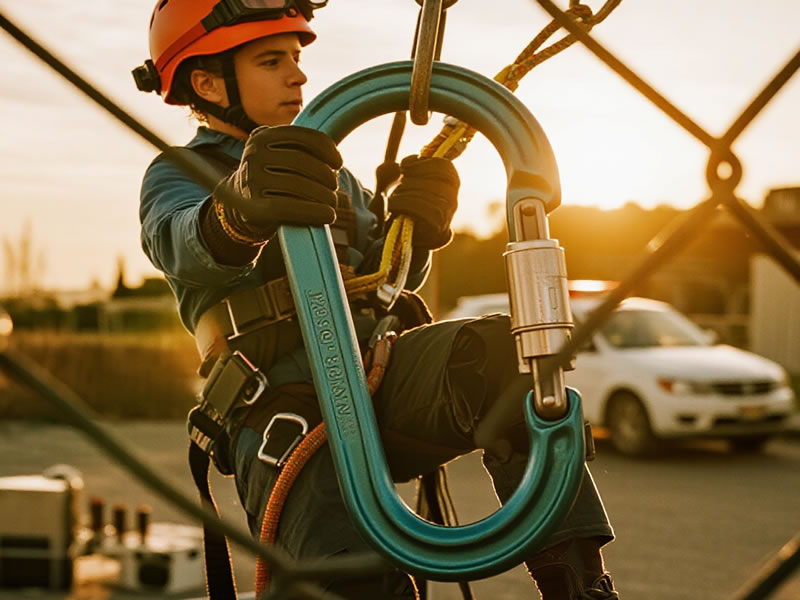
The Unique Demands of the Rescue Environment
Rescue scenarios impose challenges beyond those of recreational climbing:
- Unpredictable & Multi-Directional Loading: Systems involve raising, lowering, hauling, and belaying, often with multiple change-of-direction pulleys, creating complex vectors of force on carabiners.
- Absolute Security: A gate opening due to vibration, rope movement, or contact with equipment is unacceptable. The margin for error is zero.
- Durability Under Stress: Gear is used frequently, often in harsh conditions (ice, water, debris), and must withstand abrasion from both ropes and sharp edges on infrastructure.
- Rapid, Gloved Operation: Rescuers must be able to operate carabiners quickly and positively, often with cold, wet, or gloved hands, without compromising security.
Mandatory Standards and Certifications
Rescue carabiners must comply with rigorous professional standards. Key certifications include:
- NFPA 1983 (Standard on Life Safety Rope and Equipment for Emergency Services): The North American benchmark. Specifies requirements for Technical Use (minimum 27 kN major axis) and General Use (minimum 40 kN major axis) carabiners.
- CE EN 362: The European standard for "Connectors" in personal fall protection equipment.
- CE EN 12275: The mountaineering equipment standard, often met as a baseline, but rescue-specific models exceed these ratings.
Critical Features of a Rescue Carabiner
- Material: High-Strength Aluminum Alloy or Steel.Aluminum: The standard for most applications, offering an excellent strength-to-weight ratio. Uses high-grade alloys (e.g., 7075-T6) and is often anodized for corrosion resistance.Steel: Used for high-wear points, permanent anchors, or in pulley systems where extreme abrasion resistance is needed. Heavier but exceptionally durable.
- Strength Rating: High Minimums with a Significant Safety Margin.Major Axis: 40 kN to 50+ kN (9,000 - 11,200+ lbs force) is common for rescue-rated carabiners. This provides a massive safety factor beyond calculated system loads.
- Locking Mechanism: Auto-Locking, Preferably Triple-Action.This is the industry standard. Triple-action (push-twist-pull) locks or similar secure auto-locking mechanisms (e.g., Petzl's B'D or I'D system) are mandatory for all critical connections. They ensure the carabiner is always locked unless deliberately opened, eliminating human error in high-stress situations.
- Design for Function:Large, Smooth Nose (Keylock): Prevents snagging on ropes, webbing, or harnesses during complex rigging.Oversized Operation: Thumb loops and locking sleeves are designed for easy manipulation with gloved hands.Captive Eye Variants: Some rescue carabiners feature a captive eye or permanently attached pulley for dedicated use in mechanical advantage systems, ensuring the pulley cannot be accidentally separated.
Primary Types and Their Roles in a Rescue System
- Personal Attachment Carabiners: Connect the rescuer's harness to the rope system (belay device, main line, lanyard). Always a large, auto-locking HMS/pear-shaped carabiner to accommodate devices and prevent cross-loading.Example: Petzl WILLIAM ATTACHE (Auto-Lock)
- Anchor Carabiners: Used to join anchor slings, ropes, and hardware at the main load-bearing point. Typically auto-locking D-shapes or ovals in steel or aluminum.Example: DMM CAPTAIN (Auto-Lock)
- Pulley System Carabiners: Connect pulleys to the rope, anchor, or hauling harness. They experience high wear. Swivel carabiners (like the Petzl AM'D or DMM REVOLVER) are invaluable here to prevent rope twist and system binding during raising/lowering operations.
- Specialty Carabiners:Directional / Friction Carabiners: Designed with a curved spine to create specific friction for rope management (e.g., Petzl SM'D CURVE).Rapid-Link / Maillon Rapide: A screw-lock, steel oval link used for permanent or semi-permanent connections in rigging (e.g., connecting a bridle). Not a carabiner, but an essential rescue connector.
Safety Protocols, Inspection, and Maintenance
- Systematic Inspection: Follow a pre-use, during-use, and post-use inspection routine. Check for cracks, corrosion, deep grooves (>1mm), gate deformation, and smooth locking function. Any doubt results in immediate removal from service.
- Load and Orientation Awareness: Rescuers must be trained to understand force vectors and ensure carabiners are loaded along the major axis, not cross-loaded or gate-loaded.
- Documentation and Retirement: Rescue gear often has a service log. Carabiners must be retired after a severe shock load, visible damage, or as per the manufacturer's recommended lifespan.
- Training and Compatibility: These are professional tools. Their safety is contingent on proper training within certified rescue systems using compatible components (rope, harness, pulley).
Conclusion: The Linchpin of Lifesaving Systems
Carabiners for rescue operations represent the intersection of advanced metallurgy, human factors engineering, and rigorous protocol. They are not general-purpose clips but precision instruments in a life-support symphony. By mandating high-strength auto-locking designs built to NFPA or CE EN standards, the rescue community ensures that these critical connections provide unwavering security when it matters most. For the rescue professional, the choice and care of a carabiner reflect a core principle: in the calculus of saving lives, every link in the chain must be trusted absolutely.




