




Carabiners for Sailing and Marine Use: Navigating a Corrosive Environment
In the demanding world of sailing and marine environments, every piece of hardware must withstand a relentless assault from saltwater, UV radiation, and constant load cycles. Carabiners, serving as critical connectors for safety, rigging, and gear management, require a specialized set of characteristics distinct from their terrestrial counterparts. Selecting the right marine carabiner is a decision that directly impacts safety, reliability, and the longevity of your equipment.
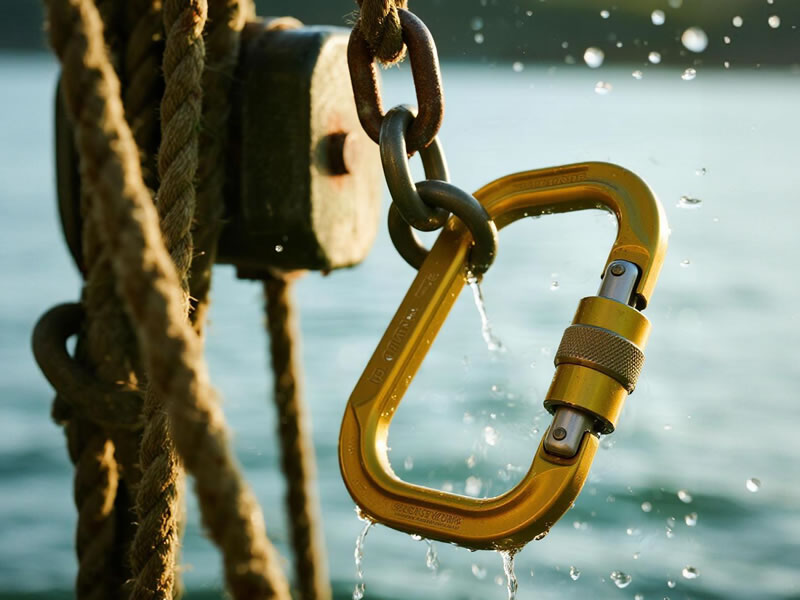
The Primary Adversary: Corrosion
The single most important factor governing choice is corrosion resistance. Saltwater is an exceptionally effective electrolyte that accelerates galvanic corrosion, rapidly destroying unsuitable metals.
- Mandatory Material: Stainless Steel. 316-grade (Marine Grade) stainless steel is the unequivocal standard. It contains molybdenum, which provides superior resistance to pitting and crevice corrosion in chloride-rich environments. Aluminum carabiners, even anodized, are unsuitable for primary marine applications as they will corrode quickly and unpredictably.
- Key Feature: Passive Safety. High-quality stainless steel carabiners are often passivated, a chemical process that enhances the natural protective oxide layer, making them even more resistant to rust.
Critical Design Features for the Marine Environment
- Locking Mechanism: Secure and Simple.Screw-Gate: The most common and reliable choice. Look for models with coarse, deep threads that are less prone to binding with salt crystals. A large, knurled sleeve is essential for operation with cold, wet, or gloved hands.Auto-Locking/Triple-Action: Excellent for critical safety points where guaranteed locking is paramount (e.g., safety tether to jackline). Ensure the mechanism is designed to resist salt ingress and is easy to operate.
- Shape and Size:Large, Round or Oval Profile: A wide, smooth shape is crucial. It must accommodate thick, stiff lines (like double-braid polyester), webbing straps, and shackles without pinching or inducing wear. It also allows for easier handling.Smooth, Snag-Free Nose: A keylock or welded nose prevents catching on sails, lines, and clothing—a major safety and convenience feature on a rolling deck.
- Strength and Construction:High Load Rating: Marine forces can be immense. Look for a major axis strength of 25 kN (5,600 lbs) or higher. The carabiner should be forged for strength and durability.Rounded Edges: All edges should be smooth to protect lines and sails from chafe.
Primary Applications Onboard
- Safety Tethers & Jacklines: The most critical use. A sailor's safety tether (harness line) uses a carabiner to clip onto a deck-mounted jackline. This requires an auto-locking or very secure screw-gate stainless steel carabiner that can be operated quickly and reliably in heavy weather. It is a genuine life-support application.
- Gear Securing: Clipping down items like ditchie bags, winch handles, or portable electronics to prevent them from going overboard.
- Rigging and Adjustments: Temporary attachment points for blocks, guys, or sheets during system adjustments. Useful for creating quick attachments on lifelines or stanchions.
- Dinghy & Tender Operations: Securing painters (ropes), hoisting outboards, or rigging makeshift lifts.
Recommended Types and Reputable Brands
The marine industry has specialized manufacturers whose products are engineered for this specific hellscape:
- Wichard (France): The gold standard. Renowned for their "Snap Shackles" and forged stainless steel carabiners (like the Wichard Pro Snap). They feature excellent corrosion resistance, smooth operation, and robust construction.
- Kong Marine (Italy): Offers a full range of marine-specific stainless steel carabiners and connectors, from compact models to large locking versions, all designed for saltwater use.
- DMM Marine (Wales): Leverages their climbing forging expertise into marine-grade stainless products, known for innovation and strength.
- Nicro / Davis Instruments: Offer more value-oriented stainless steel clips and snaps commonly found in marine catalogs.
Maintenance and Safety Protocol
Even stainless steel requires care to ensure longevity and safety:
- Rinse Regularly: After every saltwater exposure, rinse the carabiner thoroughly with fresh water. Work the gate and locking mechanism open and closed under the rinse to flush out salt crystals.
- Lubricate Sparingly and Correctly: Use a water-displacing, corrosion-inhibiting lubricant (e.g., Teflon-based dry lubricant or specific marine grease) on the gate pivot and screw threads sparingly. Wipe off excess to avoid attracting grime.
- Inspect Religiously: Before any major passage or regularly during the season, inspect for:Cracks or Stress Marks: Especially around the gate and spine.Corrosion or Pitting: Any signs of rust, particularly in crevices or on the spring.Gate Function: Smooth, positive opening and closing. A stiff or gritty action indicates salt buildup or corrosion.Grooves: Deep wear from line chafe.
- Retire with Caution: Any carabiner used for a safety tether that has been shock-loaded (e.g., from a crew member falling and being caught) should be retired. Corrosion can hide microscopic cracks.
Conclusion: The Uncompromising Choice for Bluewater Reliability
Carabiners for sailing are not a place for compromise or repurposed land gear. The marine environment is unforgiving, and the consequences of failure are severe. By insisting on 316-grade stainless steel construction, a secure locking mechanism, and a large, snag-free design from a reputable marine manufacturer, you invest in a connector that matches the durability and demands of the sea.
Proper selection, combined with a disciplined routine of rinsing and inspection, ensures that these small but vital components remain trustworthy guardians of both crew and equipment, voyage after voyage. In sailing, where strength must meet serenity, your hardware should be as dependable as the horizon.




