




Carabiner with the Smoothest Gate Action: The Quest for Effortless Clipping
In the world of climbing, efficiency is safety, and few things impact on-the-wall efficiency more than the feel of your carabiner's gate. A smooth, reliable gate action isn't a luxury—it's a critical performance feature that allows for one-handed, instinctive clipping, reduces fumbling under pressure, and provides constant, reassuring feedback about your gear's health. The quest for the carabiner with the smoothest gate action leads to an exploration of precision engineering, material science, and design philosophy.
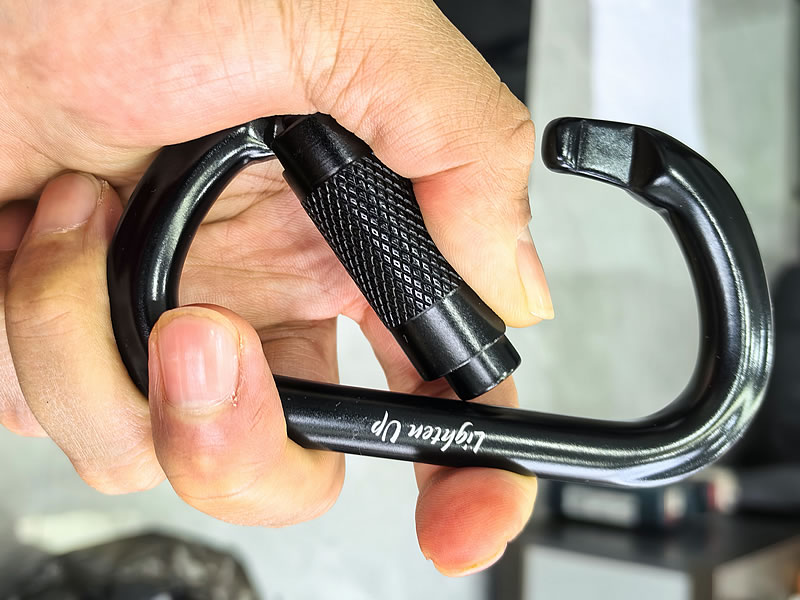
Why Smoothness Matters: Beyond Just Feel
A truly smooth gate action provides tangible functional benefits:
- Faster, More Reliable Clipping: A gate that opens with consistent, minimal effort allows for fluid, confident clipping during strenuous moves or on overhanging terrain.
- Reduced Fatigue: Over the course of a long route with dozens of clips, a gritty or stiff gate adds unnecessary physical and mental strain.
- Enhanced Safety: A gate that snaps shut with positive, predictable force ensures secure capture of the rope or sling. A slow, mushy closure can indicate spring fatigue or internal wear, serving as an early warning sign.
- Improved Cold-Weather Performance: A well-machined gate with a smooth action is less prone to being slowed or seized by ice or congealed lubricants.
The Anatomy of Smoothness: Key Engineering Factors
Several design elements converge to create that coveted buttery-smooth feel:
- Precision Machining and Tolerances: The highest-smoothness carabiners are machined from solid aluminum stock (often 7075-T6 alloy) to extremely tight tolerances. The hinge pin, the gate's pivot hole, and the internal channel must align perfectly. Any imperfection or excess play creates friction or a gritty sensation.
- Spring Mechanism: The heart of the action. A high-quality, corrosion-resistant stainless steel spring must provide consistent tension throughout the gate's full travel. It should offer initial resistance, a smooth middle arc, and a definitive, snappy closure. Springs that are too weak feel mushy; those that are too strong are tiresome to open.
- The Wire Gate vs. Solid Gate Debate: Wire-gate carabiners are often the frontrunners for ultimate smoothness and consistency. Their design uses a simple, bent steel wire and a robust coil spring, minimizing internal friction points and moving mass. This often results in a lighter, crisper, and more predictable action than some solid-gate designs, which can have more complex internal mechanisms.
- Keylock or "Snag-Free" Nose: While not directly related to the pivot smoothness, this design eliminates the traditional notch and pin. This removes a potential point of mechanical hang-up and allows the gate to open and close along a perfectly clean arc, contributing to the overall sensation of seamless operation.
Top Contenders for the Smoothest Gate Action
Based on consistent acclaim from climbers, guides, and industry reviewers, several models stand out:
- Petzl Spirit (Wire-Gate): Often cited as the benchmark for smoothness. Its action is legendary—consistently light, incredibly snappy, and perfectly reliable. The wire-gate design and meticulous manufacturing set a high standard.
- Black Diamond HotForge (Wire-Gate): A relative newcomer that has earned rapid praise. Its gate action is notably smooth and quiet, with a very positive closure. The hot-forged construction may contribute to its precise fit and finish.
- DMM Alpha Sport (Wire-Gate): Renowned for its superb, fluid action. DMM's attention to detail in the pivot design and spring results in a carabiner that feels both solid and effortless to operate.
- Camp Photon Wire: A standout in the value category, offering remarkably smooth performance that rivals more expensive models, proving that cost isn't the sole determinant of feel.
The Human Factor: Maintenance Defines Longevity
The smoothest gate out of the box can be ruined by neglect. To preserve that action:
- Keep it Clean: Rinse with fresh water after exposure to salt, chalk, or dirt. Grit is the primary enemy of smoothness, acting as an abrasive inside the pivot.
- Lubricate Sparingly and Correctly: Most climbing carabiners are designed to run dry. If you must lubricate due to wear or a stiff spring, use a single drop of a dry Teflon-based lubricant on the hinge pin. Avoid wet lubricants like WD-40, which attract and hold abrasive particles.
- Inspect and Retire: Feel is a diagnostic tool. If the action becomes persistently gritty, sticky, or requires increased force, it indicates internal wear or contamination. If cleaning doesn't restore it, the carabiner should be retired.
Conclusion: The Synergy of Precision and Trust
The carabiner with the smoothest gate action represents the pinnacle of functional industrial design tailored to human interaction. It’s a tool where engineering serves ergonomics, creating a seamless extension of the climber's intention. While models like the Petzl Spirit and Black Diamond HotForge are frequently celebrated for their exemplary performance, the true "smoothest" carabiner is ultimately the one that feels like a natural, trustworthy part of your kit—a piece of gear whose operation you never have to think about. By choosing a well-made model from a reputable brand and committing to its proper care, you ensure that this critical point of connection remains a source of confidence, not friction, on every climb.




