




Proper Way to Use a Carabiner for Towing
While a carabiner might seem like a quick and convenient solution for attaching a tow strap, using one incorrectly can lead to catastrophic failure. This guide outlines the proper, safe method for using a carabiner in vehicle recovery and towing scenarios.
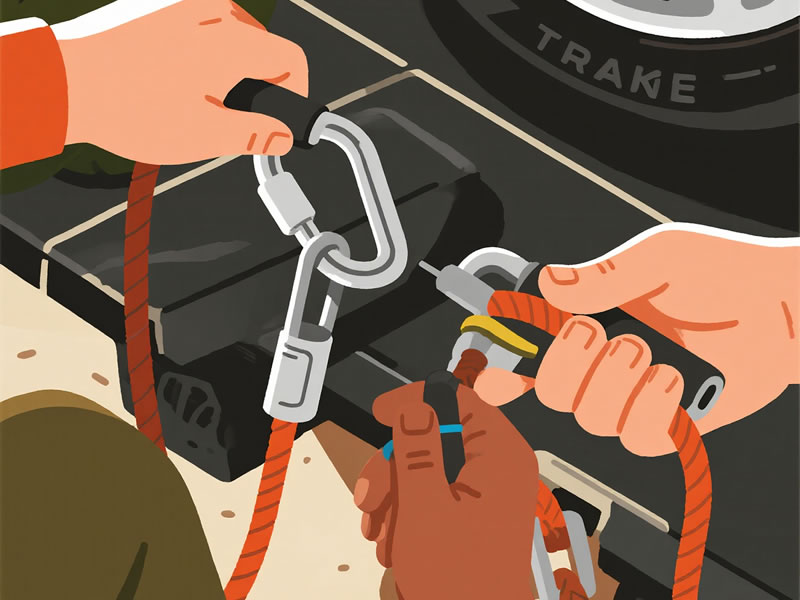
1. The Right Carabiner: Not All Are Created Equal
Never use a standard climbing or hardware store carabiner. You must use a load-rated screw-gate or auto-locking carabiner specifically designed for industrial rigging or recovery. Look for a clear stamp indicating its Working Load Limit (WLL), which should be significantly higher than the expected load (a minimum of 20,000 lbs WLL is often recommended for vehicle recovery). The gate must have a reliable locking mechanism to prevent accidental opening under tension or vibration.
2. Proper Attachment Points
The carabiner should only connect two secure, fixed points:
- Vehicle Side: Attach only to a dedicated, factory-installed recovery point or a properly rated aftermarket tow shackle. Never attach to a trailer hitch ball, suspension components, or bumper parts.
- Strap Side: Attach directly to the loop of a properly rated recovery strap or tree trunk protector. Ensure the strap is not twisted. The carabiner should never directly connect to another metal object (like another shackle or carabiner) in a way that creates a "side-load" or cross-load condition.
3. Correct Installation Technique
- Orientation is Key: Load the carabiner along its major axis (the long, strong spine). The gate should face away from the direction of pull and not be in contact with the strap or vehicle point, as contact can unscrew the gate.
- Secure the Lock: Once attached, manually screw the gate sleeve down completely until it is firmly seated. Perform a visual and tactile check to confirm it is locked. A partially screwed gate can vibrate open.
4. Critical Safety Warnings and Common Mistakes
- Never Side-Load: Applying force across the minor axis (the side with the gate) dramatically reduces the carabiner's strength and can cause immediate failure.
- Avoid "3-Way" Pulls: Do not use a single carabiner to connect multiple straps at different angles. This creates unpredictable and dangerous side loads.
- Inspect Regularly: Before each use, check for cracks, deep gouges, corrosion, or gate malfunction. Retire any damaged carabiner immediately.
- The Shock Load Danger: During kinetic recovery (using a snatch strap), forces far exceed the vehicle's weight. Your carabiner's rating must account for this.
The Bottom Line
A load-rated locking carabiner can be a safe connecting link when used correctly. However, for most towing and recovery situations, a properly sized and rated soft shackle or bow shackle with a clevis pin is often a safer, stronger, and more reliable choice. When in doubt, choose the dedicated tool over the improvised one. Your safety and the safety of others depend on using the right equipment the right way. Always prioritize a slow, controlled pull over a high-force yank.




