




Carabiner for Hanging a Hammock: A Complete Safety and Setup Guide
Using a carabiner to hang your hammock is a popular method that promises quick setup and takedown. However, the convenience factor depends entirely on using the right carabiner in the correct way. This guide will walk you through selecting, using, and understanding the critical role of carabiners in a safe and tree-friendly hammock system.
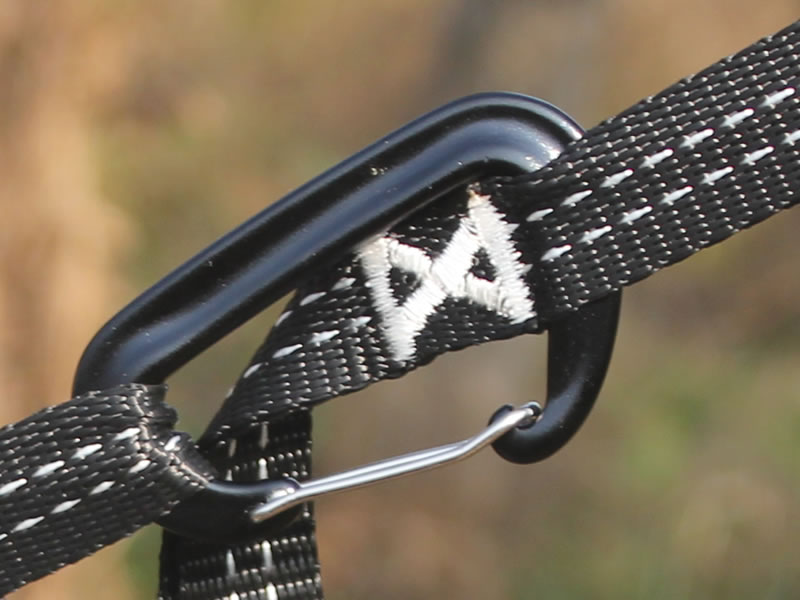
The Essential Rule: Never Just "Clip and Go"
First and foremost, a carabiner should only ever be a connecting link within a larger, responsible system. That system must include:
- Wide, Tree-Friendly Straps: Never use rope or narrow cords that cut into and damage bark.
- The Carabiner: Your secure connector.
- The Hammock's Attachment Points: Typically continuous loops or whoopie slings.
The carabiner connects the strap to the hammock—it does not replace the strap or go directly around the tree.
Choosing the Right Carabiner: It's About More Than Strength
Not all carabiners are created equal. For hammocking, you need a carabiner that is strong, secure, and easy to use.
- Type: Locking Carabiners are Non-Negotiable.Screwgate Lockers: The most common and reliable choice. You manually screw the sleeve down to lock the gate closed.Auto-Locking (TwistLock): Convenient but can sometimes clog with dirt or freeze in cold weather.Avoid: Non-locking snap-gate or wire-gate carabiners (common in climbing quickdraws). The gate can be accidentally depressed by fabric or a branch, leading to a catastrophic failure.
- Strength Rating: Look for the kN.A carabiner suitable for hammocking should have a minimum strength rating of 20 kN (approx. 4,500 lbs) along its major axis. This rating is stamped on the spine.This rating accounts for "dynamic loads"—the forces created when you enter, exit, or shift in your hammock, which are much higher than your static body weight.
- Size and Shape:Oval or D-Shaped: These are ideal as they provide a large, smooth clipping area for straps and won't create sharp bend angles in your suspension, which can weaken it.Ensure it's large enough to easily accommodate two thick strap loops and your hammock's loop.
Step-by-Step: The Proper Hanging Method
- Secure the Tree Straps: Wrap your wide, flat tree straps around two healthy, sturdy trees at about eye-level height. Thread the strap end through its own loop to create a secure, adjustable choke.
- Attach the Carabiner: On the strap's end loop (the one hanging away from the tree), fully open the gate of your locking carabiner. Thread the strap loop onto the spine of the carabiner (the solid, curved back). Do not just clip the gate onto the loop.
- Connect the Hammock: Clip your hammock's continuous loop or whoopie sling through the same carabiner. You now have the strap and the hammock both connected to the carabiner.
- Lock It Down: Before applying any weight, manually screw the gate sleeve down completely until it stops. Perform a visual and tactile check.
- Achieve the Right Sag: Adjust your strap height so that when sitting in the hammock, the suspension forms roughly a 30-degree angle at the carabiner. This ensures optimal comfort and minimal stress on the entire system.
Common Mistakes and Critical Safety Warnings
- Mistake: Using Hardware Store Carabiners.Risk: These are often made of weaker steel or aluminum, with no clear load rating. They may have gates that can easily open under pressure.
- Mistake: Connecting Carabiners in Series (Daisy-Chaining).Risk: Linking multiple non-locking or small carabiners together creates multiple potential failure points and can induce dangerous side-loading.
- Mistake: Over-tightening the Hammock ("The Banana Hang").Risk: A hammock strung too tightly creates immense lateral force on the trees and your gear, potentially exceeding the carabiner's and strap's ratings.
- The Golden Safety Check: Before every use, inspect your carabiner for cracks, deep gouges, corrosion, or a malfunctioning, gritty gate mechanism. If in doubt, retire it.
Conclusion: The Secure Link in Your Relaxation Chain
A properly chosen and used locking carabiner is an excellent tool for the hammock enthusiast. It provides a reliable, strong, and reusable connection point that simplifies setup. By investing in UIAA/CE-certified, locking carabiners rated over 20 kN, and integrating them into a system that uses wide tree straps and respects the 30-degree hang angle, you transform a simple clip into a cornerstone of safe, sustainable, and comfortable hammocking. Remember, your safety hangs not on a single piece of gear, but on the informed choices you make in assembling your entire system.




