




Can Carabiners Be Used for Zip Lines?
The short answer is yes, but with absolutely critical caveats. Using the wrong carabiner, or using it incorrectly, can lead to catastrophic failure. A zip line is a dynamic load system where safety is non-negotiable.
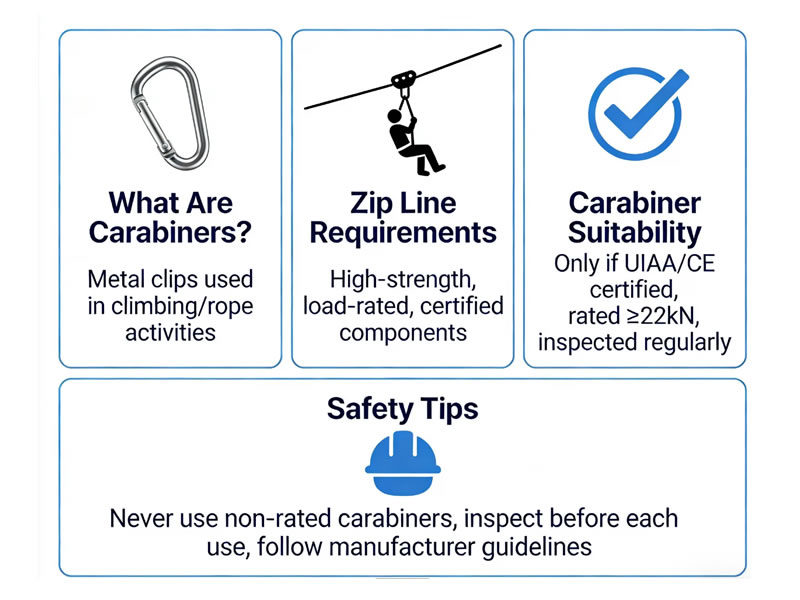
Not All Carabiners Are Created Equal
The typical carabiner on a backpack or keychain is dangerously inadequate. For zip lines, you need industrial-strength, load-rated hardware. Here’s what to look for:
- Material & Strength: You must use steel or high-tensile aluminum alloy carabiners. They must have a clear Minimum Breaking Strength (MBS) rating, typically 50 kN or higher (over 11,240 lbf). This rating is for the gate closed and locked. Always look for a stamp or marking indicating this strength.
- Gate Type: A screw-lock or triple-action auto-locking gate is mandatory. These mechanisms prevent the gate from accidentally opening under vibration or contact. Never use a non-locking or basic snap-gate carabiner on a zip line's main connection.
- Shape & Design: Oval or D-shaped carabiners are often preferred for zip lines as they maintain better alignment of the load and reduce wear on straps or pulleys. Avoid wire-gate carabiners meant for climbing, as they may not withstand the constant friction.
Critical Best Practices and Warnings
- The Primary Connection: The carabiner connecting the rider's trolley or harness to the cable is the Primary Anchor. This demands the highest-rated, most secure hardware. Many professional installations use a captive system (like a forged eye-bolt) instead of a carabiner at this critical point for ultimate safety.
- Redundancy is Key: Never rely on a single point of failure. Professional systems often use two locking carabiners in tandem or a redundant lanyard.
- Regular Inspection: Before each use, inspect carabiners for cracks, deep grooves, gate malfunctions, or corrosion. Retire any questionable hardware immediately.
- Professional Installation is Paramount: Designing a safe zip line involves complex calculations of tension, sag, braking, and anchorage. Always consult with a professional installer. They will select and certify the correct hardware—including carabiners—for the specific load, height, and length of your line.
Conclusion
While specially designed, load-rated locking carabiners have a place in zip line construction, their selection and use is a matter for serious expertise. They are a vital component but never a DIY shortcut. Prioritize professionally engineered systems, redundant safety measures, and certified equipment to ensure every ride is thrilling yet secure. Your life, and the lives of users, depend on it.




