




How to Test a Carabiner at Home: A Safety-Critical Guide
A crucial disclaimer first: There is no safe way to perform a load-bearing strength test on a carabiner at home. Attempting to do so with weights, pulleys, or force can damage the carabiner catastrophically or cause injury. The structural integrity test, which verifies the kiloNewton (kN) rating, must be conducted with calibrated equipment in a controlled lab.
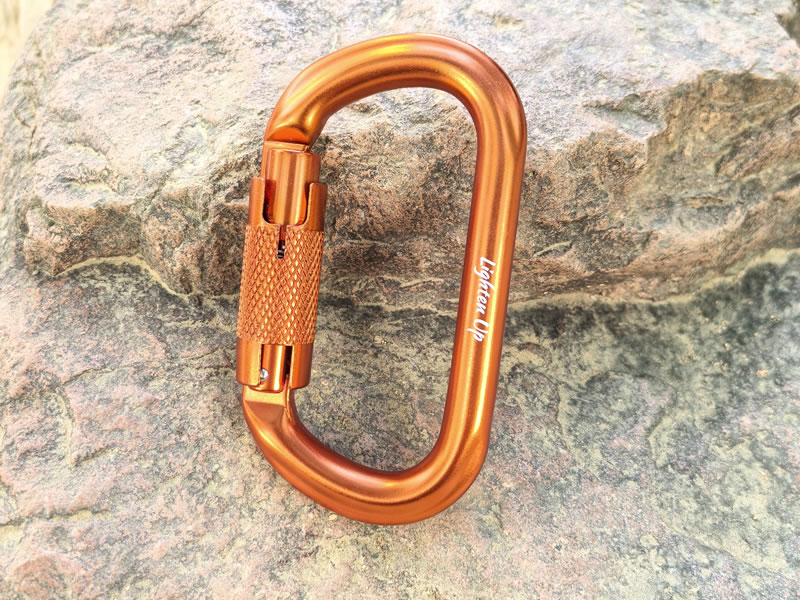
However, what you can and must do at home is a comprehensive visual and functional inspection. This is the primary method for assessing gear health between professional checks. Here is a systematic, safety-focused guide.
Phase 1: Preparation & Cleaning
Begin with a clean, well-lit workspace. Wipe down the carabiner with a damp cloth to remove dirt, chalk, and grime. For stubborn residues, use a soft brush and mild soap. Dry it thoroughly. A clean surface is essential for spotting minute flaws.
Phase 2: The Visual Inspection
Examine every millimeter under good light, using your fingers to feel for imperfections your eyes might miss. Use a magnifying glass for suspect areas.
1. Check for Cracks and Deformation:
- Focus on high-stress areas: the spine (straight side opposite the gate), the nose, and the ends of the gate wire/bar.
- Look for hairline cracks, which often appear as fine, jagged lines.
- Check for any bending or deformation of the spine. It should be perfectly straight.
2. Assess Surface Wear:
- Grooving: Deep, smooth grooves worn into the spine or gate by rope friction are critical. Light scuffing is normal, but a groove you can feel with a fingernail significantly weakens the metal. Retire the carabiner.
- Burrs and Sharp Edges: Run your finger along all edges. Any sharp protrusions, especially near the gate opening or on the inside curve, can cut gear or skin and indicate impact damage.
3. Inspect for Corrosion:
- Aluminum carabiners develop a harmless white oxidation. However, pitting corrosion—small, deep, crater-like holes—is a serious defect. Steel carabiners showing any rust, especially in moving parts, should be carefully evaluated.
Phase 3: The Functional (Gate) Test
This is the test of the moving parts.
1. Gate Action:
- The gate should open smoothly and snap shut decisively with a distinct, spring-loaded sound and feel. It should not feel sluggish or gritty.
- Listen and feel for any grinding or catching during operation.
2. Gate Play:
- With the gate closed, try to move it side-to-side (parallel to the spine). A tiny amount of play is normal in well-used gear, but excessive wobble indicates a worn pivot.
- Push and pull on the gate tip along the opening axis. It should not feel loose or rattle.
3. Locking Mechanism (for Locking Carabiners):
- Screw Gate: The sleeve must turn smoothly along the entire thread path, easily screw down to fully cover the gate nose, and not cross-thread.
- Auto-Locking/Twist Lock: Test the mechanism repeatedly. It should consistently lock automatically when the gate closes and require a defined, deliberate motion (push-and-twist) to unlock.
Phase 4: The "History" Consideration
Ask yourself: What is this carabiner's history? Has it:
- Taken a severe fall?
- Been struck by rockfall or dropped onto a hard surface from height?
- Been exposed to chemicals, acids, or intense heat?If the answer to any of these is "yes," the carabiner may have internal damage not visible on the surface. The safest action is to retire it.
Conclusion: The Limits of Home Testing
Your at-home inspection is a vital routine for catching obvious and progressive wear. It can tell you when a carabiner is definitely unsafe (visible crack, deep groove, malfunctioning gate). However, it cannot certify a carabiner as safe for future use, as it cannot detect internal metal fatigue or microscopic stress fractures.
Therefore, treat your home inspection as a critical screening tool. Any doubt, any anomaly, or any significant wear means the carabiner should be permanently retired from life-support roles. For formal verification or if you are uncertain, consult the manufacturer's guidelines or a professional gear inspection service. Your vigilance is the most important safety feature you possess.




