




What Carabiner Fits Through a Climbing Bolt Hole?
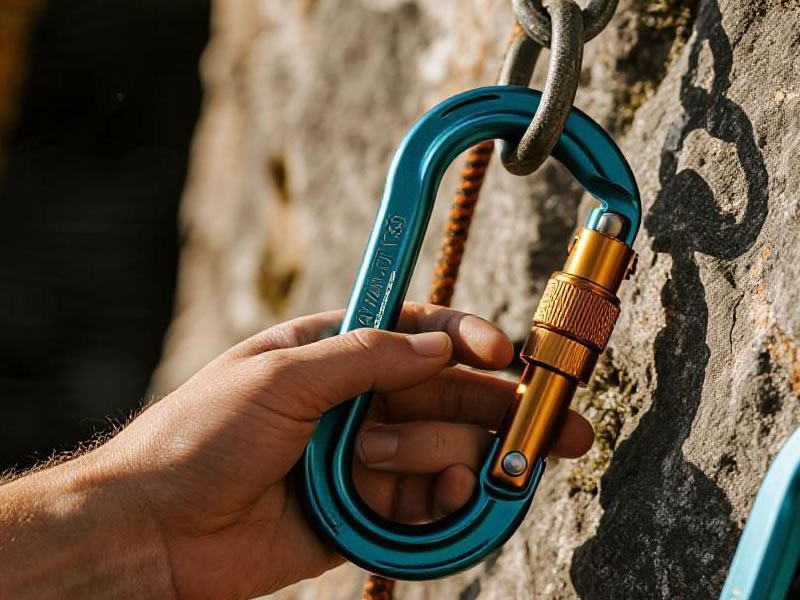
This is a fundamental and critical question for any climber who cleans their own sport routes or works with fixed anchors. Threading a carabiner directly through the hole of a bolt hanger or chain link is a standard technique for lowering, rappelling, or setting up a top-rope anchor. Using a carabiner that doesn't fit can lead to dangerous delays, a stuck carabiner, or a compromised setup. The answer revolves around precise measurements and specific design features.
Recommended trekking pole purchase link: https://s.click.aliexpress.com/e/_c4M7OWaN
Understanding the Bolt Hanger
Standard stainless steel bolt hangers used in modern sport climbing have a hole diameter typically between 10mm and 12mm (approximately 3/8 to 1/2 inch). The internal diameter of a chain link or a quicklink (maillon rapide) is similar. The goal is to pass the spine (the solid, curved back) of the carabiner through this hole.
Key Carabiner Dimensions: Spine Thickness and Nose Profile
- Spine Thickness (The Critical Measurement): This is the width of the carabiner's solid backbone. You need a carabiner with a spine thickness of less than 10mm, ideally in the 8-9mm range. Many modern, performance-oriented wire-gate carabiners are designed with this in mind.
- Nose Design: A Keylock or Snag-Free Nose is almost mandatory. Traditional notched noses are prone to catching on the edge of the bolt hole as you try to rotate or remove the carabiner, which can be frustrating and hazardous. A smooth, keylock nose slides through cleanly.
Top Carabiner Models That Fit
The following models are renowned for their slim profiles and are consistently cited by climbers as reliable for threading bolts:
- Petzl Spirit & Ange Series: These are often the gold standard. Their Sm’D wire technology creates a very strong yet slim spine (around 8-9mm). The keylock nose is flawless for this task.
- Black Diamond HotWire & Ultralight Series: Designed with a focus on a thin, hot-forged spine to reduce weight. They fit through most standard bolt holes with ease.
- Camp Photron / Nano Series: Known for their incredibly sleek, keylock designs and thin spines.
- DMM Alpha Sport & Shadow: DMM's precision engineering ensures a smooth, keylock nose and a spine that fits standard holes.
Important Note: Even within these models, there can be slight variations. It is always best to physically test your specific carabiners on a bolt at ground level before relying on them at the top of a route.
The "Spine Bulge" Consideration
Be aware of the "spine bulge" — the slight widening of the spine where it is stamped with the strength rating and certifications. This stamped area can be a fraction of a millimeter thicker. On a very tight-tolerance bolt hole (e.g., a worn or slightly bent 10mm hole), this bulge can cause the carabiner to fit loosely when unweighted but become "cammed" or stuck when weighted, as the force pushes the thickest part against the metal. This is another reason to choose a carabiner known for a consistently slim profile.
What Does NOT Fit
- Most Solid-Gate Carabiners: They often have thicker spines and bulkier noses. The classic DMM Dragon, while an incredible trad biner, has a thicker spine and a nose that can snag.
- Most Locking Carabiners: Especially HMS/Pear-shaped lockers, are far too large and bulky. Their purpose is for belay loops, not bolt holes.
- Oval Carabiners: While their symmetrical shape might seem logical, they are generally too thick and not designed for this specific function.
- Carabiners with Thick Coatings or Sleeves: Some carabiners have plastic collars or thick coatings that add significant width.
Safety Protocol and Best Practices
- Certification First: The carabiner must be UIAA/CE certified. This task is load-bearing.
- The "Thread and Clip" Method: The proper technique is to thread the spine of the carabiner through the bolt hole, then clip your rope (for lowering) or a second, securing carabiner (for anchoring) into the basket of the threaded carabiner. Never clip the rope directly through the bolt hole itself, as this creates dangerous metal-on-rope friction.
- Carry a Dedicated "Bolt-Threading" Carabiner: Many experienced climbers designate one specific, slim carabiner in their rack for this purpose. It’s often a brightly colored one for easy identification.
- Inspect the Bolt Hanger: Before threading, check for excessive wear, sharp edges, or corrosion that could damage your carabiner.
Conclusion
The carabiner that best fits through a standard climbing bolt hole is a UIAA/CE certified wire-gate carabiner with a slim spine (<10mm) and a keylock nose. Models like the Petzl Spirit or Camp Photron are exemplary choices due to their engineered slimness and smooth operation.
Ultimately, this is a question of function and safety. By choosing the right tool and practicing the proper technique on the ground, you ensure that what should be a routine task at the anchors remains quick, secure, and stress-free, allowing you to focus on the climb itself. Always verify the fit of your specific gear and never force a carabiner that doesn't pass through smoothly.




