




Are Keychain Carabiners Safe for Climbing? A Critical Safety Warning
The short, unequivocal answer is no. Using a keychain carabiner for climbing, belaying, or any other life-support activity is extremely dangerous and can lead to catastrophic equipment failure, severe injury, or death. This article explains the critical distinctions between decorative hardware and professional climbing equipment, underscoring why this substitution is never acceptable.
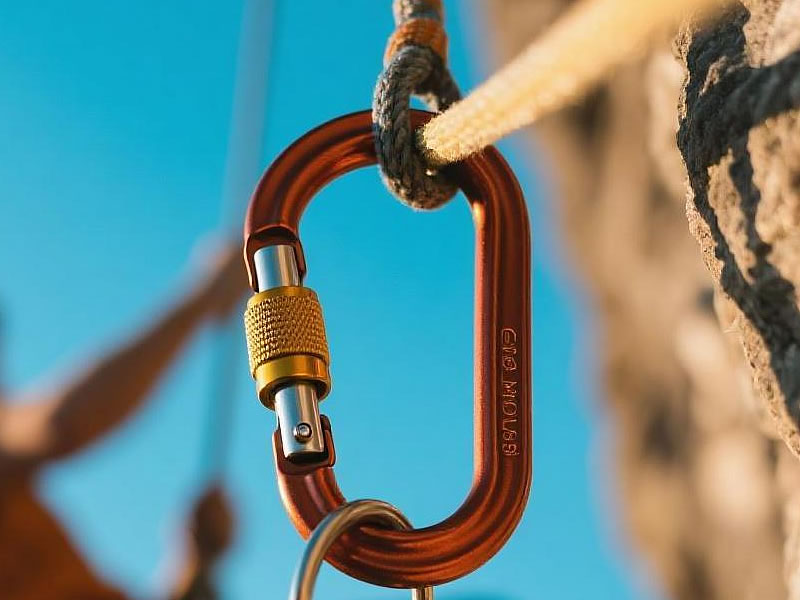
The Fundamental Difference: Intended Use and Engineering
Keychain carabiners and climbing carabiners may look superficially similar, but they are engineered for entirely different worlds.
- Keychain Carabiners: Designed as convenience items for organizing keys, attaching decorative trinkets, or pulling a zipper. Their primary purpose is light-duty utility.
- Climbing Carabiners: Classified as Personal Protective Equipment (PPE) and life-support gear. Their sole purpose is to manage forces generated during a fall and protect human life.
Why Keychain Carabiners Fail as Climbing Gear
1. Complete Lack of Certification and Rating:
This is the most critical factor. Genuine climbing carabiners must undergo rigorous independent testing to meet strict international safety standards set by organizations like the UIAA (International Climbing and Mountaineering Federation) and CE (European Conformity). These certifications confirm a carabiner's strength along its major axis (gate closed) and minor axis (sideways pressure), typically rated between 20 kN to 30 kN (kiloNewtons). To visualize, 1 kN equals about 225 pounds of force; thus, a 22kN carabiner can withstand over 5,000 pounds of force.
Keychain carabiners have no such ratings. They are manufactured with no expectation of bearing dynamic loads. Their strength is unknown, often minimal, and absolutely untrustworthy.
2. Inferior Materials and Construction:
- Materials: Climbing carabiners are made from high-strength aluminum alloys (e.g., 7075-T6) or steel. Keychain versions are often made from softer, cheaper metals like zinc alloy, low-grade aluminum, or even painted steel, which can be brittle or prone to bending.
- Gate Mechanism: Climbing carabiners feature secure locking mechanisms (screw-gate, auto-locking, twist-lock) designed to prevent accidental opening under load or impact. Keychain carabiners usually have a simple, non-locking spring-loaded gate that can easily snag open on rock or gear—a phenomenon known as "gate lash"—leading to instantaneous failure.
3. Inadequate Strength in Critical Scenarios:
During a fall, forces are magnified far beyond a climber's static weight due to the physics of a falling mass (the "fall factor"). A standard leader fall can generate several kN of force instantly. A keychain carabiner's gate or spine can snap, bend open, or simply break under this load, as it was never designed to handle such forces. Furthermore, they are not engineered to withstand the cross-loading (force applied sideways to the spine) that can occur in real climbing situations.
The Grave Risks of Misuse
Substituting uncertified gear creates two primary hazards:
- Complete Carabiner Failure: The carabiner breaks, causing an immediate and total loss of connection.
- Inadvertent Gate Opening: The weak, non-locking gate opens upon contact, releasing the rope or sling.
Both scenarios result in an unprotected fall directly to the ground or a ledge.
How to Identify a Real Climbing Carabiner
Always look for these markers on the equipment you trust with your life:
- A stamped Strength Rating: Clearly marked major axis (e.g., 22 kN) and minor axis (e.g., 7 kN) figures.
- Certification Marks: Look for the UIAA safety label and/or CE mark with the category code "EN 12275:2013" for climbing.
- Brand and Source: Purchase from reputable climbing and outdoor retailers (e.g., Black Diamond, Petzl, Camp, Mammut, etc.), not from general merchandise, hardware, or promotional gift stores.
Conclusion: There is No Substitute for Certified Gear
The world of climbing operates on a foundation of managed risk. Climbers mitigate objective dangers by using meticulously engineered and tested equipment. Using a keychain carabiner for climbing is not a clever hack or a harmless shortcut; it is a fundamental violation of this safety principle.
The stakes are binary: either your gear holds, or it doesn't. For life-support, there is no middle ground. Never, under any circumstances, use a keychain carabiner, decorative carabiner, or any uncertified hardware for climbing, belaying, rappelling, or anchoring. Your safety, and the safety of your climbing partners, depends on using the right tool for the job—certified climbing gear from trusted manufacturers.
Climb Smart. Climb Safe. Use Rated Gear.




