




Is This Carabiner Too Big/Small for My Use? A Practical Guide to Sizing
Selecting the right carabiner isn't just about strength ratings and locking mechanisms—its physical size plays a crucial, often overlooked, role in safety, efficiency, and functionality. A carabiner that is too large or too small can compromise your system, lead to frustration, or even create a safety hazard. This guide will help you answer the common question: "Is this carabiner the right size for my task?"
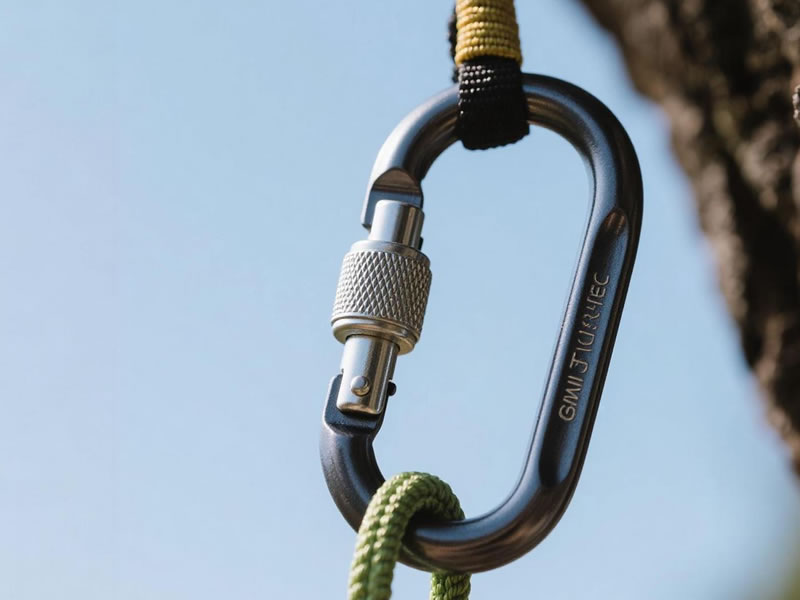
The answer is not one-size-fits-all. It depends on three key factors: the intended application, the objects you need to clip, and the environment in which it will be used.
Application-Based Sizing Guidelines
1. For Climbing and Life-Support:
- Too Small: A carabiner is too small if it cannot easily and reliably accommodate all necessary components. This includes:Not fitting two carabiners and a sling for an anchor.Being too narrow to smoothly accept a belay device and the rope without constant fiddling.Having a gate opening so tight that clipping a rope or sling is difficult, especially with cold or gloved hands.
- Too Large: While less common, an overly large carabiner (like a massive steel rigging 'biner) is problematic due to:Excessive Weight: Adding unnecessary load to your harness.Increased Snag Potential: More likely to catch on rock features, vegetation, or other gear.Poor Handling: Can be cumbersome to manipulate with one hand.
- The Ideal: Standard climbing carabiners (often called "HMS" or "Pearabiner" shapes for belaying) are designed to be a versatile "Goldilocks" size—large enough for multi-component clipping, but compact and light enough for efficiency.
2. For Gear Organization (Backpacks, Keychains, EDC):
- Too Small: If you struggle to clip it onto a backpack loop, or if the gate opening won't fit over the items you need to attach (e.g., a thick water bottle handle), it's too small.
- Too Large: A carabiner is too large if it dangles awkwardly, gets caught on every branch or door handle, or adds notable weight for no benefit. A massive carabiner on a keychain is often impractical.
- The Ideal: Choose a size proportional to the items. Mini carabiners are great for keys. Medium sizes (similar to a non-locking climbing 'biner) are perfect for attaching bottles or gear to backpack daisy chains.
3. For Rigging and Fixed Anchor Points:
- Too Small: Cannot accommodate multiple slings, rope eyes, or a shackle pin, forcing unsafe cross-loading or overcrowding.
- Too Large: Rarely an issue for strength, but can be inefficient and expensive. Ensure it's compatible with your other hardware.
- The Ideal: Size should be dictated by the Working Load Limit (WLL) and the need to avoid pinching or damaging slings. A larger, round-profile steel carabiner or screw link is often preferred to reduce wear on soft materials.
Key Signs and Practical Tests
Signs a Carabiner is TOO BIG:
- It feels bulky, heavy, and awkward for the task.
- It frequently snags on the environment.
- Attached items (like a water bottle) have excessive, noisy movement ("rattle").
- For climbing: It unnecessarily complicates a neat gear rack on your harness.
Signs a Carabiner is TOO SMALL:
- Clipping and unclipping requires force, pinching, or two hands.
- Multiple components (rope, sling, device) are jammed together inside, putting pressure on the gate.
- The nose of the carabiner constantly hooks on material when you try to clip.
- You cannot achieve a clean, straight-line load; the attachment causes cross-loading.
The "Hands-On Test": Before committing to a carabiner for a critical use, perform a mock setup. If it's for climbing, practice clipping the rope and your device. If it's for gear, attach it to your bag and the item. The action should be smooth and intuitive.
Safety Considerations: When Size Directly Impacts Security
- Cross-Loading: A carabiner that is too small for the attached sling or webbing can easily turn sideways (cross-load), reducing its strength by 65-70%. The sling should sit in the basket (the curved spine), not push against the gate.
- Gate Function: Overloading a small carabiner can strain or warp the gate, preventing it from closing properly.
- Accidental Unclipping: An undersized carabiner on a large attachment point may not achieve a secure closure, risking the gate being levered open.
Conclusion: Fit for Purpose
Choosing the correctly sized carabiner is an exercise in applied ergonomics. There is no universal "best" size, only the optimal size for your specific need. Always prioritize:
- Function: It must perform its clipping task effortlessly.
- Safety: It must maintain proper alignment and gate integrity under load.
- Efficiency: It should not hinder your activity through bulk or difficulty of use.
When in doubt, err on the side of slightly larger for versatility in technical systems, and slightly smaller for discreet everyday carry. Remember, the most expensive, perfectly rated carabiner becomes the wrong tool if its size makes it impractical or unsafe for your intended use. Test it, assess it, and ensure it’s not just strong, but also the right fit.




