




Largest Capacity Carabiner for Holding Multiple Items: Maximizing Space and Security
When your gear organization or technical setup requires consolidating several components into a single, secure point, selecting the right high-capacity carabiner is essential. The goal is not merely to find the physically largest piece of metal, but to identify the design that optimally manages multiple items without compromising safety, accessibility, or function. For this purpose, one design stands above the rest: the pear-shaped carabiner, also known as an HMS (Halbmastwurfsicherung) carabiner.
Why Design Dictates True Capacity
The "largest capacity" must be evaluated in terms of functional internal space, not just external dimensions. A carabiner's effectiveness for holding multiple items depends on two key zones:
- Basket Space: The curved area opposite the gate. This is where items should rest under load.
- Gate Clearance: The opening through which items are introduced. A wide gate is useless if the basket behind it is narrow, causing items to jam.
Standard D or oval carabiners often fail here because items slide toward the gate end, creating a tangled cluster that can:
- Jam the gate mechanism open.
- Force the carabiner into a dangerous cross-loaded position.
- Make retrieving a single item frustrating.
The Champion: The Pear-Shaped (HMS) Carabiner
The pear-shaped carabiner is expressly engineered to solve this problem, making it the undisputed leader for high-capacity needs.
- Tapered Design: Its distinctive teardrop shape features a wide, rounded basket that naturally stacks items away from the gate. This leaves the gate area clear for operation and prevents jamming.
- Volume: It offers the greatest internal area of any common carabiner shape. This volume is essential for accommodating a belay device (like a Munter hitch), multiple slings, a rope loop, and a safety tether simultaneously—a common requirement in complex climbing anchors or rescue scenarios.
- Secure Locking: Given its typical use in belaying and anchoring, HMS carabiners almost always feature a screwgate or auto-locking mechanism. This is non-negotiable when multiple critical items are attached; a non-locking gate could be levered open by shifting gear.
Other Contenders and Their Best Uses
While the HMS is the gold standard for technical, load-bearing multiplicity, other shapes have roles:
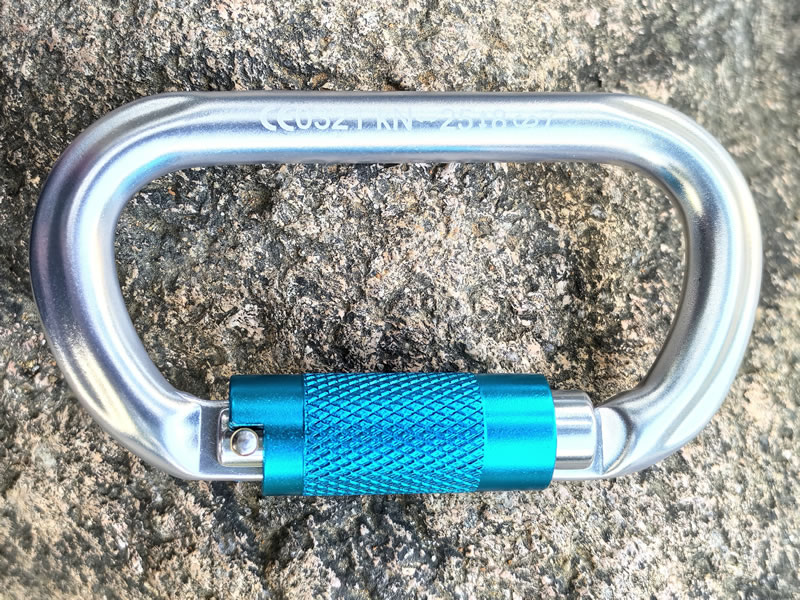
- Large, Locking D-Shaped Carabiners: These provide excellent strength and good capacity. The asymmetric D helps keep loads on the spine. Ideal for permanent gear racks on a harness (carrying multiple pre-clipped quickdraws) or for organizing heavy tools on a work belt where a slightly narrower profile is beneficial.
- Oval Carabiners: Offer consistent space along their entire interior. Useful for rigging and static setups where you want connected items (like multiple rope bags or pulley systems) to center themselves and not slide. Their symmetrical shape can, however, make them more prone to cross-loading in dynamic situations.
Critical Application Guidelines
Using a high-capacity carabiner effectively requires disciplined practice:
- Load Order Matters: When building an anchor, clip the least frequently adjusted, static items first (e.g., anchor slings) into the basket. Clip items you need to manipulate often (e.g., the rope) last, near the gate.
- Avoid the "Octopus" Anchor: While an HMS carabiner can hold many things, best practice in critical climbing anchors is to limit one carabiner to 2-3 major components and use multiple carabiners to distribute the load and reduce complexity. Use the high-capacity 'biner as a central master point.
- Gate Discipline is Paramount: With so much gear attached, you must visually and physically confirm the gate is fully locked after every adjustment. Gear can obscure the view of the locking sleeve.
- Weight and Snag Consideration: The largest HMS carabiners are heavy. For non-life-support organization (e.g., on a backpack), a large aluminum locking D might offer a better strength-to-weight ratio and a less snag-prone profile.
What "Largest Capacity" Does NOT Mean
It is vital to remember that "capacity" refers to organized volume, not increased load rating. Attaching more items does not increase the carabiner's strength; its kN rating remains the same. Furthermore, overloading it with excessive hardware can:
- Mask wear and tear on individual items.
- Create unpredictable lever forces on the gate.
- Lead to user error in a cluttered system.
Conclusion: The Right Tool for Consolidation
For securely and efficiently holding multiple items—whether constructing a climbing belay station, organizing a rescue kit, or managing a dense array of tools—the pear-shaped (HMS) locking carabiner is the optimal solution. Its design is a direct result of solving the very problem of managing multiplicity under load.
Choosing the largest capacity carabiner is therefore an exercise in selecting the right geometry. Prioritize the expansive, intelligent basket of the HMS shape, pair it with a reliable locking mechanism, and deploy it with mindful loading practices. This ensures that your high-capacity hub remains a center of order and safety, not a tangled point of failure.




