




Carabiner Finish: Powder-Coated vs. Anodized
Choosing a carabiner isn't just about its shape and strength rating; the surface finish plays a critical role in durability, corrosion resistance, maintenance, and even safety. The two predominant finishes—anodizing and powder coating—are fundamentally different processes with distinct advantages and ideal applications. Understanding this distinction ensures you select gear that will perform reliably in your specific environment.
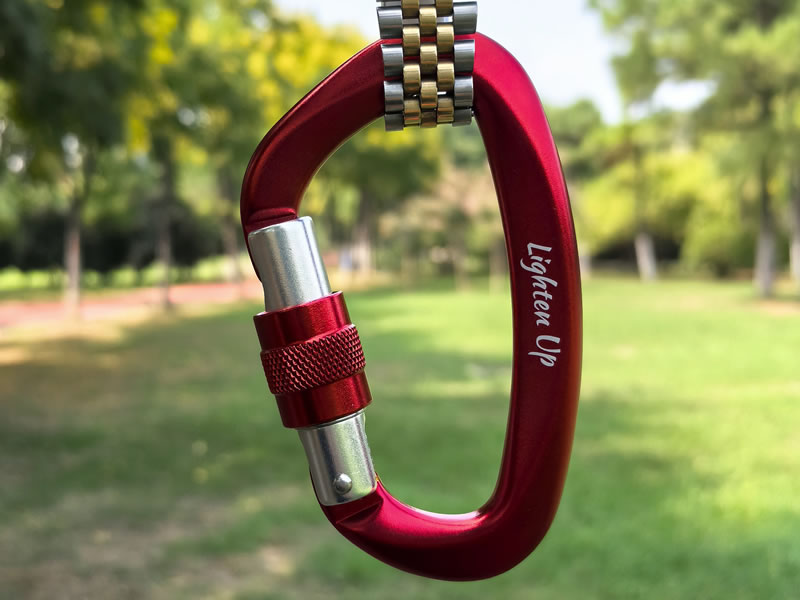
Anodized Finish: The Integrated Hardened Layer
Process: Anodizing is an electrochemical treatment specific to aluminum. The carabiner is submerged in an acid bath and an electrical current is applied, converting the outer surface into a hard, porous aluminum oxide layer. This layer is then dyed (if desired) and sealed.
Key Characteristics:
- Durability & Hardness: The anodized layer is extremely hard (comparable to sapphire). It is highly resistant to abrasion from rock, gear, and webbing.
- Wear Pattern: It does not "chip." Instead, under heavy use, it gradually wears down to reveal the bare, silver aluminum underneath. This creates a polished, smooth wear pattern that many users consider a badge of honor.
- Color: The dye is infused into the oxide pores. Colors are typically matte or satin and are very consistent. However, they can be susceptible to UV fading over many years, though modern dyes are highly stable.
- Feel & Function: The finish is thin and maintains the precise dimensions and smooth operation of the gate. It has a slightly dry, non-slick feel.
- Industry Standard: This is the universal finish for climbing, mountaineering, and any life-safety carabiner. It is the only finish compatible with the precise manufacturing and certification (UIAA/CE) required for these activities.
Powder-Coated Finish: The Tough Exterior Shield
Process: Powder coating is a polymer finishing process that can be applied to metals like steel or aluminum. A dry powder (composed of pigment and resin) is electrostatically sprayed onto the part, which is then baked in an oven. The heat causes the powder to flow and form a smooth, continuous film.
Key Characteristics:
- Corrosion & Chemical Resistance: The polymer layer creates a superior barrier against moisture, salt, and chemicals. It is often the finish of choice for marine, industrial, and harsh environmental applications on steel hardware.
- Wear Pattern: It can chip, scratch, or peel if impacted by a sharp edge or subjected to severe abrasion, revealing the metal beneath.
- Color & Aesthetics: Offers brilliant, glossy, and textured color options. It provides excellent UV resistance and color retention.
- Feel & Function: The coating adds measurable thickness. This can slightly affect gate tolerance and, if applied poorly, may even impede function. It often has a smoother, sometimes slightly tacky feel.
- Common Use: Predominantly found on utility, tactical, and decorative carabiners made of steel. It is rarely, if ever, used on certified climbing aluminum carabiners due to the thickness and potential for hiding defects.
Direct Comparison & Decision Guide
| Feature | Anodized Finish (Aluminum) | Powder-Coated Finish (Typically Steel) |
|---|---|---|
| Base Material | Exclusively Aluminum. | Primarily Steel, sometimes aluminum. |
| Process | Electrochemical conversion of the surface. | Application and baking of a polymer layer. |
| Durability | Extremely abrasion-resistant. Wears smoothly. | Good impact resistance, but can chip under sharp abuse. |
| Corrosion Resistance | Very good (protects aluminum). Vulnerable if layer wears through. | Excellent. Superior barrier against rust and chemicals. |
| Color Integrity | Dye can fade with decades of UV exposure. | Superior UV and color stability. |
| Thickness | Adds negligible dimension. Maintains part precision. | Adds a noticeable layer. Can affect tight tolerances. |
| Primary Application | Life-safety gear (climbing), technical outdoor equipment. | Marine hardware, industrial uses, tactical gear, general utility. |
| Cost | Generally moderate, part of standard manufacturing. | Can vary; often used on both economical and premium utility items. |
How to Choose: Matching the Finish to the Task
Choose an Anodized Carabiner if:
- You are engaging in rock climbing, ice climbing, mountaineering, or any rope-access work. This is non-negotiable for safety and performance.
- Your primary wear factor is abrasion (e.g., rubbing against rock, nylon slings).
- You need a finish that wears predictably without flaking.
- You are using aluminum carabiners.
Choose a Powder-Coated Carabiner if:
- You need maximum corrosion resistance in a wet, salty, or chemical environment (e.g., boat rigging, coastal installations).
- The carabiner is made of steel and is for heavy-duty utility, organization, or non-life-safety tactical use.
- Vibrant, durable color for identification or aesthetics is a priority, and minor chipping is acceptable.
- Abrasion will be minimal, but protection from the elements is key.
Important Safety Note
Never use a powder-coated steel carabiner for climbing or life-support. The finish can hide cracks or defects in the underlying metal, and the steel itself may not be certified for dynamic loads. Always look for the stamped kN rating and UIAA/CE mark on climbing gear, which will invariably feature a hard-anodized finish.
Conclusion: Two Excellent Tools for Different Jobs
The anodized versus powder-coated debate isn't about which is universally better, but about which is correctly engineered for the substrate and the application.
- Anodizing is a performance finish for aluminum, optimizing it for the abrasive, high-friction world of climbing where precision and predictable wear are critical.
- Powder coating is a protective finish often for steel, creating a resilient shield against corrosion for utility and industrial roles where absolute grip abrasion is less common than exposure to the elements.
By selecting the finish that aligns with your material and your mission, you ensure your carabiner isn't just strong, but also suitably armored for the specific battles it will face.




