




How Does Carabiner Gate Design Affect Smoothness?
In the critical moments of clipping into protection, managing a belay device, or organizing gear, the smoothness of a carabiner's gate operation is far more than a mere luxury—it is a fundamental component of efficiency, confidence, and safety. A smooth gate allows for fluid, one-handed operation even with gloves, reduces fumbling, and enables faster, more precise movements. This coveted smoothness is not accidental; it is the direct result of intentional engineering choices in the gate's design. Understanding these elements reveals why some carabiners feel like precision instruments while others feel clunky and unreliable.
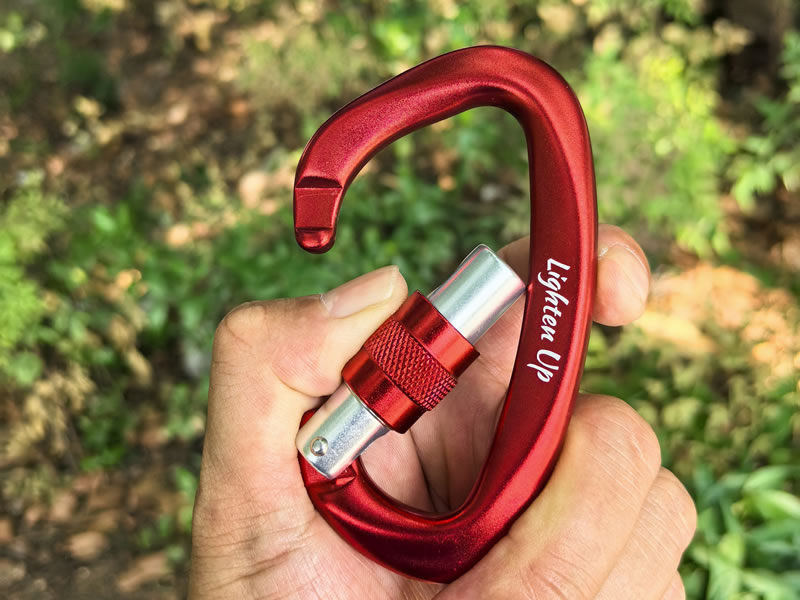
Core Design Elements Impacting Smoothness
1. Gate Type: Wire vs. Solid
- Wire Gates: Constructed from a single, bent strand of spring steel or titanium, wire gates are the smoothness champions. Their design minimizes mass and moving parts. The gate's action is primarily a simple flex of the wire, resulting in a very light, quick, and consistent opening and closing force with minimal internal friction.
- Solid Gates: These feature a hinged, solid metal arm with an internal coil spring. Smoothness here depends heavily on the pivot pin's precision and the spring's quality. A well-machined pivot with smooth bearings (like brass bushings) allows for a fluid swing. However, solid gates inherently have more mass and points of potential friction, often making them feel slightly less "crisp" than a wire gate, though they can be engineered to feel exceptionally smooth.
2. Nose Design: The Key to Snag-Free Engagement
This is arguably the most significant factor in clipping smoothness.
- Traditional Notched Nose: The gate hooks onto a small external protrusion. This notch constantly catches on gear loops, slings, and ropes, causing a jarring, hesitant feel during clipping. This snagging action is the antithesis of smoothness.
- Keylock (No-Snag) Nose: A revolutionary design where the gate closes into a recess within a smooth, rounded nose. There is no external hook. The carabiner glides over obstacles without catching. The difference in feel is dramatic—clipping becomes a seamless, uninterrupted motion. For smooth operation in complex environments, a keylock nose is transformative.
3. Pivot Mechanism & Spring Engineering
The heart of the gate's action lies in its pivot.
- Pivot Precision: A pivot formed by a machined pin riding in a smooth bushing creates consistent, low-friction rotation. Cheap carabiners may use a simple rivet or a poorly finished hole, leading to a gritty, sticky feel.
- Spring Type and Tension: The spring must provide enough force for positive closure but not so much that opening is a struggle. Progressive spring tension (smoothly increasing resistance) feels better than a sudden, jarring stop. In wire gates, the springiness is inherent to the wire material; in solid gates, the coil spring's quality and fit are critical. An over-tensioned or poorly seated spring is a primary cause of a "stiff" gate.
4. Locking Mechanisms: The Smoothness Trade-Off
Smoothness often encounters a trade-off with security in locking carabiners.
- Screwgate Sleeves: Manual screwgates add a step. Smoothness here refers to the thread action and the ease of manipulating the sleeve with gloves. Coarse or poorly machined threads feel gritty.
- Auto-Locking Gates (Twist, Ball, Magnetic): These mechanisms add complexity. While designed for security, they introduce more stages to the opening/closing cycle. A well-designed auto-locker (e.g., with a magnetic assist or a ball-lock with a smooth cam) can be very smooth, but it will almost never match the instantaneous, single-motion feel of a non-locking wire gate.
Environmental Factors and Maintenance
Design dictates potential, but environment affects realized performance.
- Dirt and Grit: Sand and debris trapped in the pivot or spring channel will destroy smoothness. Designs with open, easy-to-clean mechanisms (like wire gates) fare better.
- Cold Weather: As temperatures drop, lubricants stiffen and moisture freezes. Wire gates excel here due to minimal surface area for ice adhesion. Enclosed solid-gate springs can freeze solid, rendering the gate inoperable.
- Wear: A carabiner that starts smooth can become notchy if the pivot wears unevenly or if the nose/gate interface becomes dented from repeated impacts.
Conclusion: The Symphony of Components
The smoothness of a carabiner gate is not the result of a single feature but the harmonious integration of multiple design choices. For the user seeking the ultimate in smooth, effortless operation, the pinnacle is often found in a non-locking wire-gate carabiner with a keylock nose, manufactured by a brand known for precision machining. This combination minimizes mass, eliminates snag points, and relies on a simple, reliable action.
However, for applications requiring security, a well-engineered solid gate with a keylock nose and a high-quality pivot can provide excellent smoothness alongside locking safety. The key is to understand that smoothness is a measurable indicator of manufacturing quality and thoughtful design. When a carabiner's gate operates with a consistent, fluid, and snag-free motion, it reflects an investment in the subtle engineering that transforms a basic connector into a true performance tool, directly enhancing the user's effectiveness and confidence in the field.




