




Best Carabiner for a Woman’s Climbing Harness: A Functional Guide Beyond Gender
The quest for the "best" carabiner for a woman's climbing harness is an excellent question that hinges on understanding one crucial principle: Carabiners are not gender-specific, but harness designs are. Therefore, the optimal carabiner choice is dictated not by the climber's gender, but by the specific features of her harness, her primary climbing discipline, and the intended function of that carabiner. This guide moves beyond assumptions to focus on practical pairing of hardware with harness design for maximum safety, comfort, and efficiency.
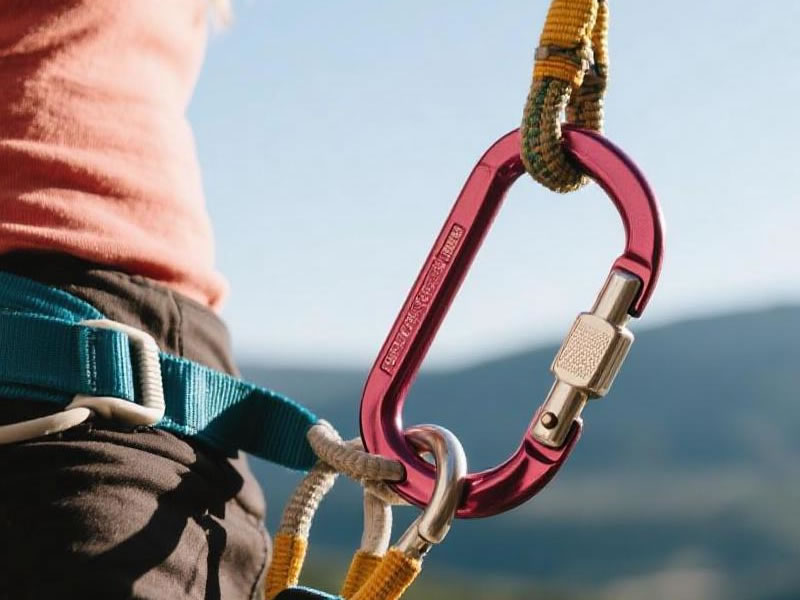
Core Harness Considerations: What Actually Matters
Modern women-specific harnesses are engineered for different hip-to-waist ratios and pelvic structures. This affects carabiner choice in two key ways:
- Gear Loop Design: Women's harnesses often feature repositioned or angled gear loops to sit more comfortably on the hips and avoid interference with the leg loops. The size, stiffness, and spacing of these loops determine what carabiners clip best.
- Belay Loop Proportions: While standardized for safety, the relative size and orientation of the belay loop can feel different. Ensuring a carabiner fits cleanly without twisting the loop is important.
Selecting by Function: The Three Key Roles
1. For the Belay/Rappel Device (The Belay Loop Carabiner):
This is your most critical carabiner. It must be versatile and secure.
- Type: HMS (Pear-shaped) Screwgate Carabiner.
- Why: The large, tapered basket is designed to accommodate a belay device and a Munter hitch without bunching, which can happen with smaller D-shapes. This is a universal need, regardless of harness.
- Key Feature: A smooth, glove-friendly locking sleeve is essential. Look for models known for easy one-handed operation.
- Top Recommendation: A Petzl William or Black Diamond RockLock. Their size, smooth action, and reliable locking are industry standards.
2. For Gear Organization (The Gear Loop Carabiners):
These are for carrying quickdraws, alpine draws, and racking gear.
- Type: Standard D-Shaped or Asymmetric D Carabiners.
- Why: The D-shape efficiently directs load onto the spine. A slightly asymmetric design (like the Black Diamond HotForge) or an oval can be easier to clip and unclip repeatedly from gear loops, especially if the loops are closely spaced.
- Key Feature: A keylock (no-snag) nose. This prevents the carabiner from hooking on other gear or the harness webbing itself—a common annoyance that is solved by this design.
- Weight Consideration: Many climbers, focusing on lightness, prefer wire gates (e.g., DMM Alpha Sport, Black Diamond Nitron) for their racking carabiners. They are light, reliable, and less prone to freezing.
3. For Specialized Rope Management & Anchor Work:
- Type: Additional HMS or Auto-Locking D.
- Why: A second HMS is invaluable for building comfortable anchors. For climbers who do multi-pitch or trad, an auto-locking carabiner (like a Petzl Sm'D or Mammut Smart) can be perfect for clipping into the master point, offering security without needing to screw a gate.
Avoiding Common Pitfalls: Fit and Interference
When selecting carabiners, consider their interaction with your specific harness:
- Bulk on the Hips: Very large or bulky carabiners on the rear gear loops can be uncomfortable when sitting or leaning back. Streamlined D-shapes are often better here.
- Gear Loop Capacity: Smaller harnesses may have slightly shorter or fewer gear loops. Using excessively large carabiners can overcrowd the space, making it hard to access individual pieces. Opt for a consistent, moderate size for your racking biners.
- The "Test Fit": The best advice is to take your harness to a store and physically clip different carabiners onto the gear loops. Feel how they sit, how easily they spin, and if they catch on the harness material.
The Verdict: A Starter Kit
For a woman starting out or optimizing her setup, a versatile and high-performance selection would be:
- One HMS Screwgate Carabiner (Petzl William, BD RockLock) for belaying/rappelling.
- Four to Six Keylock Wire-Gate D-Carabiners (DMM Alpha Sport, BD Nitron) for racking draws and gear.
- One Auto-Locking Carabiner (Petzl Sm'D) for secure anchor attachment.
Conclusion: Harness as the Blueprint
The best carabiner for a woman's climbing harness is the one that best complements the harness's unique geometry and the climber's specific goals. By focusing on the functional role (belay, racking, anchoring) and choosing well-engineered tools to fulfill those roles—prioritizing a keylock nose, appropriate size, and certified quality—you build a system that is safe, comfortable, and efficient.
Gender informs harness design for comfort and fit; let that harness design then inform your choice of tools. Invest in the highest-quality carabiners you can for your belay device, and choose lightweight, snag-free models for your gear loops. This strategic approach ensures your hardware enhances your performance, letting you focus on the climb itself.




