




Carabiners for Kids’ Adventure Gear (Safe Options) Introducing children to the wonders of the outdoors through climbing, zip li
Introducing children to the wonders of the outdoors through climbing, zip lines, or simple backyard adventures is a gift. However, equipping them requires a mindset shift: kids' gear is not merely smaller adult gear; it is specialized safety equipment where every component must be chosen with heightened diligence. Carabiners, as critical connection points, demand particular scrutiny. The goal is to select options that are intrinsically safe, manageable for small hands, and foolproof against common childhood errors.
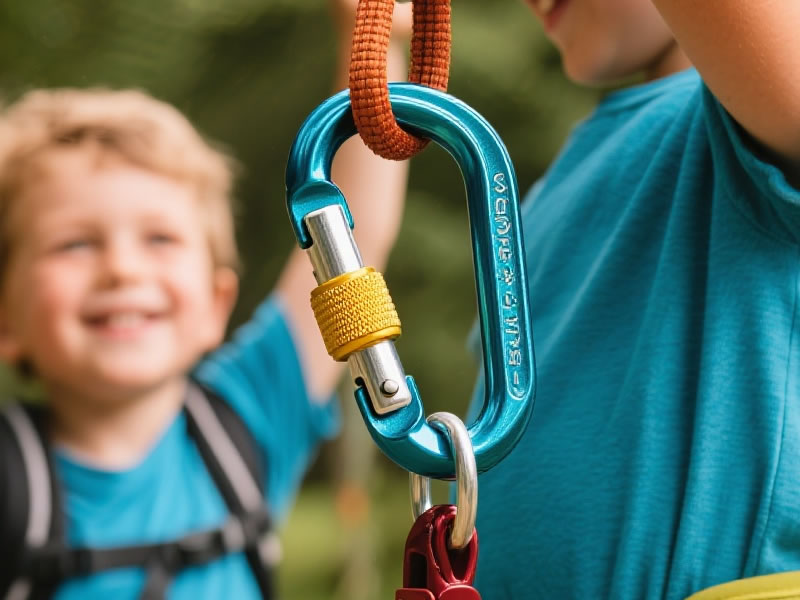
The Golden Rule: Certification is Non-Negotiable
For any activity where a child's weight could be suspended—even partially—only UIAA or CE-certified climbing carabiners are acceptable. These certifications guarantee the carabiner has been destructively tested to withstand forces far beyond what a child could generate. This immediately disqualifies all decorative keychain carabiners, promotional items, or unrated hardware from the toy aisle. Their strength is unknown and untrustworthy.
Key Selection Criteria for Safety
- Locking Mechanism is Mandatory: Only use locking carabiners. Non-locking (snap-gate) carabiners can be easily bumped open by a knee, a rock, or a twist in the rope.Auto-Locking Carabiners (Twist, Ball, or Magnetic Lock): These are often the safest and most convenient choice. They automatically lock when the gate closes, preventing a child (or a distracted adult) from forgetting to screw it shut. Models like the Petzl Sm'D or Mammut Smart are excellent, though their smaller size can be perfect.Screwgate Carabiners: If used, ensure the screw sleeve is large, easy to grip, and requires clear, deliberate action to open. Teach the "lock, load, check" mantra.
- Size and Weight: The carabiner must be proportionally sized for a child's hand and strength. A full-sized, heavy steel carabiner is cumbersome and intimidating.Opt for smaller, lightweight aluminum models from reputable brands. Many brands offer compact locking carabiners designed for alpine climbing or gear organization that are ideal for kids.Ensure the gate opening force is not too stiff for small fingers to operate.
- Design and Finish:Keylock/No-Snag Nose: This design eliminates the external hook, preventing the carabiner from snagging on clothing, ropes, or harnesses—a common source of frustration and potential entanglement.Smooth, Rounded Edges: Avoid carabiners with sharp machining marks or protruding parts that could pinch skin or damage other equipment.Bright Colors: High-visibility colors (orange, red, blue) make it easy for an adult to visually verify from a distance that the carabiner is properly closed and locked.
Appropriate vs. Inappropriate Uses
Safe Applications (with certified, locking carabiners & adult supervision):
- Clipping a child's harness into a top-rope system at a climbing gym or crag.
- Connecting a tether on a challenge course or zip line (following the operator's specific gear rules).
- Non-weight-bearing educational purposes: Teaching knot-tying, practicing clipping techniques on a ground-level rope, or organizing camping gear on a backpack.
Strictly Prohibited Uses:
- Never allow a carabiner to be clipped directly to clothing, a belt, or a backpack strap for hoisting or restraining a child. The forces can be dangerous, and the attachment point is not designed for load-bearing.
- Never use as a toy for swinging, throwing, or attaching to playground equipment not designed for it.
- Never substitute for proper safety hardware on bicycles, scooters, or other moving vehicles.
Recommended Approach and Specific Models
Look for brands that take youth safety seriously. Petzl's "Via" series and Black Diamond's "Gridlock" series offer smaller, user-friendly locking carabiners suitable for youth programs. The DMM Revolver or Camp Orbit are also compact, high-quality locking options.
A Parent or Instructor's Checklist:
- Inspect Before Every Use: Check for cracks, gate stickiness, or any damage.
- Supervise Constantly: A carabiner is a tool, not a toy. Its use must be directly overseen by a knowledgeable adult.
- Educate the Child: Even young children can learn, "This is a lock. It must be closed and clicked (or twisted) shut to be safe." Make checking the lock a non-negotiable habit.
- Store Responsibly: Keep carabiners with other technical gear, out of reach when not in use, to prevent unsupervised play.
Conclusion: Building a Foundation of Safety
Choosing the right carabiner for a child's adventure gear is a profound act of risk management and mentorship. By insisting on properly certified, locking carabiners that are appropriately sized and designed, you do more than just mitigate physical danger. You model respect for equipment, introduce the concept of mechanical safety systems, and build a child's confidence in their own capabilities within a protected framework.
The safest carabiner is the one used correctly under watchful, educated guidance. It becomes the first link in a chain of safe practices that can last a lifetime of outdoor exploration, instilling from the very start that adventure and responsibility are inextricably linked.




