




How to Choose the Right Trekking Poles for Hiking? A Comprehensive Guide
Selecting the right trekking poles is a key decision that can dramatically improve your comfort, safety, and endurance on the trail. With options ranging from basic adjustable models to high-tech carbon fiber systems, the best choice depends on a careful assessment of your typical terrain, physical needs, and hiking style. This guide breaks down the critical factors to consider, transforming a potentially overwhelming purchase into a straightforward process.
Recommended trekking pole purchase link: https://s.click.aliexpress.com/e/_c4M7OWaN
1. Material: Balancing Weight, Durability, and Cost
The pole's shaft material is its foundation, determining its feel, strength, and price.
- Aluminum (6061 or 7075 Alloy): The go-to choice for most hikers, especially beginners. Aluminum offers an excellent balance of durability, affordability, and shock absorption. It is resilient, can bend under extreme stress (often without breaking), and provides a reassuring, solid feel. While slightly heavier than carbon, the difference is minimal for most.
- Carbon Fiber: Prized for being ultra-lightweight and stiff, reducing arm fatigue on long distances. However, it is more expensive and can be brittle, posing a higher risk of catastrophic failure if slammed in a rock crevice or placed under severe lateral pressure. Best for experienced, weight-conscious hikers on established trails.
2. Adjustability and Locking Mechanism: Versatility and Reliability
- Adjustable vs. Fixed-Length: For 95% of hikers, adjustable poles are essential. They allow you to shorten poles for steep ascents and lengthen them for descents, reducing strain on your joints. Only consider fixed-length poles if you hike exclusively on flat terrain and value minimal weight above all else.
- Locking Type: This is crucial for safety and ease of use.Flick Lock / Lever Lock: The most recommended and user-friendly mechanism. It’s easy to operate with gloves on, provides visible and tactile confirmation of being locked, and is highly reliable.Twist Lock: Lighter and sleeker but can be prone to slipping, especially when cold or dirty, and is harder to tighten sufficiently. Best left to those who prioritize minimalism and are diligent about maintenance.
3. Grip and Strap: Where You Connect
Comfort here prevents blisters and fatigue.
- Grip Material:Cork: Contours to your hand, excellent at wicking moisture, and performs well in both hot and cold temperatures. A top choice for sweaty hands and long days.Foam: Provides a soft, cushioned feel and is also highly absorbent. Ideal for those who want maximum padding.Rubber: Durable and insulates well in cold weather but can become slippery when wet and cause sweating in the heat. Best for cold-weather hiking or ski touring.
- Strap: A proper padded, adjustable strap is vital. You should transfer weight through your palm to the strap, not grip the pole tightly. Look for quick-release buckles.
4. Specific Features for Your Terrain
- Shock Absorption (Anti-Shock): Poles with internal springs can dampen impact on paved paths or long descents. However, they add weight, cost, and a potential maintenance point. Many experts prefer the consistent feel of non-shocking poles, using proper technique to absorb impact.
- Baskets: Small, removable discs near the tip. Standard trekking baskets (approx. 2") are fine for most trails. For snow, sand, or deep mud, you'll need larger snow baskets.
- Tips: Tungsten carbide tips are standard and provide excellent traction on rock and dirt. Rubber tip covers protect indoor floors and provide grip on pavement.
5. Putting It All Together: A Recommendation
For the majority of hikers—from weekend warriors to those tackling their first long-distance trail—a reliable, adjustable aluminum pole with flick locks and cork grips represents the perfect blend of performance, durability, and value. A model like the Cascade Mountain Tech Aluminum Trekking Poles or the REI Co-op Traverse Poles exemplifies this ideal, offering professional-level features at an accessible price point.
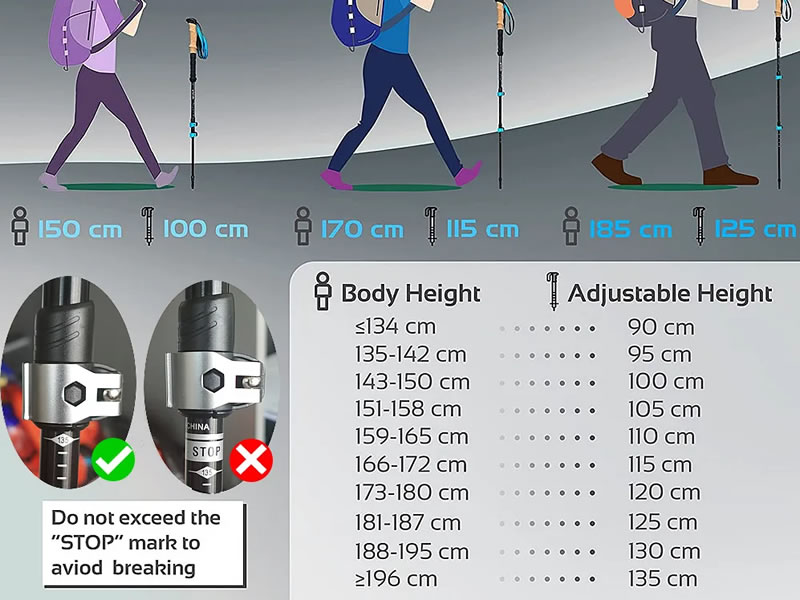
Final Sizing Tip: To set your pole length correctly on flat ground, grip the pole and ensure your elbow forms a 90-degree angle. Remember to shorten them slightly for ascents and lengthen them for descents.
By prioritizing these factors—Material, Adjustability, Grip, and Features—you can confidently select a pair of trekking poles that will become trusted companions, enhancing your stability, speed, and enjoyment on every hike. Invest in the right tool for your journey, and feel the difference with every step.




