




What Should I Look for When Buying Trekking Poles? Your Essential Pre-Purchase Checklist
Investing in a pair of trekking poles is one of the most impactful upgrades for any hiker, offering increased stability, reduced joint impact, and improved endurance. However, navigating the market's options requires a clear checklist. Knowing what to prioritize ensures you purchase poles that enhance your experience rather than complicate it. Here are the definitive features to evaluate before you buy.
Recommended trekking pole purchase link: https://s.click.aliexpress.com/e/_c4M7OWaN
1. Core Construction: Material and Mechanism
These are the non-negotiable fundamentals that determine durability and day-to-day usability.
- Shaft Material:Aluminum (6061/7075 Alloy): Your best all-around choice. It offers superior durability, excellent value, and predictable flex. It can withstand accidental impacts and side loads that might snap carbon fiber. The slight weight penalty is negligible for most.Carbon Fiber: Prioritized for ultra-lightweight performance on long-distance trails. It’s stiffer and transfers energy efficiently but is more expensive and vulnerable to catastrophic failure from sharp impacts. Best for weight-focused thru-hikers.
- Locking Mechanism: This is critical for safety and adjustment ease.Flick Lock / Lever Lock: The most reliable and user-friendly choice. It provides a secure, visible lock that’s easy to operate with cold, wet, or gloved hands. This should be your default selection.Twist Lock: Sleeker and marginally lighter but can slip when dirty or cold and is harder to achieve a consistently tight seal. Requires more diligent maintenance.
2. The Human Interface: Grip and Strap
If your hands aren’t comfortable, you won’t use the poles effectively.
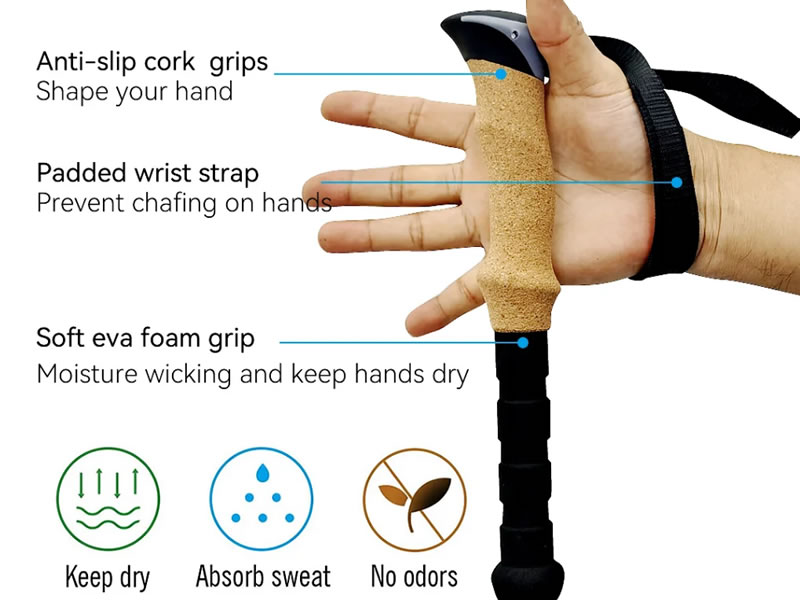
- Grip Material:Cork: Top recommendation for most. It naturally conforms to your hand, wicks moisture superbly, and remains comfortable in both heat and cold.Foam: Offers a soft, cushioning feel and is highly absorbent, ideal for minimizing blister risk.Rubber: Durable and warm in cold weather but can become slippery with sweat and is less breathable.
- Strap Design: Look for a wide, padded, adjustable strap that forms a “glove” around your hand. You should transfer weight through the strap, not by gripping tightly. A quick-release buckle is a valuable convenience.
3. Adjustability and Packability
- Adjustable Length: Essential for proper technique. You need to shorten poles for ascents and lengthen them for descents. Three-section poles offer the best balance of adjustability range and packed size.
- Packed Size: If you travel or have a small pack, consider foldable (Z-poles) or adjustable poles that collapse below 15 inches. Standard adjustable poles typically pack to around 24-28 inches.
4. Terrain-Specific Features
- Tips and Baskets: Ensure the pole includes replaceable tungsten carbide tips for durable traction. Small trekking baskets (included) are fine for most trails; larger snow baskets (often sold separately) are needed for soft terrain.
- Shock Absorption: Poles with internal springs dampen vibration on descents or pavement. This is a personal preference; some hikers love it for reduced fatigue, while others prefer the direct feedback and lighter weight of non-shocking poles.
5. Putting It All Together: The Smart Buyer's Action Plan
- Set a Budget: Excellent, durable poles start around $50-$80 (e.g., Cascade Mountain Tech). Premium models run $120-$200.
- Prioritize Your Top Three: For most, this is 1) Flick Locks, 2) Cork Grips, 3) Aluminum Shafts.
- Check the Extras: Do they include rubber trekking tips for paved surfaces? Is the strap removable and adjustable?
- Try Before You Buy (If Possible): Grip different materials in a store to feel the difference.
- Buy from a Reputable Retailer with a Good Return Policy (like REI, Backcountry, or a dedicated outdoor shop) in case the fit isn’t right.
Final Recommendation:
You cannot go wrong starting with a highly-rated, aluminum, flick-lock pole with cork grips, such as the Cascade Mountain Tech Aluminum Cork Trekking Poles. They provide professional-level performance at an entry-level price, allowing you to learn exactly what you need before potentially upgrading.
By methodically checking these features against your personal hiking style and physical needs, you will confidently select poles that provide thousands of miles of support, stability, and comfort. Remember, the best trekking poles are the ones that feel like a natural extension of your body on the trail.




