




Best Trekking Poles for Heavy Backpacking: Your Essential Pillars of Support
Carrying a heavy backpack—whether on a multi-day expedition, a hunting trip, or a wilderness traverse—fundamentally changes the demands placed on your trekking poles. They are no longer just aids for balance; they become critical load-bearing tools that share a significant portion of your pack's weight with your legs, reducing fatigue and protecting your knees and hips. Choosing the wrong poles under a heavy load can lead to equipment failure, instability, or injury. The best poles for this task are defined by uncompromising durability, absolute reliability, and features designed for sustained, weighted use.
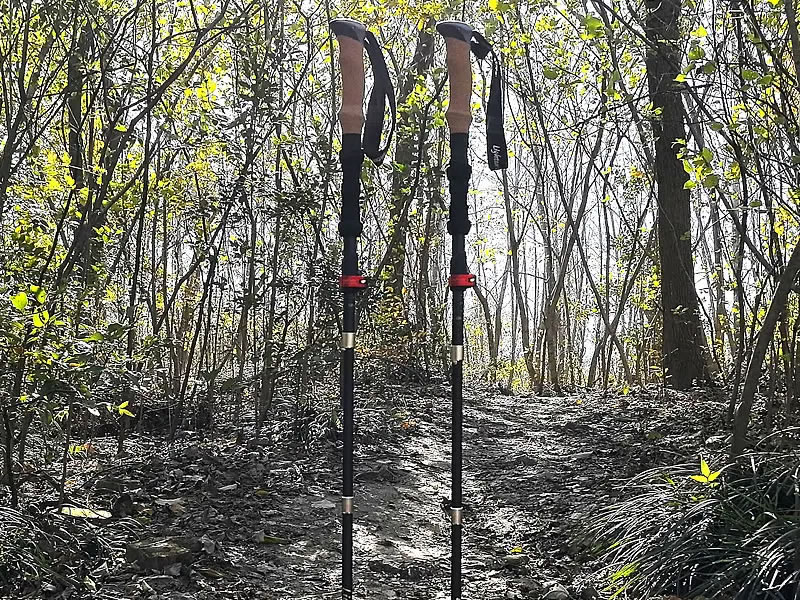
Recommended trekking pole purchase link: https://s.click.aliexpress.com/e/_c4M7OWaN
Key Features for Heavy Load Support
1. Material: Aluminum is Non-Negotiable
For heavy backpacking, high-grade aluminum alloys (7075 or 6061) are the undisputed choice. While carbon fiber is lighter, its brittleness under lateral or impact stress is a severe liability when you're miles from the trailhead with 40+ pounds on your back. Aluminum offers superior ductility—it may bend under extreme misuse, but it's far less likely to snap catastrophically. The slight weight penalty is a worthwhile trade for the assurance of unyielding strength.
2. Locking Mechanism: The Foundation of Security
A failing lock under load is dangerous. The external lever lock (flick lock) is mandatory. It provides a visible, mechanical advantage to achieve a tight, secure closure that will not slip under the constant downward and shear forces of a heavy pack. Twist locks are more prone to gradual loosening under vibration and are notoriously difficult to tighten sufficiently when cold or wet—avoid them for this use case.
3. Grip and Strap: Managing Sweat and Pressure
With increased exertion, sweat management is key.
- Grip: Cork is the top recommendation. It naturally wicks moisture, molds to your hand, and remains comfortable in varied temperatures. Dense foam is a good secondary choice for its cushioning, though it may retain more moisture over very long days.
- Strap: A wide, padded, ergonomic strap is essential. It allows you to transfer weight from your skeleton through your palm to the pole without a crushing grip, preventing hand fatigue and blisters. Look for secure, easy-adjust buckles.
4. Shock Absorption: A Worthwhile Luxury
While some purists prefer the direct feedback of non-shock poles, a high-quality shock-absorbing system (like Leki's Super Anti-Shock or Black Diamond's FlickLock Joint) is a significant advantage for heavy backpacking. It reduces the cumulative impact transmitted to your wrists, elbows, and shoulders during thousands of weighted steps, especially on descents. This can dramatically reduce joint fatigue over a long day.
Top Recommendations for Heavy-Duty Use
- Black Diamond Expedition 3: Often considered the gold standard for expedition use. Built with tough 7075 aluminum, an ultra-secure FlickLock Pro mechanism, and a durable grip, it's designed for the most demanding loads and environments.
- Leki Corklite Anti-Shock: Offers an excellent balance of Leki's reliable build quality and their effective anti-shock system. The cork grip and robust locking mechanism make it a dependable workhorse for heavy packs.
- Komperdell C3 Powerlock Aluminum: Known for exceptional durability and their patented external Powerlock system, these are a favorite among European mountaineers and serious backpackers.
Critical Considerations Beyond the Pole
- Proper Sizing and Technique: Under load, a slightly longer pole may provide better support on flat terrain. Maintain a relaxed arm with a ~90-degree elbow angle. Practice a rhythm where the pole plants firmly with the opposite foot.
- Baskets: Use the appropriate-sized baskets. Small trekking baskets are fine for trails, but if you're traversing soft snow, mud, or talus, larger expedition baskets prevent the pole from plunging excessively.
- Pole Tips: Start with sharp, replacement carbide tips for maximum bite. Carry an extra set of tip protectors and a basic repair kit for multi-week trips.
The Verdict
For heavy backpacking, do not compromise for the sake of saving a few ounces. Invest in over-built, aluminum poles from a reputable mountaineering brand with proven lever locks. The added confidence, durability, and joint protection they provide will pay dividends in stability and reduced fatigue when every step counts. Your poles become foundational to your stability system—choose pillars, not twigs.




