




Adjustable vs Fixed-Length Trekking Poles: Pros, Cons, and Your Perfect Fit
Choosing between adjustable and fixed-length trekking poles is a fundamental decision that dictates your experience on the trail. This choice isn't about one being universally "better," but about which design aligns with your hiking style, terrain, and physical needs. Understanding the inherent trade-offs of each system is key to selecting the tool that will become a true asset rather than a compromise.
Recommended trekking pole purchase link: https://s.click.aliexpress.com/e/_c4M7OWaN
Adjustable (Telescoping) Trekking Poles: The Versatile Workhorse
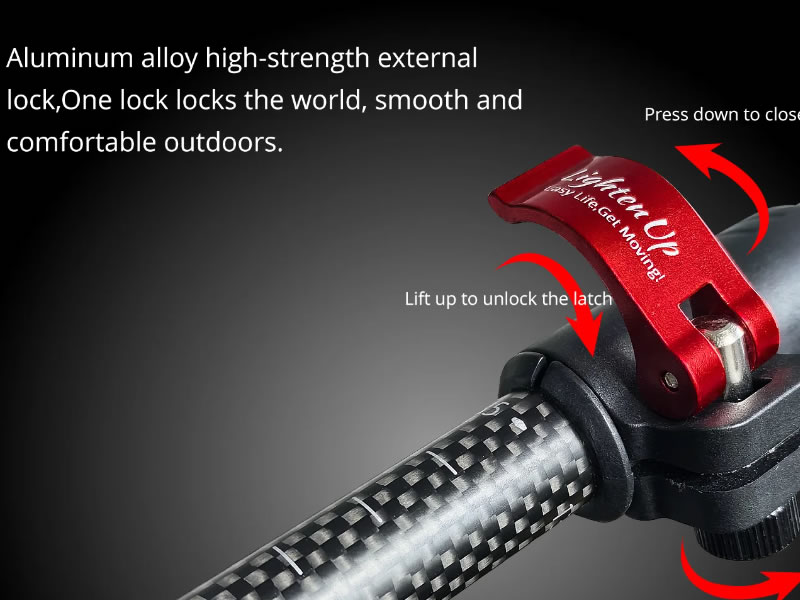
How They Work: These poles feature two or three overlapping sections secured by a locking mechanism (lever/flick lock or twist lock).
Pros:
- Versatility on Variable Terrain: This is the primary advantage. You can shorten poles for steep ascents and lengthen them for descents, optimizing power transfer and reducing strain on your knees, hips, and back. This adaptability is crucial for joint health and efficiency on mountainous trails.
- Perfect Fit for Your Stride: You can fine-tune the length to achieve the optimal 90-degree elbow angle on any terrain, and adjust for different footwear (e.g., trail runners vs. heavy boots).
- Adjustable Pack Height: They can be lengthened to create a taller support for an ultralight tarp or trekking pole tent.
- Shareability: One pair can be easily adjusted to fit hiking partners of different heights.
- Travel & Storage: When collapsed, they are relatively compact, though not as small as foldable fixed-length poles.
Cons:
- Weight and Complexity: The locking mechanisms and overlapping sections add weight and introduce potential points of failure. Locks can slip, freeze, or clog with mud if not properly maintained.
- Less Rigidity: The joints can create minor flex or a slight wobble, which some hikers notice, especially under heavy loads.
- Vibration: The junctions can sometimes transmit more trail vibration to your hands compared to a seamless, one-piece shaft.
Fixed-Length (Including Foldable/Z-Poles) Trekking Poles: The Simple, Efficient Performer
How They Work: These are a single, non-adjustable length. "Foldable" or "Z-poles" are a popular subtype, using internal cords to collapse into a very compact size.
Pros:
- Lightweight & Simple: By eliminating locks and overlapping sections, they are lighter and have fewer parts to fail. There is no risk of a lock slipping mid-hike.
- Superior Rigidity and Feel: The continuous or elegantly hinged shaft provides a direct, solid, and responsive feel with minimal energy loss or flex. Many users prefer this more connected feedback from the ground.
- Ultimate Packability (Foldable Models): Z-poles collapse to an incredibly compact size (often 14-16 inches), easily fitting inside a backpack or suitcase—a major advantage for travel and airline carry-on (when checked).
- Speed and Convenience: They deploy and collapse in seconds with a simple pull or fold, with no locks to fiddle with.
Cons:
- No On-Trail Adjustability: This is the critical limitation. You cannot adapt to changing incline/decline, which may lead to less-than-optimal biomechanics and increased joint strain on long, steep sections.
- Less Forgiving of User Error: Choosing the correct fixed length is crucial. If your size is between standard lengths, you must compromise.
- Not Shareable: They are essentially custom-fit to one user's height and preferred length.
- Potential Durability Concern (Foldables): The internal tension cords, while reliable, represent a single point of failure that is field-repairable but requires a specific repair kit.
Side-by-Side Comparison
| Feature | Adjustable Poles | Fixed-Length (Foldable) Poles |
|---|---|---|
| Primary Strength | Versatility & Joint Protection | Weight, Simplicity & Packability |
| Terrain Adaptation | Excellent (Ascents/Descents/Flats) | Poor (One length for all terrain) |
| Weight | Higher | Lower |
| Rigidity/Feel | Good (Some flex at joints) | Excellent (Solid, direct feel) |
| Pack Size | Moderate (~24-28in collapsed) | Excellent (~14-16in folded) |
| Durability Concern | Locking Mechanisms | Internal Tension Cord (foldables) |
| Best For | Mountainous trails, beginners, heavy backpacking, those with joint concerns. | Fastpacking, established trails, alpine travel, ultralight purists, travelers. |
The Verdict: Which Should You Choose?
Your decision should be guided by your most common hiking profile:
- Choose ADJUSTABLE Poles If: You hike in mountainous or highly variable terrain, are new to trekking poles and want to dial in your fit, have knee or joint sensitivities, carry a heavy backpack, or plan to use them for trekking pole tent support.
- Choose FIXED-LENGTH (Foldable) Poles If: You prioritize minimal weight and pack size, hike mostly on established trails without extreme elevation change, are a fastpacker or ultralight hiker, need poles specifically for easy travel, or value absolute simplicity and a rigid feel.
For most general hikers exploring diverse trails, adjustable poles offer the safest and most versatile introduction, providing crucial adaptability that protects the body. For the specialized long-distance or speed-focused hiker on predictable terrain, fixed-length poles deliver peak efficiency and convenience. By matching the tool's inherent strengths to your personal trail map, you ensure your poles become an extension of your intent, not a limitation.




