




How to Walk Naturally with Trekking Poles: Finding Your Rhythm on the Trail
For many new hikers, trekking poles can feel awkward—an unnatural addition that disrupts their gait. The goal, however, is the opposite: to integrate them so seamlessly that they become an extension of your body, enhancing your natural movement rather than hindering it. Walking naturally with poles is about rhythm, not force; finesse, not effort. Mastering this transforms your hike from a strenuous walk into an efficient, full-body exercise.
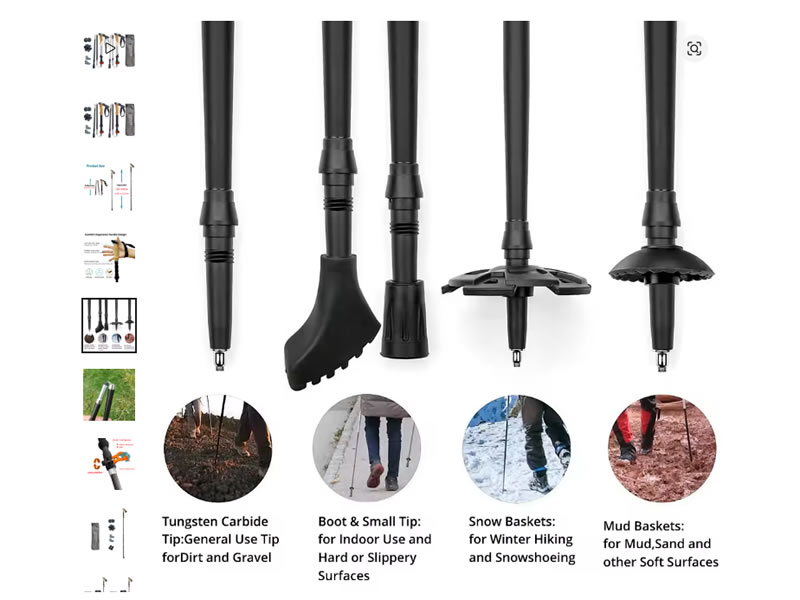
Recommended trekking pole purchase link: https://s.click.aliexpress.com/e/_c4M7OWaN
1. Replicate Your Natural Arm Swing
The fundamental principle is simple: opposite arm, opposite leg. This is your body's innate walking pattern. When your right foot steps forward, your left arm naturally swings forward. With poles, this left arm now plants the left pole.
- The Motion: As you step forward with your right foot, your left pole should touch the ground nearly simultaneously, beside or slightly behind your right foot. This mirrors your natural arm swing, maintaining your biomechanical balance and momentum.
2. Master the Grip: It's All in the Strap
A white-knuckle grip is the enemy of natural movement. Your hand should be relaxed.
- Correct Strap Use: Slide your hand up through the bottom of the wrist strap. Now let the strap cradle the base of your thumb as you rest your palm on the grip. This allows you to transfer weight through your palm via the strap without constantly gripping. On the forward swing, you can even open your fingers slightly.
3. Establish a Light, Rhythmic Planting
Think "touch, tap, brush," not "stab, pound, drag."
- The pole tip should engage the ground with a light but secure contact. You are not planting a flag; you are providing a brief, rhythmic point of support. The pole should leave the ground smoothly as your arm swings back, ready for the next plant.
4. Maintain an Upright, Relaxed Posture
Poles are not crutches to lean heavily upon during normal walking. Stand tall, shoulders relaxed and back, looking ahead—not at your feet.
- Arm Angle: On level ground, when the pole is planted beside you, your elbow should be at a comfortable, slightly bent angle (roughly 90 degrees is a good starting point). Avoid reaching too far forward or planting the pole too close.
5. Let the Poles Propel You (The "Push-Off")
The power phase happens after the plant. As your body moves forward over the planted pole, apply gentle pressure through the strap to push the ground behind you. This subtle push propels you forward, engaging your back, shoulder, and arm muscles to share the workload with your legs. This is the secret to efficiency.
Common Pitfalls That Disrupt Natural Movement:
- The "Double Plant": Planting both poles at once, then taking several steps. This creates a choppy, unnatural rhythm.
- Hunching Over: Leaning on the poles as if they are walkers. This closes off your airways and strains your back.
- Swinging Arms in Sync: Moving the arm and leg on the same side together feels and looks awkward and reduces stability.
- Dragging the Poles: Letting the tips scrape along the ground behind you provides no benefit and is simply extra weight.
Practice Makes Natural
Start on a flat, easy trail. Focus first on the opposite arm/leg timing without worrying about power. Once the rhythm feels ingrained, begin to incorporate the gentle push-off. It may feel conscious at first, but soon, like pedaling a bicycle, it will become unconscious and fluid.
Walking naturally with trekking poles is about syncing a tool with your body's innate mechanics. When done correctly, you'll notice a faster, more sustainable pace, less fatigue in your legs, and a wonderfully rhythmic connection to the trail. The poles won't feel like separate equipment; they'll feel like a part of you, working in harmony with every step.




