




Trekking Poles with Built-in Shock Absorption: Do They Work? A Detailed Analysis
The concept is undeniably appealing: trekking poles that actively soften each impact, sparing your joints from the cumulative shock of miles on the trail. Poles with built-in shock absorption, featuring internal springs, elastomers, or hydraulic-style dampeners, are a significant point of innovation from brands like Leki (with their Anti-Shock systems) and Black Diamond. The straightforward answer is yes, they absolutely work from an engineering and physiological perspective. However, whether they are the right choice for you depends on your hiking style, physical needs, and personal preference.
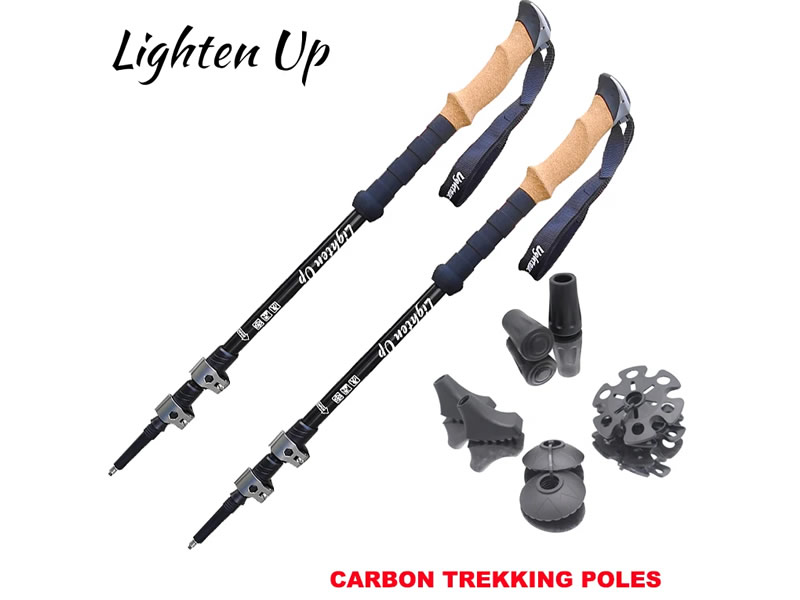
Recommended trekking pole purchase link: https://s.click.aliexpress.com/e/_c4M7OWaN
How They Work: The Mechanics of Dampening
These systems are typically integrated into the upper section of the pole. When you plant the pole and transfer weight onto it, the mechanism compresses slightly (often by 10-20mm), absorbing the high-frequency vibrations and initial impact peak before the shaft itself loads. This is different from the natural flex of an aluminum shaft; it's an active, engineered response. The goal is to reduce the transmission of jarring forces through the bones and connective tissues of your wrists, elbows, and shoulders.
Proven Benefits: Where They Excel
- Reduction of Joint and Muscle Fatigue: On long, sustained descents—where forces on the body are highest—shock absorption can make a noticeable difference. By dampening the "braking" impact, they can delay the onset of muscle fatigue in the forearms and reduce the ache in elbow and shoulder joints over many miles.
- Comfort on Hard, Unyielding Surfaces: They are particularly effective on paved trails, rocky plateaus, frozen ground, and other surfaces where vibrations are most pronounced. The "trail buzz" that can leave hands tingling is significantly muted.
- Beneficial for Hikers with Pre-existing Conditions: For individuals with arthritis, tendonitis, carpal tunnel syndrome, or previous injuries in the upper body, shock-absorbing poles can be a game-changer, allowing them to hike longer and more comfortably by mitigating aggravating vibrations.
The Trade-offs and Criticisms: Why Some Hikers Avoid Them
- Loss of "Trail Feel" and Precision: This is the most common complaint from experienced hikers, especially in technical terrain. The slight compression can create a perception of mushiness or lag, making the pole feel less immediate and precise when planting on a rocky step or during a quick maneuver. For those who rely on poles for delicate balance, this feedback is crucial.
- Added Weight and Complexity: The internal mechanism adds ounces (typically 1-2 oz per pole) and introduces another potential point of mechanical failure. While modern systems from reputable brands are very reliable, a simple non-shock pole has fewer parts to break.
- Potential "Pogo" Effect on Ascents: If the shock system is not designed to deactivate or is too soft, it can compress slightly during the push-off phase of an uphill step, wasting a small amount of energy—like a soft spring. Better systems, like Leki's, often feature a manual lock-out switch for ascents.
- Cost: Shock absorption is a premium feature that increases the price.
The Verdict: A Targeted Tool, Not a Universal Upgrade
Choose trekking poles with shock absorption if:
- You primarily hike on trails with long, punishing descents.
- You hike frequently on hard surfaces like pavement, rock slabs, or packed earth.
- You have sensitive wrists, elbows, or shoulders, or are managing an upper-body joint condition.
- Your primary goal is long-distance comfort over technical performance.
Stick with standard, non-shock poles if:
- You prioritize lightest weight and maximum simplicity.
- You hike in highly technical, off-trail, or scrambling terrain where instantaneous pole placement and rigid feedback are essential.
- You are a strong, experienced hiker who doesn't perceive joint discomfort as a primary issue.
- You prefer a more direct, connected feel to the ground.
Conclusion: Effective Engineering for a Specific Need
Shock-absorbing trekking poles are not a gimmick; they are a legitimate and effective technology that solves a specific problem: reducing repetitive impact stress. For the right user, they can significantly enhance comfort and endurance. However, they are a specialized feature that comes with compromises prized by other hikers.
The best way to decide is to try both. Borrow or rent a pair with and without shock absorption on a familiar, challenging descent. Your body will tell you if the dampened feel provides a tangible comfort benefit or if you miss the direct, unmediated connection of a traditional pole. In the world of gear, "better" is always personal, and shock absorption is a perfect example of a feature whose value is measured in the condition of your joints at the end of a long, hard day.




