




Trekking Poles for Knee Pain: Do They Help? A Biomechanical and Practical Guide
The short answer is an emphatic yes, when used correctly, trekking poles are one of the most effective, non-invasive tools a hiker can employ to manage and prevent knee pain. They are not a cure for underlying conditions like arthritis, but they function as a powerful biomechanical intervention that directly addresses the primary causes of hiking-related knee discomfort: excessive load and destabilizing impact.
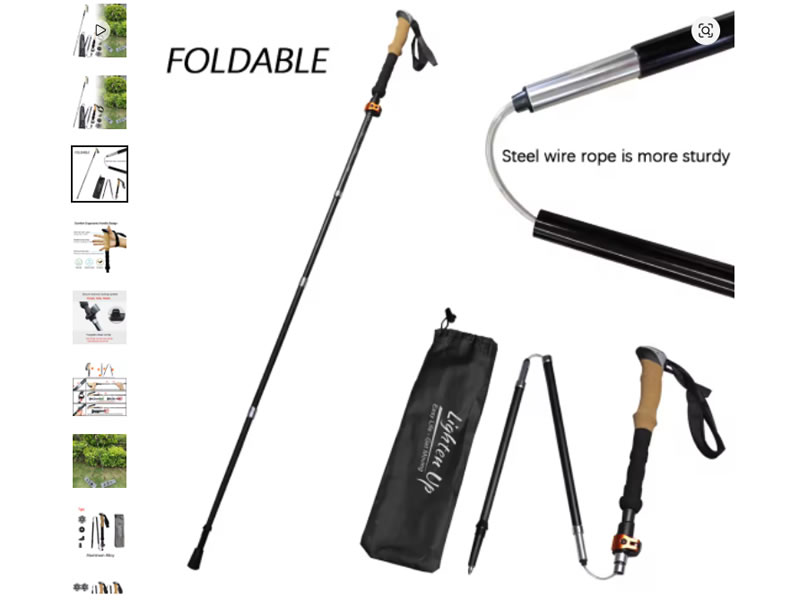
Recommended trekking pole purchase link: https://s.click.aliexpress.com/e/_c4M7OWaN
The Science of Load Transfer: Taking Weight Off the Joints
The human knee is a remarkable but vulnerable hinge joint. During downhill hiking, it can bear compressive forces of 3 to 5 times your body weight with each step. This "eccentric loading" is the primary culprit behind post-hike soreness and long-term wear.
Trekking poles intervene through a process called load redistribution.
- Quantifiable Reduction: Studies, including research published in the Journal of Sports Sciences, have shown that using poles can reduce the total force on the knees by up to 25-30% during descent.
- How It Works: By planting a pole ahead of you on a downhill, you actively use your arms, shoulders, and back muscles to lower your body weight with control. This turns a jarring, weight-bearing step into a more controlled, three-point movement. The poles essentially allow your upper body to act as a secondary suspension system, sparing the quadriceps and knees from the brunt of the deceleration.
Beyond Descents: Stability and Proprioception
Knee pain isn't only about sheer load; it's also about sudden, destabilizing movements. A slip on a loose rock or an awkward step can cause a painful twist or hyperextension.
- Enhanced Stability: Poles provide two additional points of contact with the ground, dramatically widening your base of support. This prevents the minor slips and slides that lead to those harmful, jerky motions in the knee joint.
- Proactive Testing: You can use a pole to test the stability of a footing or stream crossing before committing your full weight, preventing traumatic missteps.
The Critical Importance of Correct Technique
Poles only help if used properly. Incorrect technique can nullify benefits or even strain other joints.
- Proper Length Adjustment: This is foundational. On downhills, lengthen poles by 5-10 cm so you can plant them in front without hunching. On uphills, shorten them for an efficient push-off.
- The Downhill Rhythm: Plant the pole opposite your forward foot, slightly ahead and to the side. As your body moves forward, apply firm pressure down and back through the strap (not by gripping tightly) to actively control your descent.
- Use the Straps: Slide your hand up through the strap to form a cradle. This allows you to transfer weight through your palm without a death grip, engaging larger muscle groups.
Choosing the Right Poles for Knee Pain
Not all poles are equal for this specific therapeutic purpose. Key features to prioritize:
- Adjustability: Non-negotiable. You must be able to fine-tune length for different slopes.
- Locking Mechanism: External flick/lever locks are mandatory. They are secure, easy to adjust on the go, and won’t slip under load like twist locks can.
- Shock Absorption: While not essential, poles with built-in shock-absorbing systems (e.g., from Leki) can further dampen vibration, providing extra comfort for arthritic joints.
- Material: Aluminum (7075 or 6061 alloy) offers a great blend of durability, slight natural dampening, and value. Carbon fiber is lighter but less impact-resistant.
A Word of Caution and Consultation
While poles are immensely helpful, they are an aid, not a cure. If you have chronic, severe, or unexplained knee pain, consult a physician or physical therapist first. They can diagnose the root cause (e.g., IT band syndrome, meniscus tear, arthritis) and recommend a holistic plan that may include poles, specific exercises, and other interventions.
Conclusion: A Simple Tool with Profound Impact
For hikers with knee pain, trekking poles are more than gear—they are a portable joint-preservation system. By scientifically reducing load, enhancing stability, and promoting better biomechanics, they directly tackle the mechanical stressors that cause pain. The investment in a good pair of adjustable poles and the time to learn proper technique is one of the smartest decisions you can make for your long-term trail longevity. They empower you to hike farther, more comfortably, and with greater confidence, turning daunting descents into manageable, even enjoyable, parts of the journey.




