




Cork Grip vs Rubber Grip Hiking Poles: Which is Better for Sweaty Hands?
For avid hikers and backpackers, few things are as critical—and as personal—as the feel of your trekking pole grips. Your hands are the primary point of contact, and their comfort directly impacts your endurance and enjoyment. If you have sweaty hands, choosing the right grip material isn't just a matter of comfort; it's a question of safety and control. The debate often centers on two popular materials: natural cork and synthetic rubber. This guide will dissect the performance of each in humid, high-exertion conditions to help you make the best investment for your adventures.
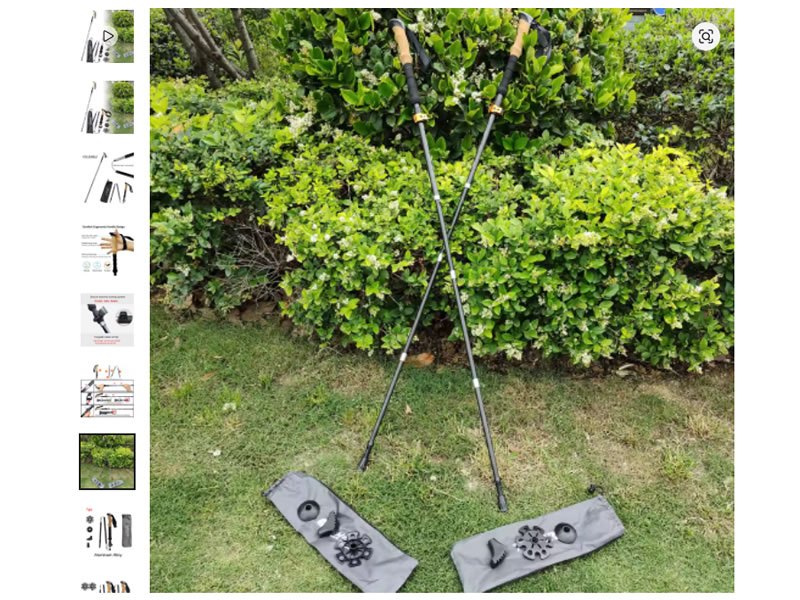
Recommended trekking pole purchase link: https://s.click.aliexpress.com/e/_c4M7OWaN
The Core Challenge: Moisture Management
When your hands sweat, two main problems arise: friction blisters from chafing on a slippery surface, and reduced grip security, which compromises pole placement and upper-body efficiency. The ideal grip must effectively manage moisture, either by wicking it away or providing a secure hold despite it.
Deep Dive: Cork Grips
How They Work:
Cork is a natural, porous material harvested from the bark of cork oak trees. Its structure is inherently breathable and hydrophobic to a degree.
Pros for Sweaty Hands:
- Superior Moisture-Wicking: Cork absorbs perspiration without feeling soaked. It draws moisture away from your skin, maintaining a consistently "tacky" or dry-feeling grip even during prolonged use.
- Moldable Comfort: Over time, body heat softens the cork, allowing it to conform to the unique shape of your hand. This custom fit reduces hot spots and pressure points.
- Temperature Neutral: Cork feels naturally warm in cool weather and doesn't become excessively hot in the sun, providing a comfortable feel year-round.
Cons to Consider:
- Durability: While generally robust, cork can degrade over many years if frequently exposed to extreme UV light or abrasion. It may show wear patterns faster than rubber.
- Initial Feel: Some users find new cork grips slightly rougher than cushioned rubber, though they quickly smooth out with use.
- Cost: Poles with high-quality cork grips often command a slight price premium.
Deep Dive: Rubber (or EVA Foam) Grips
How They Work:
Rubber and the softer EVA foam are synthetic, non-porous materials. They provide grip through their textured surface and cushioning.
Pros for Sweaty Hands:
- Excellent Cushioning: Rubber and EVA excel at shock absorption, dampening trail vibration. This can reduce hand fatigue on long, rocky descents.
- High-Durability: Synthetic grips are extremely tough, resistant to abrasion, oils, and UV damage, often outlasting the pole itself.
- Consistent Performance in Cold/Dry Conditions: In cold, dry weather, rubber provides great insulation and a reliably secure feel.
Cons for Sweaty Hands:
- The Slippery When Wet Problem: This is the critical flaw for sweaty palms. As a non-porous material, rubber traps a thin layer of moisture between your skin and the grip, creating a slippery, clammy sensation that can necessitate constant re-gripping.
- Heat Retention: Dark rubber grips can become uncomfortably hot when left in direct sunlight.
- Less Conformity: They retain their factory shape and do not mold to your hand over time.
Head-to-Head Comparison Table
| Feature | Cork Grips | Rubber/EVA Grips |
|---|---|---|
| Moisture Management | Excellent. Wicks sweat, stays tacky. | Poor. Can become slippery with sweat. |
| Cushioning & Shock Absorption | Good, but firmer. | Excellent. Softer, more vibration dampening. |
| Durability | Good, but can degrade with extreme exposure. | Excellent. Highly abrasion and UV resistant. |
| Comfort & Feel | Molds to hand, temperature neutral. | Soft initially, can get hot/cold, retains shape. |
| Best Use Case | Long-distance hiking, warm climates, sweaty hands. | Cold-weather hiking, short bursts, users who prefer maximum cushioning. |
Practical Advice and Final Verdict
For Hikers with Consistently Sweaty Hands: The winner is clearly Cork. Its ability to manage moisture passively, improve grip security when damp, and mold to your hand provides a long-term solution that enhances control and reduces blister risk. Look for poles with high cork content (like those from Cascade Mountain Tech or Black Diamond) for the best performance.
When Rubber Might Still Be a Viable Choice: If your sweat is minimal and you prioritize plush cushioning above all, or if you primarily hike in cold, dry climates where insulation is key, a quality rubber grip may still work. Some hybrid designs feature a cork upper grip with a rubber lower extension for varied hand positions, offering a versatile compromise.
Pro-Tip for Any Grip: Always use the wrist strap correctly (threading your hand up from the bottom). This proper technique transfers power through your arm and allows you to relax your grip, significantly reducing sweat and fatigue regardless of material.
The Bottom Line:
Your grip is your connection to the trail. For sweaty hands, cork grips provide a safer, more controlled, and ultimately more comfortable experience by actively managing the moisture that rubber simply cannot handle. While personal preference always plays a role, the physiological advantages of cork make it the objectively better choice for most hikers dealing with perspiration on the trail.




