




How to Properly Use Hiking Poles for Uphill Climbs?
Conquering a steep trail can be a rewarding challenge, but it often demands significant energy and places considerable strain on your legs and joints. Using hiking poles correctly during uphill sections is not just an added benefit; it's a game-changing technique that can transform your climb from a grueling slog into an efficient, powerful, and more enjoyable ascent. This guide will walk you through the essential steps to master your poles for the uphill.
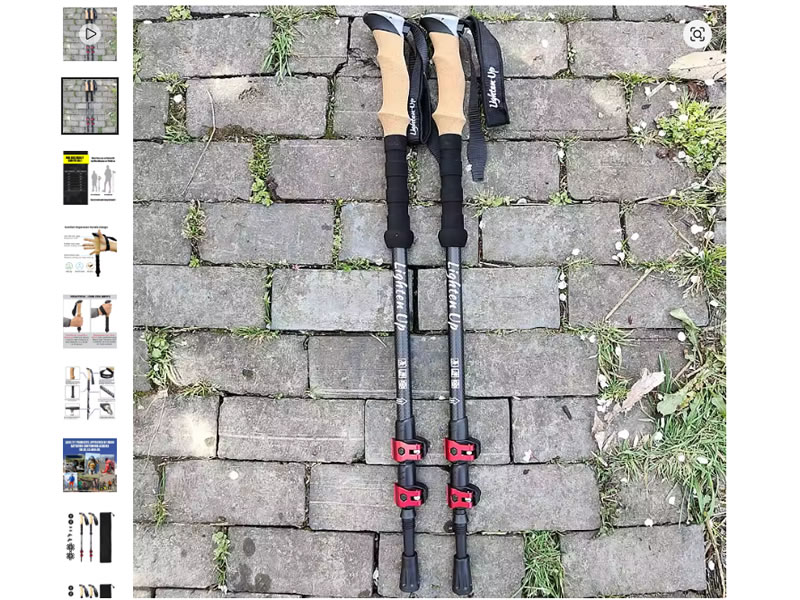
Recommended trekking pole purchase link: https://s.click.aliexpress.com/e/_c4M7OWaN
1. Adjust for the Ascent: Shorten Your Poles
Before you begin climbing, this is your most critical adjustment. On flat ground, your forearm should be parallel to the floor when holding the pole with the tip on the ground. For uphill travel, shorten each pole by 5-10 cm (2-4 inches). A shorter pole prevents you from overreaching and straining your shoulders, allowing for a more vertical, powerful planting motion. Many poles feature adjustable lengths for this exact purpose—use them.
2. The Proper Planting Technique: Plant, Push, Propel
The magic of poles lies in the technique. Do not simply drag them beside you.
- Plant Ahead: As you step forward with your right foot, simultaneously plant the tip of your left pole slightly ahead and to the side of your forward foot. This creates a stable, triangular base.
- Push Down: Engage your core and upper body. As you drive your right leg to push your body upward, apply firm, downward pressure on the left pole. This actively engages your arms, chest, and back muscles to pull yourself up the hill.
- Alternate Rhythm: Maintain a natural, opposite arm/leg rhythm (right foot, left pole, and vice versa). This coordinated movement provides continuous propulsion and optimal balance.
3. Focus on Power and Posture
Think of your poles as extensions of your arms. The power should come from a solid push through your palm via the strap. Use the straps correctly: put your hand up through the bottom of the strap and then grip the handle, allowing you to transfer force through your wrist without a death-grip on the handle. This technique conserves hand and forearm energy.
Maintain an upright posture. It's tempting to hunch over on steep sections, but leaning too far forward reduces lung capacity and strains your back. Let the poles help you stay tall, opening your chest for better breathing.
4. Adapt to Steeper Terrain
On very steep or technical climbs, you can use a "double plant" technique. Plant both poles together high above you, then step up one or two steps toward them. This provides maximum stability for short, powerful bursts. For switchbacks, shorten the pole on the inside of the turn and slightly lengthen the outside pole for better support on the cross-slope.
Benefits of Proper Uphill Pole Use:
- Distributes Effort: Engages your upper body, saving your legs by up to 25% of the energy cost.
- Reduces Joint Impact: Decreases the load and impact on your knees, hips, and ankles with every upward step.
- Improves Stability & Traction: Provides two additional points of contact, preventing slips and helping you power through loose terrain.
- Enhances Pace & Endurance: By spreading the workload, you maintain a steady pace and reduce overall fatigue.
Common Mistakes to Avoid:
- Poles Too Long: Causes awkward, inefficient movement and shoulder strain.
- Dragging or Tapping Poles: This provides no propulsive benefit. Commit to a firm plant and push.
- Poor Strap Use: Not using the straps negates the major mechanical advantage they provide.
- Death Grip: Clenching the handle tightly wastes energy. Push through your palm.
Mastering your hiking poles for uphill climbs turns them from simple sticks into powerful tools for efficiency and preservation. By adjusting the length, perfecting the planting rhythm, and using your body's full kinetic chain, you'll climb stronger, feel fresher at the summit, and protect your body for the miles—and the downhill—ahead.




