




How to Store Hiking Poles Long-Term?
Proper long-term storage is the final, critical phase of hiking pole maintenance. Whether you're storing them for an off-season or several years, how you prepare and place your poles can mean the difference between a set that’s ready for adventure and one that’s seized, corroded, or degraded. This guide outlines a systematic approach to ensure your poles emerge from storage in optimal condition.
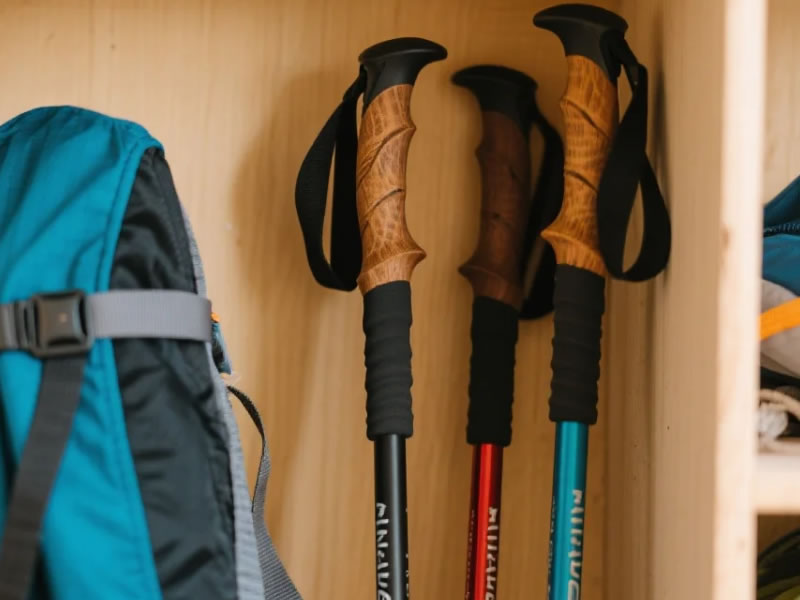
Recommended trekking pole purchase link: https://s.click.aliexpress.com/e/_c4M7OWaN
The Four Pillars of Long-Term Storage
Successful preservation hinges on four principles: Cleanliness, Dryness, Pressure Relief, and Environmental Control.
1. The Pre-Storage Deep Clean & Inspection
Never store dirty gear.
- Disassemble Completely: Collapse all sections to their shortest length. If your poles have multiple sections, separate them if the design allows.
- Thorough Cleaning: Wash with mild soap and warm water, using a soft brush to remove all dirt, mud, salt, and organic matter. Pay special attention to threading, locking mechanisms, and the undersides of baskets.
- Detailed Inspection: Check for wear: measure tip erosion, inspect baskets for cracks, test strap integrity, and feel for any grit in the locks. Address any repairs now.
- Dry Absolutely: This cannot be overstated. Dry every component with a towel, then allow all sections to air-dry fully extended in a warm, dry room for at least 48 hours. Ensure no moisture remains inside the shafts or locks.
2. The Protective Preparation
Once clean and dry, take these protective steps:
- Lubricate (Condition): Apply a light coat of a dry silicone lubricant to the male shaft sections. This creates a protective barrier against oxidation and prevents the locking mechanisms from bonding during storage.
- Loosen All Locks: For twist locks, leave them in the fully unlocked (open) position. For lever locks, ensure they are unfastened. This relieves constant pressure on the internal components (springs, bushings, and cams), preventing them from taking a permanent set or losing tension.
- Protect Tips and Tips: Cover sharp carbide tips with their rubber protectors or a small piece of cork/foam to prevent accidental damage to other gear and to protect the points from chipping.
- Relieve Strap Elasticity: If possible, unhook the straps from the poles or store them without tension to preserve the elastic’s lifespan.
3. Choosing the Storage Environment
The location is as important as the preparation.
- Cool, Dry, and Stable: Store poles in a climate-controlled environment like a closet or gear room. Avoid attics (extreme heat) and basements (dampness), which accelerate material degradation.
- Avoid UV Exposure: Prolonged direct sunlight can weaken nylon straps, fade colors, and degrade plastic components and grips.
- Keep Away from Chemicals: Do not store near solvents, fertilizers, or pool chemicals, as fumes can corrode metals and damage composites.
4. Optimal Positioning and Method
- Vertical Hanging (Ideal): Hanging poles vertically by their straps or handles on a dedicated gear rack is best. It eliminates pressure points, allows air circulation, and prevents bending.
- Horizontal Laying (Acceptable): If hanging isn’t possible, lay them flat on a high shelf. Use a supportive surface along their entire length to prevent sagging or warping over many months. Do not stack heavy objects on top of them.
- In a Protective Bag: Placing them in a breathable fabric bag (like the one they came in) shields them from dust and scratches. Avoid airtight plastic containers or bags, as these can trap residual moisture and promote mildew or condensation.
Material-Specific Considerations
- Aluminum Poles: Primarily guard against galvanic corrosion where dissimilar metals (steel locks, aluminum shafts) meet. A clean, dry, lubricated interface is your best defense.
- Carbon Fiber Poles: The resin matrix can be sensitive to extreme temperatures. A stable, moderate-temperature environment is key. Avoid any storage method that creates a persistent bend or twist in the shaft.
- Cork Grips: Allow them to breathe; avoid plastic wrapping which can trap moisture and lead to mold.
Common Long-Term Storage Mistakes to Avoid
- Leaving Them Tightened on a Backpack: This keeps locks under constant stress and exposes poles to garage or car-trunk temperature swings.
- Storing Them Dirty or Damp: This is the single greatest cause of irreversible corrosion and seized locks.
- Compressing Them in a Tight Space: Storing them fully collapsed in a small bag for years can cause internal components to stick and shafts to develop a memory bend.
- Neglecting to Check Annually: Even in storage, a quick annual check for dust, moisture, or pest activity (like mice chewing straps) is wise.
Conclusion: Preservation for Performance
Long-term storage is not merely about putting gear away; it is an active process of preservation. By investing 30 minutes in a meticulous cleaning, lubrication, and strategic placement routine, you safeguard your investment. Properly stored poles will not only retain their resale value but, more importantly, will deliver immediate, reliable performance when you next reach for them. They will extend and lock with familiar smoothness, their grips will be intact, and you can hit the trail with confidence, knowing your equipment has been cared for with the same respect you have for the journey itself.




