




Hiking Pole Accessories: What's Useful vs Gimmicky?
The market for hiking pole accessories can be overwhelming, filled with gadgets that promise to transform your experience. While some are genuine game-changers that enhance safety, performance, and gear longevity, others add little more than weight, cost, and complexity. Distinguishing between the two is key to building a functional, efficient kit.
Recommended trekking pole purchase link: https://s.click.aliexpress.com/e/_c4M7OWaN
Essential & Highly Useful: The Performance Enhancers
These accessories solve real problems and are worth their weight in your pack.
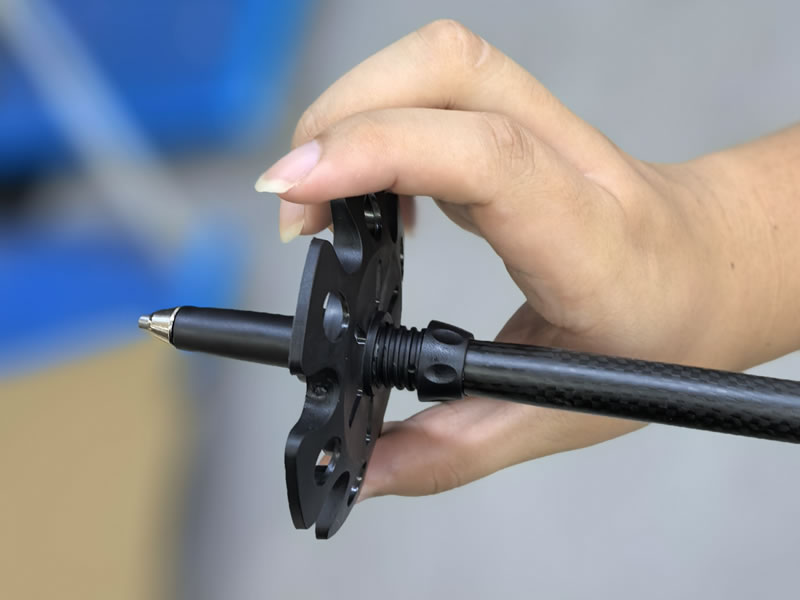
- Replacement Tips & Terrain-Specific Baskets: This is the most critical category. Tungsten carbide tips are consumable parts; carrying a spare set is prudent. Rubber trekking tip covers (ascenders) are invaluable for hiking on pavement, slick rock, or indoors. Swapping small solid baskets for mud and large snow baskets for winter is not a gimmick—it’s fundamental to adapting your tool to the environment. Verdict: Essential.
- Spare Parts Kit: For long-distance thru-hikes or remote expeditions, a mini-kit with a spare locking mechanism nut, an expansion bushing for twist locks, and a segment of duct tape can save your trip. It’s lightweight insurance. Verdict: Highly Useful for serious trips.
- Rubber Cap or "Paw" Sets: Beyond protecting floors, a good rubber cap provides superior grip on smooth granite slabs or concrete, where carbide tips slip and screech. They are a specific tool for a specific condition. Verdict: Very Useful.
- Pole Storage/Transport Bag: A simple, lightweight nylon bag that holds a collapsed pair protects your other gear from sharp tips and straps during travel in cars, planes, or backpacks. Verdict: Practical & Useful.
- Customizable Grip Tape: For hickers who find stock grips slippery or who have specific hand issues, a wrap of sports tape or specialized grip tape can improve comfort and control without permanently modifying the pole. Verdict: A Niche but Useful Solution.
Gimmicky & Unnecessary: The Solutions in Search of a Problem
These items often overcomplicate a simple tool.
- Integrated Gadgets (Compasses, Thermometers, Whistles): These are typically low-quality, hard-to-read, and add failure points. A dedicated compass on your trekking pole grip is useless for navigation. Your phone, watch, or a standalone whistle/thermometer is far better. Verdict: Pure Gimmick.
- Excessive Cushioning or Aftermarket Foam Grips: While ergonomic grips are great from the factory, adding bulky secondary foam often interferes with the pole's balance and the all-important wrist strap function. It can trap sweat and moisture. Verdict: Generally Unnecessary.
- Camera or Smartphone Mounts that Attach to the Pole: Turning your pole into a monopod sounds clever, but it often creates a wobbly, insecure platform. It also encourages you to take your pole off its primary duty—stability—while you’re shooting, which can be unsafe on uneven ground. A dedicated mini-tripod is a better choice. Verdict: Gimmicky and Potentially Unsafe.
- Decorative or "Fashion" Baskets/Wraps: Any accessory that prioritizes aesthetics over function on the trail is suspect. Baskets with excessive branding, flags, or flimsy decorative elements serve no performance purpose and can snag. Verdict: Unnecessary.
- Complex Multi-Tool Attachments: Attaching a heavy multi-tool or knife to your pole disrupts its swing weight and balance. These tools belong on your belt or in your pack. Verdict: Gimmick.
The Gray Area: Context-Dependent Accessories
Some items fall in the middle, depending on your specific activity.
- Powder Baskets (XL Snow Baskets): For ski touring or deep snowshoeing, they are essential. For a summer hiker, they are useless.
- Shock Absorbers: Built-in suspension systems (like LEKI's Super FX) are a core design choice. Adding external aftermarket "shock absorbers" is usually ineffective and problematic.
- Quick-Convert Trekking Pole Tent Poles: This is a brilliant system for ultra-light backpackers using specific tents (like those from Durston Gear or Six Moon Designs). For others, it's irrelevant.
The Decision-Making Framework
Ask these questions before buying any accessory:
- Does it solve a problem I actually encounter? (e.g., "My tips slip on smooth rock" = rubber caps.)
- Does it enhance the core function of stability, propulsion, or joint protection? (e.g., snow baskets do; a compass does not.)
- What is the weight and complexity penalty? Does the benefit outweigh the hassle?
- Is it durable, or will it break quickly? Flimsy plastic add-ons are rarely worth it.
Conclusion: Prioritize Function, Simplicity, and Durability
The best hiking pole accessories are those that are minimalist, durable, and directly tied to the pole's primary mechanical function. They help your poles adapt to terrain (tips, baskets), ensure longevity (spare parts), or protect other gear (storage bag). Avoid anything that turns this simple lever into a clunky, multi-purpose gadget. Invest in accessories that come from reputable gear manufacturers, not novelty brands. By focusing on utility over novelty, you ensure your poles remain the reliable, efficient, and uncomplicated tools they were designed to be.




