




How to Test Hiking Poles in a Store Before Buying?
Purchasing hiking poles based solely on online reviews and specifications can be a gamble. The perfect pole for one hiker might feel awkward or unstable to another. Testing poles in person at a reputable outdoor retailer is the single best way to ensure a confident purchase. This guide provides a step-by-step methodology to effectively evaluate poles in a store environment, turning a brief handle into a comprehensive assessment.
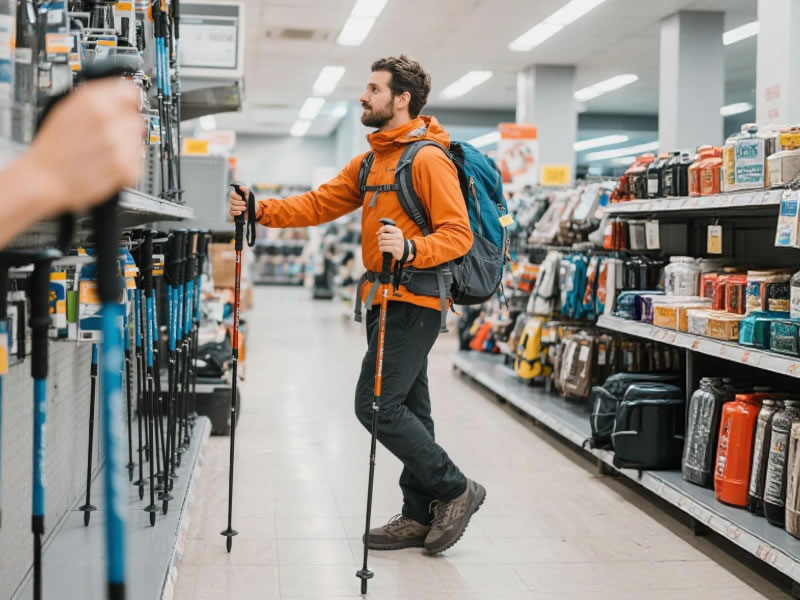
Recommended trekking pole purchase link: https://s.click.aliexpress.com/e/_c4M7OWaN
Step 1: The Initial Assessment and Adjustability
- Adjust to Your Basic Height: Extend the pole to its standard flat-ground length. A good starting point is to adjust it so that when you grip the handle and stand upright with the tip on the floor, your elbow forms a 90-degree angle. Most stores will have a small patch of carpet or hard floor for this.
- Test the Locking Mechanism: This is critical.For Flip Locks (Lever Locks): Engage the lock firmly. Does it snap into place with a solid, secure feel? Try to compress the pole section by pushing down on it. It should not budge or slip. Then, release the lock. Is it easy to disengage?For Twist Locks: Twist to tighten. Does it require excessive force? After tightening, perform the same downward pressure test. Be aware that twist locks are generally less favored for reliability.Feel with Gloves: If you hike with gloves, bring them or use a thick jacket sleeve to simulate if you can still operate the locks easily.
Step 2: The Grip and Strap Evaluation
- Grip Material and Comfort: Hold the pole naturally. Does the grip fill your hand comfortably?Cork: Should feel firm but conforming.Foam (EVA): Should feel soft and absorbent.Rubber: Often firmer, good for cold weather.Pay attention to any seams or ridges that might create a hot spot during a long hike.
- Strap Comfort and Function: Put your hand through the strap from the bottom up, then let the strap cradle the back of your hand as you grip. The strap should be padded and adjustable. It should distribute pressure across your wrist, not dig in. A good strap allows you to relax your grip slightly.
Step 3: The In-Store "Trail Test"
Use the store aisle as your test track.
- Weight and Swing Feel: Walk naturally, swinging the poles lightly. Does the weight feel balanced, or is it tip-heavy? Do they feel like an extension of your arm, or an awkward burden? Compare a carbon and an aluminum model back-to-back to feel the difference.
- Simulate Incline/Decline: Find a staircase, a ramp, or even use a sloped floor display.Uphill: Shorten the pole by 5-10 cm. Does the adjustability allow for this quickly? Does the shorter length feel natural for a pushing motion?Downhill: Lengthen the pole by 5-10 cm. When you plant it ahead of you, does it allow you to stand more upright and take pressure off your knees?
- Stability Test: Plant the pole firmly and lean into it at an angle, applying moderate body weight (be mindful of your surroundings!). Does the pole feel solid, or does it flex or wobble? Does the lock hold securely under this pressure?
Step 4: Comparison and Final Checks
- Compare Models Side-by-Side: Repeat steps 1-3 with 2-3 different shortlisted models. Differences in balance, grip shape, and lock "feel" will become immediately apparent.
- Check the Details:Tips & Baskets: Are the carbide tips sharp? Are baskets included and easy to attach/remove?Packed Size: Collapse the poles fully. Is the packed length manageable for your travel or backpack attachment needs?Warranty & Return Policy: Even in-store, ask about the manufacturer's warranty and the retailer's own return policy, especially if you discover an issue on your first real hike.
What to Bring to the Store
- The shoes you typically hike in. This affects your posture and pole length.
- Your daypack (if possible). A loaded pack changes your center of gravity.
- Your hiking gloves.
Key Questions to Answer Before You Buy
After testing, you should be able to answer:
- Do the locks inspire complete confidence?
- Does the grip feel comfortable for a prolonged hold?
- Does the overall weight and balance feel efficient and not fatiguing?
- Can I adjust them quickly and intuitively?
Final Verdict: Trust Your Hands, Not Just the Specs
A spec sheet can tell you about materials and weight, but only your hands can tell you about comfort, balance, and confidence. A pole that feels "right" in the store will feel right on the trail. By methodically testing adjustability, locks, grip comfort, and simulated terrain, you transform a guess into an informed decision.
Spending 15 minutes performing these tests can prevent years of discomfort or the hassle of a return. Whether you ultimately choose a $40 value pole or a $200 premium model, ensuring it fits you personally is the most important feature of all.




