




Are Child-Sized Hiking Poles Available and Recommended?
Introducing children to hiking is a wonderful way to foster a love for nature, but it also presents unique challenges, including fatigue, uneven terrain, and short attention spans. The question of whether to equip a young hiker with trekking poles is common among parents and guardians. The short answer is yes, child-specific hiking poles are readily available, and they can be a highly recommended tool when used appropriately. However, they are not an automatic necessity for every child or every hike.
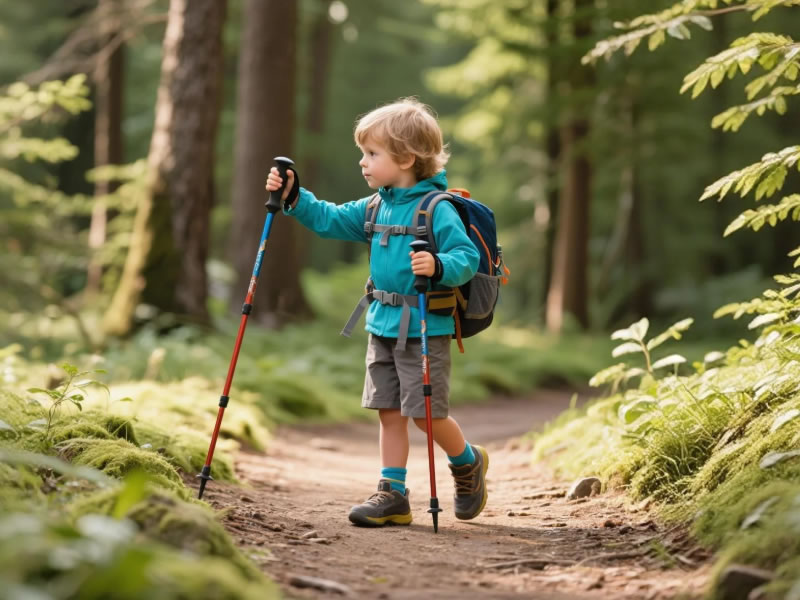
Recommended trekking pole purchase link: https://s.click.aliexpress.com/e/_c4M7OWaN
Availability: Designed for Young Adventurers
Major outdoor brands have recognized the growing family market and now offer poles specifically engineered for children. These are not merely shortened adult poles; they feature:
- Scaled-Down Proportions: Smaller grips to fit little hands, shorter maximum lengths, and lighter overall weight.
- Adjustable Length: Crucial for growing kids, allowing the poles to adapt over several seasons. Look for a range starting around 24 inches (60 cm) and extending to approximately 40 inches (100 cm).
- Safety-First Designs: Many feature rounded tips, protective baskets, and bright colors for visibility.
- Top Brands Offering Kids' Poles: REI Co-op (Trekker Jr.), LEKI (Micro Vario for Kids), Komperdell (Junior series), and Black Diamond (Distance Mini Z) are leading providers.
The Case For: Benefits of Kids' Hiking Poles
When used correctly on suitable terrain, child-sized poles offer several advantages:
- Enhanced Stability and Confidence: Children have a higher center of gravity and are still developing coordination. Poles provide two additional points of contact, dramatically improving balance on roots, rocks, stream crossings, and descents. This can prevent falls and boost a child's confidence to tackle more interesting trails.
- Reduced Joint Impact: Just like for adults, poles help distribute weight and lessen the impact on young knees and hips during downhill sections, making longer hikes more comfortable.
- Increased Engagement and Fun: Poles can transform a hike into a more dynamic, full-body activity. They give kids a "job" to do, helping with rhythm and engagement. They can be used to probe puddles, rustle leaves, or act as antennae—turning the hike into play.
- Teaching Proper Technique Early: Learning the basic opposite-arm/opposite-leg rhythm and how to plant a pole safely is a foundational outdoor skill.
The Case Against: Considerations and Cautions
Poles are not without potential downsides for young hikers:
- Tripping Hazard: This is the primary concern. An improperly carried or mis-planted pole can easily trip the child or others in the group. Constant supervision and clear rules (e.g., "tips down and behind when not in use") are mandatory.
- Over-Reliance and Improper Use: Without guidance, kids may use poles as swords, lean on them excessively, or develop a shuffling gait. The goal is assisted hiking, not supported walking.
- Not Necessary for All Hikes: On short, flat, well-groomed nature paths, poles can be an unnecessary complication. Their value increases with distance, elevation change, and technical terrain.
- Age and Maturity Requirement: Most manufacturers recommend poles for children ages 4-5 and up. The child needs sufficient coordination, attention span, and the ability to follow safety instructions.
Guidelines for Choosing and Using Kids' Poles
If you decide to proceed, follow these best practices:
- Proper Sizing is Paramount: When adjusted, the child's elbow should be at a 90-degree angle when holding the grip with the tip on the ground. Err on the shorter side for uphill and longer for downhill, just like adult poles.
- Prioritize Adjustability and Weight: Choose the lightest, most adjustable pole within your budget. Kids will complain about heavy poles quickly.
- Start with a "Lesson": On flat ground, teach the basic rhythm: right pole forward with left foot. Practice planting the tip behind their body, not far ahead where it can catch.
- Begin on Easy Terrain: Let them get comfortable with the mechanics on a flat, open trail before introducing challenges.
- Model Good Behavior: Use your own poles correctly. Children learn by imitation.
- Know When to Take Them Away: If poles are becoming dangerous toys or are slowing the group down, it's perfectly fine to collapse and stow them on the child's pack.
Top Recommendations
- Best Overall Starter Pole: REI Co-op Trekker Jr. - Affordable, adjustable, lightweight, and backed by REI's return policy.
- Best for Growing Serious Hikers: LEKI Micro Vario for Kids - A scaled-down version of their top-tier folding pole, offering excellent packability and a kid-friendly SpeedLock system.
- Best for Durability: Komperdell Junior - Built with the brand's alpine toughness, ideal for families who frequently hike in rugged areas.
Final Verdict: A Useful Tool with Supervision
Child-sized hiking poles are a valuable, recommended piece of gear for families who regularly embark on hikes with varied or challenging terrain. They promote safety, confidence, and engagement. However, they are not a universal requirement. Their successful use is entirely dependent on proper sizing, patient instruction, and active adult supervision.
For a child struggling with balance on uneven trails or showing fatigue on descents, poles can be a game-changer. For a toddler on a flat half-mile loop, they are likely unnecessary. By matching the tool to the child's ability and the trail's demands, you can make hiking a more accessible and enjoyable adventure for the whole family.




