




Using a Single Hiking Pole vs Two: When Is It Appropriate?
The choice between a single pole and a pair is one of the most common debates in hiking. While the default recommendation from experts is often a resounding "use two," the reality is more nuanced. Each approach serves different purposes, and the "appropriate" choice depends on your specific goals, terrain, physiology, and personal preference. Understanding the distinct advantages and trade-offs will help you select the right tool for your hike.
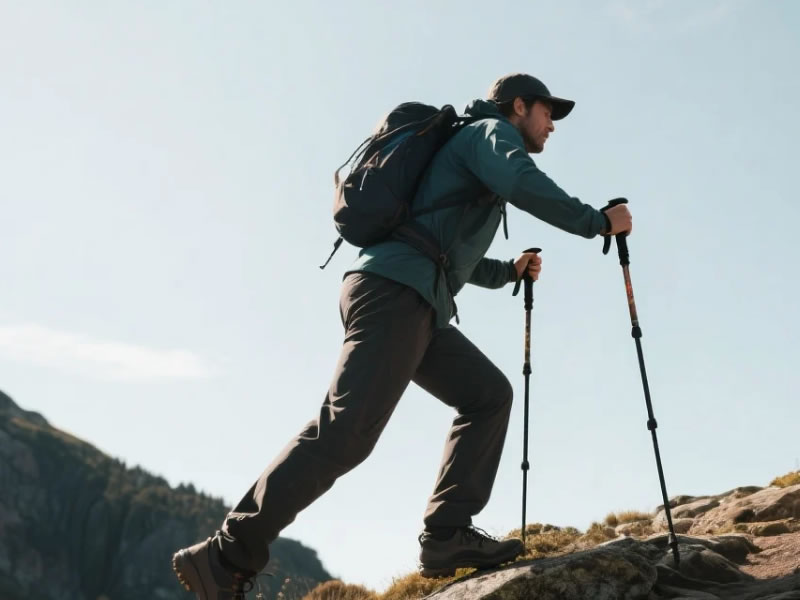
Recommended trekking pole purchase link: https://s.click.aliexpress.com/e/_c4M7OWaN
The Case for Two Poles: Maximized Benefits
Using two poles is the standard for good reason. It transforms your biomechanics from a two-legged to a four-point stabilization system, offering comprehensive advantages:
- Optimal Joint Protection: This is the most significant benefit, especially for knees. On descents, two poles allow you to transfer a substantial portion of your body weight (up to ~25% per pole) to your upper body, drastically reducing compressive forces on knees, hips, and ankles. This is critical for long-term joint health and managing existing pain.
- Superior Stability and Balance: With four points of contact, your base of support is wider and more dynamic. This is invaluable on uneven terrain, stream crossings, loose scree, and slippery surfaces, actively preventing falls.
- Balanced Propulsion and Endurance: Two poles engage your arms, shoulders, and core in a rhythmic, efficient motion. This distributes the workload across more muscle groups, reducing leg fatigue and increasing overall endurance, particularly on ascents.
- Symmetrical Muscle Engagement: Using a single pole exclusively on one side can lead to muscular imbalances over time. Two poles promote symmetrical development and posture.
The Case for a Single Pole: Situational Advantages
A single pole, often used in the traditional "walking staff" style, has its place. It is appropriate in the following scenarios:
- Light Terrain and Easy Trails: On flat, wide, well-maintained paths where maximum stability isn't a concern, a single pole provides a light touch of extra security without the encumbrance of two.
- Hikes Requiring a Free Hand: This is the most practical reason. A single pole leaves one hand consistently free for:Photography: Managing a camera without constantly stowing poles.Scrambling: Using your hand for balance or holds on brief technical sections.Navigation: Frequently checking a map, GPS, or compass.Flora & Fauna: Gently moving branches aside or handling guidebooks.
- Personal Preference and Simplicity: Some hikers simply prefer the less encumbered, more natural feel of a single pole. It can feel less "mechanical" than the rhythmic planting of two.
- Transitioning from No Poles: For a beginner unsure about poles, starting with one can be a lower-commitment way to experience the benefits before investing in a pair.
Comparative Analysis: Single vs. Double
| Scenario | Two Poles (Recommended) | Single Pole (Can Be Appropriate) |
|---|---|---|
| Steep Descents | Essential. Maximizes knee protection and braking control. | Poor. Offers minimal joint relief; can encourage asymmetrical posture. |
| Heavy Backpacking | Essential. Critical for stability and load distribution under weight. | Not advised. Inadequate support for a heavy, shifting load. |
| Uneven/Rocky Terrain | Strongly Recommended. Provides active, four-point stability. | Moderate. Offers a probe and occasional third point of contact. |
| Long-Distance/Thru-Hiking | Strongly Recommended. Reduces systemic fatigue over miles. | Possible, but less efficient. May lead to asymmetry and faster fatigue. |
| Easy, Flat Trails | Beneficial. Improves endurance and rhythm. | Suitable. Provides light support and a free hand. |
| Mixed Terrain w/ Scrambling | Possible (with frequent stowing). | Often Better. One pole aids, one hand is free for rock. |
| Joint Issues (Knees, Hips) | Strongly Recommended. The primary tool for impact reduction. | Suboptimal. Provides only partial, asymmetrical relief. |
How to Decide: A Practical Flowchart
- Assess the Terrain & Load: Is the trail rugged, steep, or slippery? Am I carrying a pack over 15 lbs? If YES → Use Two Poles.
- Identify Your Primary Need: Is my goal maximum joint protection, stability, and endurance? If YES → Use Two Poles. Is my goal light assistance while keeping a hand free for other tasks? If YES → A Single Pole may suffice.
- Consider Your Physiology: Do I have pre-existing joint pain, balance concerns, or am I recovering from an injury? If YES → Use Two Poles.
Final Verdict: A Rule of Thumb
For the vast majority of hiking—especially anything involving significant elevation change, a backpack, uneven ground, or a desire for increased endurance and joint preservation—using two poles is objectively the more appropriate, beneficial, and safer choice.
However, using a single pole is an appropriate and rational choice for specific, lower-demand situations: easy trails where you value a free hand, as a transitional tool, or simply based on personal comfort for light walks.
Recommendation: If you are serious about hiking, invest in a pair of adjustable poles. For hikes where you anticipate needing a free hand, you have the perfect compromise: use both poles for the demanding sections, and collapse and stow one when you need a free hand. This flexibility gives you the full benefits when you need them most, without ever feeling over-equipped. The goal is to match your gear to the trail's demands, and having two poles at your disposal provides the ultimate adaptability.




