




Can Hiking Poles Be Used Effectively on Paved or Flat Trails?
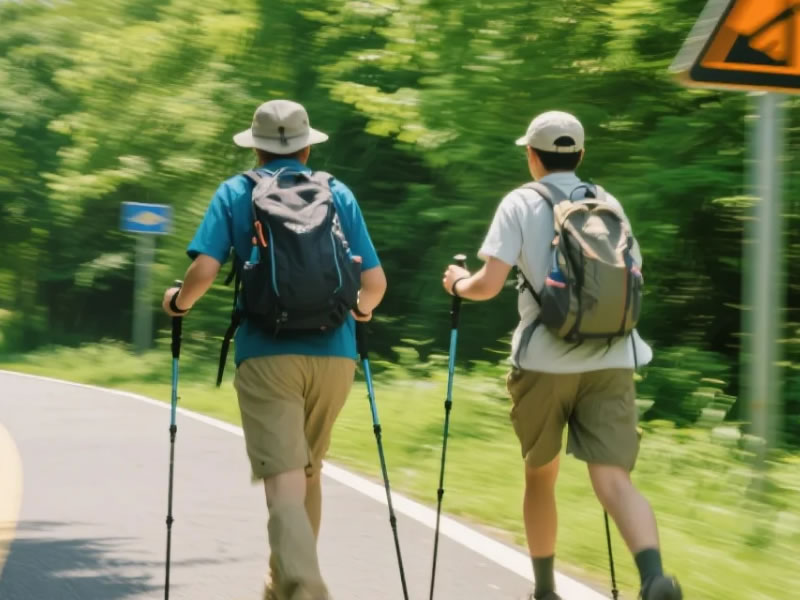
A common sight on mountain trails, trekking poles are sometimes met with skepticism when used on paved paths, bike trails, or gentle, flat terrain. The question arises: is this effective use or overkill? The answer is a definitive yes, hiking poles can be highly effective and beneficial on paved and flat trails, though their primary advantages shift from stability and impact reduction to those of efficiency, fitness, and long-term joint health.
Recommended trekking pole purchase link: https://s.click.aliexpress.com/e/_c4M7OWaN
The Shift in Purpose: From Stability to Efficiency
On rugged trails, poles are critical for balance and knee protection. On flat, even surfaces, these acute needs diminish, but the poles transition into powerful tools for enhancing the fundamental act of walking.
1. Establishing Rhythm and Increasing Pace:
Poles naturally encourage a rhythmic, opposite-arm-to-leg swing. This cadence promotes a consistent, often quicker, walking pace. The poles act as metronomes, reducing wasted lateral motion and channeling energy forward. This is particularly valuable for fitness walkers and those training for long-distance events.
2. Engaging the Upper Body for a Full-Body Workout:
Without poles, walking primarily engages the lower body. Adding poles turns a simple walk into a full-body exercise. With each plant and push, you actively engage muscles in your arms, shoulders, chest, back, and core. This increases cardiovascular demand, burns more calories, and builds muscular endurance in the upper body, transforming a casual walk into a comprehensive workout.
3. Reducing Cumulative Joint Stress:
While the jarring impacts of descents are absent on flat ground, repetitive stress remains. Every step sends a force through your ankles, knees, hips, and spine. Poles mitigate this by distributing the load across your upper body. For individuals with chronic joint issues, arthritis, or recovering from injury, this continuous offloading can make the difference between a painful, shortened walk and a comfortable, extended one.
Practical Considerations for Use on Hard Surfaces
To use poles effectively and courteously on paved trails, specific adjustments are necessary:
- Use Rubber Trekking Tips (Paws): This is non-negotiable. The standard carbide tips are for gripping dirt and rock. On pavement, they are loud, slippery, and will grind down quickly. Rubber tips provide necessary traction, reduce noise pollution, and protect your investment. They are often included with poles or available as inexpensive accessories.
- Correct Length Adjustment: On flat ground, your elbow should form a 90-degree angle when holding the pole with the tip on the surface. A proper fit ensures efficient biomechanics.
- Technique Refinement: Focus on a smooth, rearward push. Plant the pole at an angle behind your body line and push through the strap to propel yourself forward, rather than planting it vertically ahead of you.
Addressing Common Objections
- "They look silly on a paved trail." This is a matter of personal perception. The growing popularity of fitness walking (Nordic walking) with poles has increased their acceptance in urban and suburban settings.
- "It's extra effort to carry them." For short, casual strolls, this may be true. Their value compounds with distance, time, and fitness goals.
- "My hands aren't free." This is a valid trade-off. For walks where you need free hands (e.g., with a dog leash, for photography), poles can be collapsed and carried.
Who Benefits Most on Flat Terrain?
- Fitness Walkers & Power Walkers: Seeking elevated heart rates and full-body engagement.
- Individuals with Joint Sensitivities: Those managing knee osteoarthritis, hip pain, or back issues find continuous offloading invaluable.
- Recovering Athletes or Post-Injury Walkers: Poles provide stability and reduce impact during rehabilitation.
- Long-Distance Walkers and Pilgrims: Anyone covering miles daily benefits from the efficiency and fatigue reduction poles provide.
The Verdict: A Tool for All Terrains
While not essential for a short, flat walk in the way they are for a steep, rocky descent, hiking poles are far from ineffective on pavement. They are proactive tools for health and performance.
Conclusion: Dismissing trekking poles as "only for mountains" overlooks their significant ergonomic and fitness benefits. By using rubber tips and proper technique, you can leverage poles to walk faster, reduce systemic fatigue, protect your joints, and turn a simple stroll into a superior workout. For the urban hiker, the fitness enthusiast, or anyone seeking to move with greater ease and strength, poles are a wise and effective companion on any surface.




