




How to Lubricate Hiking Pole Locks (Twist vs. Lever)?
Proper maintenance of your trekking pole locking mechanisms is essential for safety, reliability, and longevity. A stiff, sticking, or slipping lock is not just an annoyance; it's a potential hazard. Lubrication is a key part of this maintenance, but the process differs dramatically between twist (spin) locks and lever (flip) locks. Using the wrong lubricant or method can attract grit, cause slippage, or damage components. Here’s a detailed guide to doing it right.
Recommended trekking pole purchase link: https://s.click.aliexpress.com/e/_c4M7OWaN
The Golden Rule: Clean Before You Lubricate
Applying lubricant to a dirty mechanism will create a grinding paste, accelerating wear. Always start with a thorough cleaning.
- Disassemble: If possible, fully extend the pole sections to separate them.
- Clean: Wipe down the entire shaft and the interior of the locking mechanism with a damp cloth. For stubborn grit inside twist locks, use a soft brush (like a toothbrush) and water. For lever locks, clean around the pivot and spring.
- Dry: Ensure all parts are completely dry before applying any lubricant.
Lubricating Twist Locks (Internal/Spin Locks)
How They Work: These locks tighten an internal expander collar against the inner wall of the adjacent pole section via a threaded mechanism.
The Challenge: The interior of the pole is a dirt magnet. Using a wet, sticky lubricant will cause dust and sand to adhere, quickly fouling the mechanism.
Recommended Lubricant: Dry Silicone Spray or Teflon-Based Dry Lube.
- Why: It leaves a slippery, non-sticky film that does not attract or hold onto particulate matter.
- What to Avoid: WD-40 (it's a penetrant/cleaner, not a durable lubricant), grease, machine oil (too sticky).
Procedure:
- Extend the pole section to expose the internal mechanism.
- Spray a very small amount of dry silicone lube onto the expander collar and the interior threads.
- Work the mechanism by twisting the lock open and closed several times to distribute the lube.
- Wipe away any visible excess from the outside of the shaft.
- Reassemble and test.
Lubricating Lever Locks (Flip Locks)
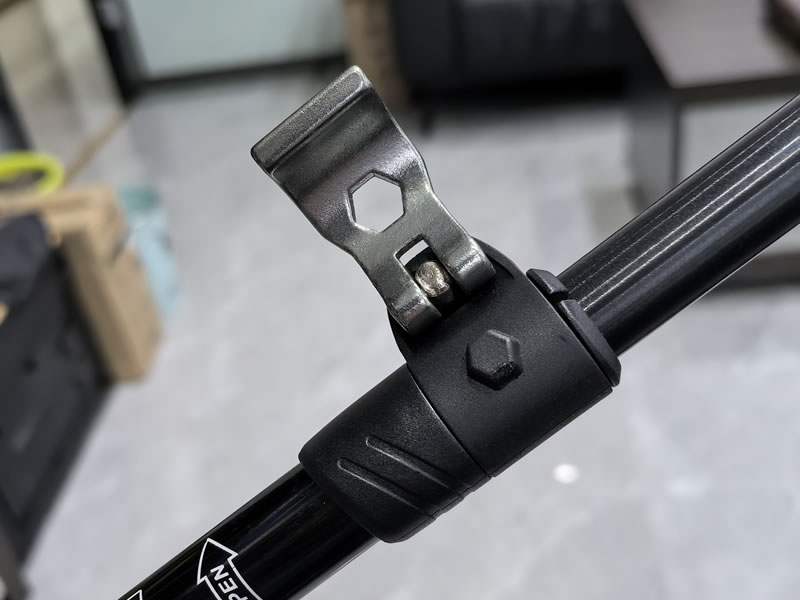
How They Work: An external lever actuates a cam or clamp that tightens a metal band or jaw around the pole shaft.
The Challenge: These mechanisms have moving metal parts (pivots, springs, cams) that need lubrication to prevent corrosion and ensure smooth operation. The lubricant should stay where it's put and not migrate onto the pole shaft where it could cause slippage.
Recommended Lubricant: Light Machine Oil or a Dedicated Tool/Weapon Oil.
- Why: These oils are designed to protect metal parts, reduce friction, and are less likely to run excessively. A dry Teflon spray can also work on the pivot points.
- What to Avoid: Heavy grease (can gum up), WD-40.
Procedure:
- Identify the pivot point of the lever and any visible spring.
- Apply one single drop of light oil to the pivot and spring contact points.
- Work the lever open and closed repeatedly to work the oil into the mechanism.
- Crucial Step: Use a dry cloth or paper towel to wipe away every trace of excess oil from the lever, the pole shaft, and especially the interior clamping surface. Any oil on the shaft or clamp can prevent it from gripping securely.
- Test the lock's grip by extending the pole and applying downward pressure.
Comparison Table: Twist vs. Lever Lubrication
| Aspect | Twist Locks | Lever Locks |
|---|---|---|
| Lubrication Target | Internal expander collar & threads. | External pivot points & springs. |
| Primary Concern | Avoiding dirt attraction. | Ensuring smooth mechanical action. |
| Ideal Lubricant | Dry Silicone or Teflon Spray. | Light Machine Oil or Tool Oil. |
| Key Step | Minimal application; no residue. | Wiping away ALL excess oil. |
| Failure Risk if Done Wrong | Lube attracts grit, causing slipping/seizing. | Oil on shaft causes catastrophic slippage. |
General Maintenance Tips & Warnings
- Frequency: Lubricate 1-2 times per season, or whenever the mechanism feels gritty or stiff.
- Less is More: Over-lubrication is worse than under-lubrication. Start with a tiny amount.
- Test Before You Trust: After lubrication and reassembly, extend the pole and apply firm downward pressure on a flat, safe surface to ensure the lock holds securely before hitting the trail.
- Environmental Considerations: In freezing conditions, ensure your lubricant won't gum up. Dry lubes often perform well here.
- When to Replace, Not Lubricate: If parts are visibly cracked, stripped, or deformed, lubrication is a temporary fix. Contact the manufacturer for replacement parts.
Final Verdict: Precision Over Guessing
Lubricating your pole locks is a simple but precise task that prevents major problems. The core principle is understanding the mechanism: keep twist locks clean and dry-lubricated to repel dirt, and keep lever locks lightly oiled at moving points but meticulously clean at clamping surfaces.
By following these targeted steps, you ensure your poles lock with a satisfying, secure snap every time, providing the confidence you need to lean into them on steep descents and rough terrain. Proper care extends the life of your poles by years, making this five-minute ritual one of the smartest investments in your gear maintenance routine.




