




How to Choose the Right Hiking Poles?
Choosing the right hiking poles is a game-changer for your comfort, stability, and endurance on the trail. They reduce impact on your joints, improve balance on tricky terrain, and can boost your overall pace. But with so many options, how do you pick? This guide breaks down the key factors to consider.
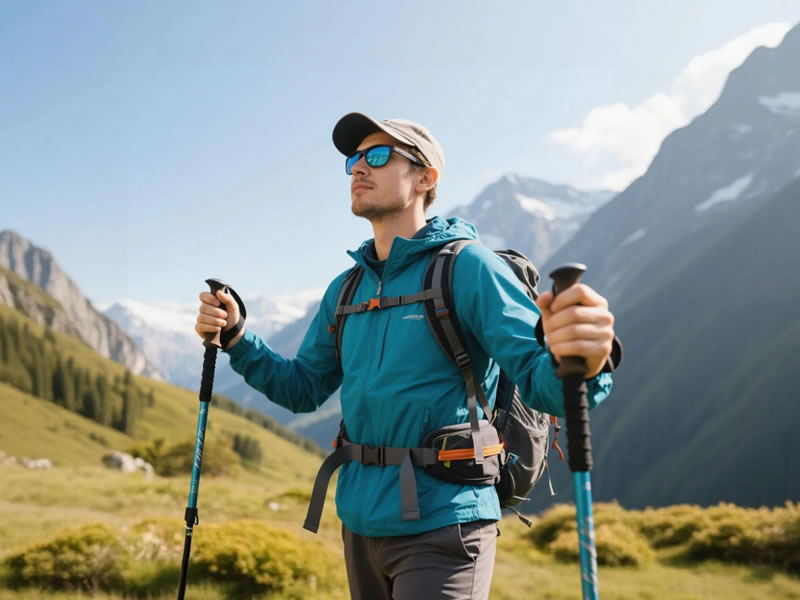
Recommended trekking pole purchase link: https://s.click.aliexpress.com/e/_c4M7OWaN
1. Pole Material: Weight vs. Durability
This is the fundamental trade-off.
- Aluminum (6061 or 7075): The most common and affordable choice. It's durable, can withstand significant bending force, and is easily adjustable. Slightly heavier than carbon, but ideal for rugged use, backpacking, and most hikers.
- Carbon Fiber: Significantly lighter and reduces arm fatigue on long distances. It absorbs more vibration, offering a smoother feel. However, it's more expensive and can be brittle; a sharp lateral impact might cause it to snap, whereas aluminum might just bend. Best for weight-conscious hikers and on well-maintained trails.
2. Grip Type: Comfort in Your Hand
Your hand is in constant contact with the grip, so material matters.
- Cork: Conforms to the shape of your hand over time, naturally absorbs sweat, and is excellent for temperature regulation. Highly recommended for long-distance and warm-weather hiking.
- Foam (EVA): Very soft, comfortable, and absorbs sweat well. A great all-around choice, especially if you have a lighter grip.
- Rubber: Durable and provides good insulation in cold weather, but can become slippery with sweat. Often found on cheaper poles or those designed for winter use.
3. Adjustability and Locking Mechanism
- Adjustable (Telescoping) Poles: Offer the most versatility. You can shorten them for uphill and lengthen for downhill. Crucial for backpacking where load changes your balance.Locks: FlickLocks (external lever) are reliable, easy to operate with gloves, and secure. TwistLocks (internal collar) are sleeker but can slip when cold or wet and are harder to fix on the trail.
- Fixed-Length or Foldable (Z-Pole) Poles: These are ultralight and compact, perfect for fastpacking or as a backup. They offer less adjustability on the fly and may be less robust under very heavy loads.
4. Weight and Packability
Consider how you'll use them. Will they be strapped to your pack frequently? For airline travel or ultralight pursuits, foldable Z-poles are unbeatable. For general backpacking, a reliable pair of adjustable aluminum or carbon poles is often the best balance.
5. Basket Size and Tip
- Tip: A durable carbide (tungsten) tip is essential for traction on rock, ice, and hard dirt. A rubber tip cover protects indoor surfaces and provides grip on pavement.
- Baskets: Small, removable baskets are standard for summer trails. Larger, permanent snow baskets are necessary for winter trekking or soft terrain to prevent the pole from sinking.
Final Checklist & Pro Tip:
- Try Before You Buy: If possible, grip different materials.
- Correct Length: With the pole tip on the ground and your arm at your side, your elbow should form a 90-degree angle.
- Wrist Straps: Use them correctly! Slide your hand up from the bottom of the strap, so the strap takes the weight, not your grip.
The Right Choice?
There's no single "best" pole. The rugged backpacker might prefer adjustable aluminum poles with cork grips. The speed-focused trail runner might choose ultralight carbon Z-poles. Assess your primary hiking style, terrain, and budget.
Ready to explore further? Once you have your poles, learn the proper technique to maximize their benefit. Check out our guide on "How to Use Hiking Poles Correctly for Maximum Efficiency."
Investing time in choosing the right hiking poles is an investment in more enjoyable, stable, and injury-free miles on the trail. Happy hiking




