




Hiking Poles for Weight Distribution: The Biomechanical Advantage
Hiking poles are often celebrated for improving balance and stability, but their most profound benefit is far more scientific: dynamic weight distribution. By effectively engaging your upper body, poles transform your hiking biomechanics, redistributing forces that would otherwise concentrate on your lower joints and muscles. This is not just a minor comfort feature—it’s a fundamental strategy for enhancing endurance, preventing injury, and carrying heavy loads more efficiently.
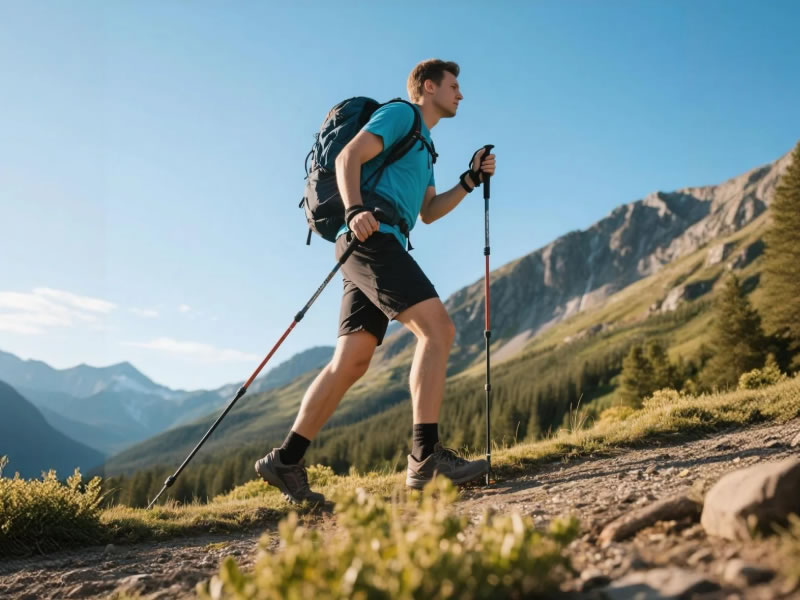
Recommended trekking pole purchase link: https://s.click.aliexpress.com/e/_c4M7OWaN
The Science of Load Sharing: How Poles Redistribute Force
When you walk without poles, nearly 100% of your body's weight, plus any pack weight, is absorbed by your legs with each step. On a descent, this force can multiply dramatically. Hiking poles interrupt this cycle by creating two additional points of contact with the ground.
- Vertical Force Redistribution: With proper technique, each pole plant allows your arms and shoulders to bear a portion of your descending momentum and pack weight. Studies suggest this can reduce the compressive load on your knees by up to 25% during downhill sections. This is achieved by literally "pushing" part of your weight into the pole and through your arms.
- Lateral Stability and Core Engagement: On uneven terrain, poles prevent sudden, jarring shifts of weight from one leg to another. They allow for smoother, more controlled weight transfers, which reduces the strain on stabilizing muscles in your ankles, knees, and hips. This engagement of your core and upper body creates a more integrated and efficient movement system.
Critical Applications: Where Weight Distribution Matters Most
This biomechanical advantage is crucial in two specific scenarios:
1. Backpacking with a Heavy Load:
A loaded backpack shifts your center of gravity upward and backward, increasing strain on your lower back and legs. Poles counter this by:
- Providing a Forward Lean Framework: They allow you to maintain a better posture while leaning slightly into the hill, whether ascending or descending.
- Assisting the Lift: On steep climbs, a powerful pole plant helps "push" your body and pack weight upward, engaging your lats, triceps, and pectorals.
- Reducing Leg Fatigue: By sharing the work, poles help preserve your quadriceps and calf muscles over long distances, delaying the onset of fatigue.
2. Managing Descents and Technical Terrain:
Downhill hiking is notoriously punishing. Poles act as brakes and shock absorbers.
- Controlled Deceleration: By planting your poles ahead of you, you lower your body down to meet them, using your upper body to control the speed of descent.
- Impact Absorption: The pole shaft (and any built-in shock absorbers) and your arms dissipate energy that would otherwise travel directly through your skeletal system.
Technique is Everything: Maximizing the Distribution
To unlock this benefit, proper technique is non-negotiable. Incorrect use can actually waste energy.
- Use the Wrist Straps Correctly: Slide your hand up through the strap from below, then grip the handle. This allows you to transfer weight through the strap without maintaining a tight, fatiguing grip. Your hand should be relaxed, with the strap supporting the load.
- Plant with Purpose: For optimal weight sharing, plant the pole firmly at a point that allows a slight forward lean. Your elbow should form a relaxed angle (slightly greater than 90 degrees on flat ground, adjusted for slope).
- Rhythmic Planting: Coordinate your pole plants with the opposite foot (right pole with left foot). This creates a natural, efficient rhythm that continuously distributes weight throughout your gait cycle.
Selecting Poles for Optimal Load-Bearing
Not all poles are equally suited for serious weight distribution, especially under a heavy pack.
- Locking Mechanism: External lever locks (FlickLocks) are superior for load-bearing. They provide a visible, secure clamp that is far less likely to slip under high pressure compared to twist locks.
- Shaft Material: For heavy-duty use, high-grade aluminum (like 7075 alloy) offers the best balance of strength, durability, and value. While carbon fiber is lighter, ensure it is a high-modulus model rated for substantial impact and load if this is your primary use case.
- Stiffness: A pole with good torsional stiffness will provide a more immediate and reliable transfer of force, giving you a solid feel with each plant.
Conclusion: A Fundamental Efficiency Tool
Viewing hiking poles merely as balance aids underestimates their true function. They are portable biomechanical levers that recruit your body's larger muscle groups to share the work of locomotion and load-carrying. This strategic weight distribution directly translates to reduced joint pain, significantly delayed muscle fatigue, improved endurance, and a greater ability to tackle challenging terrain with a heavy pack. Whether you're a weekend warrior or a long-distance backpacker, mastering this aspect of pole use will fundamentally upgrade your hiking efficiency and longevity on the trail.




