




Hiking Poles for Steep Terrain: Mastering Ascent and Descent
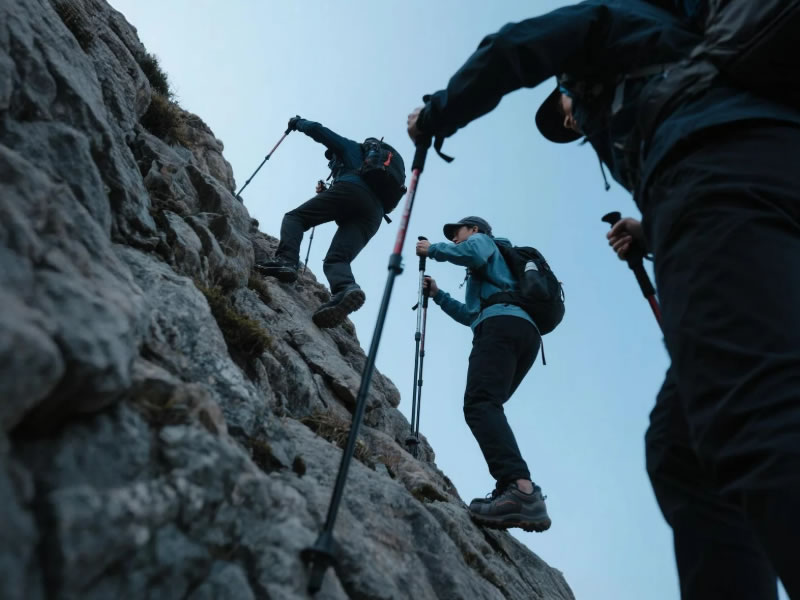
Tackling steep terrain—whether a relentless climb or a knee-jarring descent—demands a significant shift in technique and gear usage. Hiking poles are not just helpful here; they are transformative tools for propulsion, stability, and joint protection. Using them correctly on steep grades can mean the difference between confident progress and exhausting, precarious struggle. This guide details the specialized techniques and adjustments required to master steep ground with your poles.
Recommended trekking pole purchase link: https://s.click.aliexpress.com/e/_c4M7OWaN
The Foundation: Dynamic Pole Adjustment
The golden rule for steep terrain is adjust pole length to match the slope. A fixed length used on flat ground will compromise your posture and efficiency.
- For Uphill Climbing: Shorten your poles by 5-10 cm (2-4 inches). This allows you to maintain an upright torso and plant the pole effectively beside or slightly behind you without overreaching. A shorter pole facilitates a powerful push-off that propels you forward and upward, engaging your core and arms to assist your legs.
- For Downhill Descending: Lengthen your poles by 5-15 cm (4-6 inches). A longer pole allows you to plant the tip firmly downhill ahead of your body. This creates a stable brace, letting you lower your weight controllably onto the pole, reducing the massive impact on your knees and quadriceps.
Uphill Techniques: Generating Power
- The Rhythmic Drive: Maintain the classic opposite arm/leg rhythm (right pole with left foot). Plant the pole firmly at a point level with or just behind your trailing foot. Push down and slightly back through the wrist strap to drive yourself forward. This utilizes your larger back and arm muscles.
- The "Power Plant" on Very Steep Sections: On scrambly or extremely steep sections, you may use both poles simultaneously. Plant them at a higher point, then use a powerful upper-body pull to help "hoist" yourself up the step. This is particularly useful with a heavy pack.
Downhill Techniques: Controlling Descent
- The Forward Plant & Brace: This is the core technique. Proactively plant each pole tip firmly downhill and ahead of your next foot placement. As you step down, transfer a portion of your weight onto the pole, using it as a mobile anchor to brace against. This controls your speed and decelerates your mass.
- The "Double Plant" for Maximum Security: On extremely steep, loose, or exposed descents, abandon the alternating rhythm. Instead, plant both poles securely downhill. Then, take one or two careful steps down to meet them. Re-establish both poles further downhill, and repeat. This method guarantees three points of contact at all times and is the safest technique for treacherous ground.
- The "Tripod" for Rest: Need to pause on a steep slope? Plant both poles securely in front of you and lean on them with straight arms. This creates a stable three-point stance (two poles + your feet), allowing you to rest, survey the route, or adjust gear without losing balance.
Critical Safety & Gear Considerations for Steep Terrain
- Locking Mechanism Reliability: This is non-negotiable. External lever locks are vastly superior on steep terrain. They are visually verifiable, easier to adjust with cold hands, and far less prone to slipping under heavy, dynamic load than twist locks.
- Pole Material and Durability: Steep, rocky terrain is punishing. High-grade aluminum (7075 alloy) is often the best choice for its unbeatable impact resistance and ability to bend rather than snap. If opting for carbon fiber for weight savings, choose a robust model designed for mountaineering.
- Wrist Strap Mastery: On descents especially, proper strap use is crucial. Your weight should be borne by the strap, not your grip. This prevents hand fatigue and allows for a more effective push or brace.
- Basket Size: Use small, summer baskets. Large snow baskets can catch on rocks and roots, becoming a tripping hazard.
Technique Over Strength: Common Mistakes to Avoid
- Dragging the Poles: Poles should be planted actively and deliberately, not scraped along behind you.
- Over-Gripping: A tense, white-knuckle grip wastes energy. Let the straps do the work.
- Planting Too Far Away: This forces you into an overextended, unbalanced position. Keep poles close enough for a slightly bent elbow at the point of planting.
- Ignoring the Terrain: Use your poles to test the stability of rocks or footing before committing your full weight—a vital tool on loose scree or muddy slopes.
Conclusion: Embrace the Gradient
Steep terrain tests a hiker's skill and endurance. By strategically adjusting your pole length and employing targeted techniques for ascent and descent, you harness your upper body's strength to share the immense workload. This approach directly translates to preserved knee health, reduced full-body fatigue, and dramatically increased confidence when facing daunting slopes. Practice these methods on progressively steeper trails, and you'll soon find that what once seemed intimidating becomes a challenging and rewarding part of the mountain experience. Your poles are the key to unlocking that confidence.




