




Hiking Poles for Knee Pain: Your Path to Pain-Free Trails
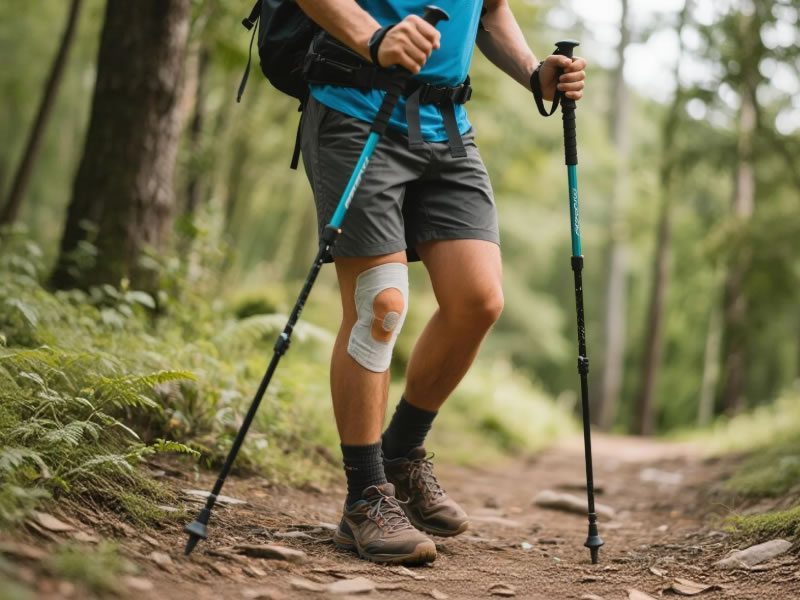
For millions of hikers, the joy of the trail is overshadowed by a familiar, unwelcome companion: knee pain. Whether from arthritis, past injury, or simply the cumulative impact of years of descents, aching knees are the leading cause of hikers cutting trips short or abandoning the sport altogether. The solution, however, is not to stop hiking—it is to hike smarter. Hiking poles, when correctly selected and used, are the single most effective tool for managing and mitigating knee pain, allowing you to reclaim the trails you love.
Recommended trekking pole purchase link: https://s.click.aliexpress.com/e/_c4M7OWaN
The Biomechanics of Knee Pain and the Pole Solution
To understand why poles work, you must first understand the problem. When you hike downhill, your quadriceps contract eccentrically to control your descent. This action generates forces through your patellofemoral joint (kneecap) equivalent to 3 to 5 times your body weight. With a heavy backpack, this force can exceed 7 times your body weight. This repetitive, high-impact loading inflames tendons, aggravates arthritis, and accelerates cartilage wear.
Hiking poles interrupt this destructive cycle. By planting a pole ahead of you and transferring your weight onto it, you redirect a significant portion of that impact force away from your knees and into your upper body. Research indicates this can reduce the compressive load on your knees by up to 25% on descents. For a 150-pound hiker, that is nearly 40 pounds of force saved with every single step downhill. Over a 1,000-foot descent, the cumulative joint savings are immense.
Critical Techniques for Knee Pain Management
Simply carrying poles is not enough. To maximize joint protection, you must use them with intent.
1. Lengthen for Downhill (The Golden Rule):
This is non-negotiable. Before beginning any descent, lengthen your poles by 5-15 cm (2-6 inches) from your flat-ground setting. A longer pole allows you to plant the tip firmly ahead and downhill of your body. As you step down, you transfer your weight onto this planted pole, using it as a brake and shock absorber. Your knee travels through a shorter, more controlled arc, and your quadriceps work less to slow you down.
2. Master the Wrist Strap:
To effectively transfer weight, you must use the straps correctly. Slide your hand up through the bottom of the strap, then grip the handle. When you plant the pole, push down through the strap, not by squeezing the grip. This allows your skeletal structure—not your hand muscles—to bear the load. Your fingers can remain relaxed, preventing hand fatigue and blisters.
3. The Rhythmic Plant:
Maintain an opposite arm/leg rhythm (right pole with left foot). This engages your core and promotes a balanced, efficient gait. Each plant should be deliberate, not a passive drag.
Choosing the Right Poles for Knee Pain
Not all poles offer equal joint protection. Prioritize these features:
| Feature | Why It Matters for Knee Pain | Recommendation |
|---|---|---|
| Material | Reduces transmitted shock to hands/arms, encouraging a relaxed grip. | Carbon fiber for superior vibration dampening. |
| Grip | Absorbs sweat, prevents slipping, and reduces need for tight grip. | Cork (best) or foam (good). Avoid hard plastic. |
| Locking Mechanism | Must hold securely under load without slipping. | External lever locks (FlickLocks) are most reliable. |
| Shock Absorption | Built-in spring further cushions impact on joints. | Optional but beneficial for those with significant knee pain or arthritis. |
| Adjustability | Essential for changing length between climbs and descents. | Telescoping poles with a wide adjustment range. |
Carbon fiber is strongly recommended for knee pain sufferers. Its natural vibration-dampening properties reduce the harsh feedback from rocky terrain, which in turn allows for a more relaxed grip and less overall tension in your upper body. This creates a virtuous cycle of reduced joint stress from head to toe.
The Cumulative Benefit: More Than Just Knees
While the primary focus is knee relief, the benefits cascade throughout your body:
- Hips: Reduced impact force translates to less stress on hip joints.
- Ankles: Improved stability prevents twisting injuries on uneven ground.
- Lower Back: Poles encourage an upright posture, reducing spinal strain.
- Cardiovascular: By engaging your upper body, poles increase your heart rate and calorie burn without added perceived effort.
Addressing Common Concerns
"Will poles make me less fit?"
No. They redistribute workload, not eliminate it. You will hike longer and recover faster, allowing for more frequent and consistent exercise.
"I feel uncoordinated with poles."
This is normal. Practice on flat, even ground first. Within a few miles, the rhythm will become second nature.
"Do I need shock-absorbing poles?"
For significant knee pain, yes—they are a worthwhile investment. The internal spring provides an extra layer of cushioning on every plant, further reducing the jolt to your joints.
Conclusion: Hike Longer, Hurt Less
Knee pain does not have to be your trail's final verdict. By equipping yourself with the right poles—carbon fiber, cork grips, reliable lever locks—and mastering the simple but profound technique of lengthening for descents and pushing through the straps, you reclaim control over your joints and your hiking future. The investment in quality poles is an investment in your mobility, your independence, and your ability to continue exploring the wild places you love. The trail is waiting; your knees are ready. Step forward with confidence.




