




Are Walking Poles Worth It? A Comprehensive Cost-Benefit Analysis
For every hiker standing at the gear shop aisle, poles in hand, the same question echoes: "Are these really worth it?" It is a fair question. Walking poles require an upfront investment, add weight to your kit, and demand a small learning curve. This guide provides a rigorous, evidence-based answer by weighing the tangible benefits—joint protection, stability, efficiency, and versatility—against the costs and compromises. By the end, you will have the clarity to decide whether poles are a worthwhile addition to your personal hiking system.
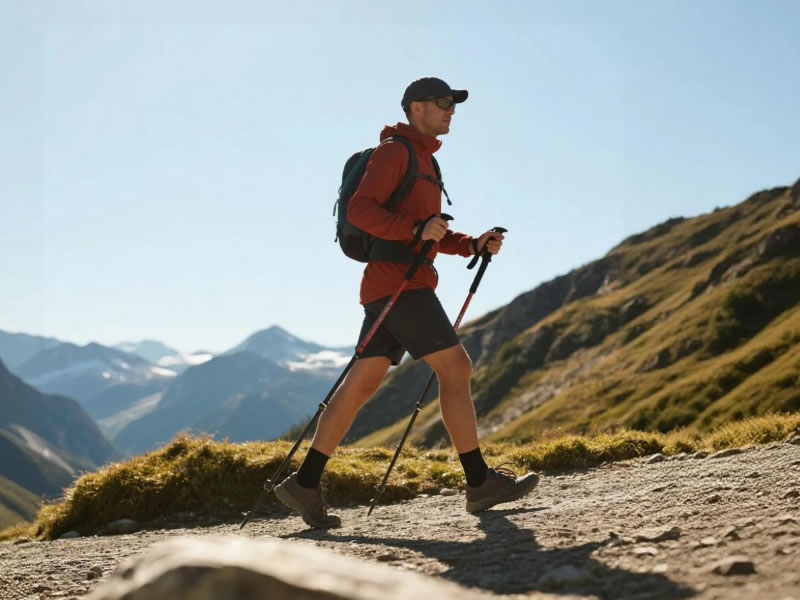
Recommended trekking pole purchase link: https://s.click.aliexpress.com/e/_c4M7OWaN
The Case For: Quantifying the Benefits
1. Joint Protection: The Medical Argument
The most compelling reason to use poles is knee preservation. Biomechanical studies consistently demonstrate that poles reduce compressive forces on the patellofemoral joint by 20-25% during descent. For context:
- A 150-pound hiker descending a 1,000-foot gradient saves approximately 40 pounds of impact per step.
- Over a 5-mile descent with 10,000 steps, that is 400,000 pounds of cumulative joint stress avoided.
Translation: Poles are not a convenience; they are preventive medicine for your knees. For hikers with existing joint pain, arthritis, or a family history of knee replacements, this benefit alone justifies the investment.
2. Fall Prevention: The Safety Argument
Falls are the leading cause of hiking-related injuries and evacuations. Poles dramatically reduce fall risk by:
- Providing two additional points of contact with the ground.
- Acting as probes to detect hidden obstacles, unstable rocks, or unsuspected depth in water and snow.
- Serving as emergency anchors to arrest a slip before it becomes a fall.
Verdict: A single fall prevented by poles repays their cost many times over in medical expenses, trip disruption, and personal suffering.
3. Efficiency and Endurance: The Performance Argument
Poles transform hiking from a purely lower-body activity into a full-body movement. By recruiting your arms, shoulders, back, and core to assist your legs:
- Uphill speed increases by 15-25% for the same perceived effort.
- Overall endurance extends because muscle groups are rotated, delaying localized fatigue.
- Recovery time shortens, allowing for multi-day trips with less cumulative soreness.
Data: A study of Appalachian Trail thru-hikers found that those using poles consistently reported lower perceived exertion and fewer missed days due to injury or fatigue compared to non-users.
4. Versatility: The Multi-Tool Argument
Beyond walking, poles serve critical secondary functions:
- Shelter Support: Many ultralight tents and tarps require poles for pitch.
- Emergency Splint: A pole can immobilize a fractured limb in a wilderness first aid scenario.
- Wildlife Deterrent: Poles create distance and noise to avoid surprise encounters.
- Water and Snow Probe: Essential for assessing depth and stability before committing your weight.
5. Accessibility: The Inclusivity Argument
Poles lower the barrier to entry for:
- Seniors seeking to maintain active lifestyles.
- Individuals recovering from injury who need temporary support.
- Heavier hikers who face amplified joint forces.
- Children learning balance on uneven terrain.
Verdict: Poles make trails accessible to populations who would otherwise be excluded.
The Case Against: Acknowledging the Compromises
1. Upfront Cost:
Quality poles range from $50 (budget aluminum) to $200+ (premium carbon). This is a genuine barrier for some. However, a well-maintained pair lasts 5-10 years or more, amortizing the cost to pennies per mile.
2. Weight and Bulk:
Even lightweight carbon poles add 10-18 ounces to your pack. For ultralight purists counting every gram, this is a legitimate trade-off. However, the energy saved by using poles typically outweighs the energy cost of carrying them.
3. Learning Curve and Coordination:
New users often feel clumsy. They may trip over their own poles, struggle with the rhythm, or find the straps annoying. This is temporary. Most hikers become proficient within one to two hikes.
4. Inconvenience on Easy Terrain:
On flat, smooth, non-technical trails, poles are largely unnecessary. They can feel like dead weight in your hands. Solution: Use collapsible or folding poles that stow quickly on your pack when not needed.
5. Reduced Agility on Scrambles:
On Class 3 and 4 terrain requiring hands-free scrambling, poles are a hindrance. They must be collapsed and stowed. This is a niche limitation affecting a small percentage of hikers on a small percentage of trails.
Cost-Benefit Analysis by Hiker Profile
| Hiker Type | Expected Benefit | Worth It? |
|---|---|---|
| Day Hiker, Easy Trails | Minimal joint stress; poles are optional. | Maybe. Nice to have, not essential. |
| Day Hiker, Mountainous Terrain | Significant knee protection; improved climb speed. | Yes. Clear performance benefit. |
| Weekend Backpacker | Critical for load support and long descents. | Yes. Non-negotiable for most. |
| Thru-Hiker / Long-Distance | Essential for joint preservation and energy efficiency. | Absolutely essential. |
| Senior / Joint Concerns | Enables continued hiking; prevents pain. | Priceless. Worth far more than cost. |
| Ultralight Purist | Weight penalty may outweigh benefits on specific trips. | Case-by-case. Consider terrain and distance. |
Addressing Common Objections
"They make me less fit because I'm not working as hard."
False. Poles redistribute workload; they do not eliminate it. You burn more calories with poles due to upper-body engagement, while perceiving the effort as easier. This is efficiency, not laziness.
"I see elderly hikers using them; they're for old people."
Fallacy. This is like saying "seatbelts are for bad drivers." Poles are used by elite mountain athletes, military personnel, and competitive trail runners. They are a performance tool for all ages.
"I tried them once and didn't like them."
Acknowledged. But one hike is insufficient. Like learning to use trekking poles correctly requires technique and adjustment period. Commit to three to five hikes before rendering a verdict.
Conclusion: The Verdict
Are walking poles worth it? For the vast majority of hikers, the answer is an unequivocal yes.
The evidence is overwhelming. Poles reduce joint impact, prevent falls, increase speed and endurance, add versatility, and make trails accessible to more people. The costs—financial, weight, and learning curve—are real but manageable, and for most users, the benefits rapidly outweigh them.
If you hike primarily on flat, smooth, non-technical terrain and have no joint concerns, poles may remain an optional accessory. But if you venture into mountains, carry a pack, value your long-term knee health, or simply want to hike farther with less fatigue, poles are not just worth it—they are one of the most impactful gear investments you can make.
The trail is waiting. Your knees will thank you.




