




Cork vs Foam Grips – Which Is Better for Walking Poles?
The grip is your only continuous physical connection to your walking poles. It transmits every push, every brace, and every ounce of support. Yet this critical component is often overlooked in the carbon‑vs‑aluminum, lever‑lock‑vs‑twist‑lock debates. When it comes to grip materials, the choice narrows to two primary contenders: cork and foam (EVA) . Each has passionate advocates, and each offers distinct advantages. This guide provides a comprehensive, evidence‑based comparison to help you decide which grip material truly deserves a place in your hands.
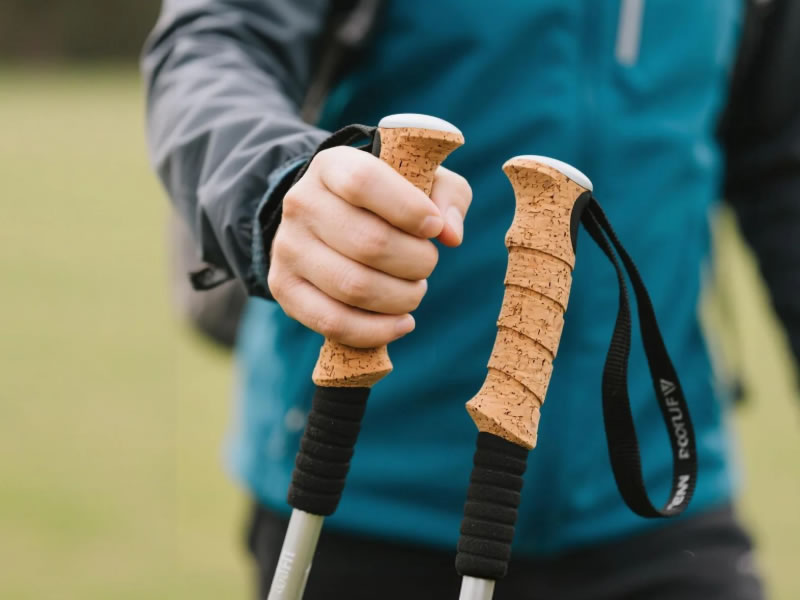
Recommended trekking pole purchase link: https://s.click.aliexpress.com/e/_c4M7OWaN
The Core Comparison: Cork vs Foam at a Glance
| Property | Cork | Foam (EVA) |
|---|---|---|
| Weight | Moderate | Lighter |
| Initial Comfort | Firm, requires break‑in | Soft, immediate comfort |
| Long‑term Comfort | Molds to your hand | Compresses, may lose shape |
| Grip When Wet | Excellent – natural tackiness | Good – can become slippery |
| Moisture Management | Wicks sweat, breathable | Absorbs sweat, can become soggy |
| Vibration Dampening | Excellent – natural absorber | Good – soft but transmits more |
| Durability | Long‑lasting – ages gracefully | Compresses, degrades with UV |
| Temperature Performance | Neutral – comfortable all climates | Can become hot in sun |
| Cost | Higher | Lower |
| Eco‑Friendliness | Renewable, biodegradable | Petroleum‑based |
Part I: Cork Grips – The Natural Performer
What It Is: Cork is harvested from the bark of cork oak trees without harming the tree. It is a renewable, sustainable material with unique cellular structure—millions of air‑filled chambers per cubic inch.
✅ Advantages of Cork
1. Molds to Your Hand
This is cork’s signature benefit. Over the first several hikes, the warmth and pressure of your hand cause the cork to conform microscopically to your unique palm and finger contours. The result is a custom‑fit grip that feels like it was carved for you. No synthetic material replicates this.
2. Superior Wet/Dry Grip
Cork contains natural waxy substances (suberin) that provide excellent traction even when wet. Unlike foam, which can become slippery when saturated with sweat, cork maintains a secure, confidence‑inspiring hold. This is invaluable on long, sweaty days or in rain.
3. Moisture Wicking
The open cellular structure of cork absorbs and dissipates moisture away from your palm. Hands stay drier, reducing the risk of blisters and hotspots.
4. Natural Vibration Dampening
The same air‑filled cells that give cork its compressibility also absorb high‑frequency vibration. On rocky, hard‑packed trails, cork significantly reduces the fatiguing “buzz” transmitted through the pole.
5. Durability and Aging
Cork does not degrade with UV exposure or compression. A well‑maintained cork grip will outlast the pole itself. It may darken with use and develop a patina, but it retains its structural integrity and comfort.
6. Eco‑Friendly
Cork is renewable, biodegradable, and harvested without tree destruction. For environmentally conscious hikers, this is a meaningful consideration.
❌ Disadvantages of Cork
1. Higher Cost
Cork grips add $10–$30 to the cost of a pole pair compared to basic foam. For budget‑conscious buyers, this is a real trade‑off.
2. Requires Break‑In
New cork grips feel firm and may initially feel less comfortable than plush foam. They require a brief break‑in period (typically 10–20 miles) to conform to your hand.
3. Can Dry Out
In extremely arid climates, cork can lose moisture and become slightly harder. Occasional treatment with very fine sandpaper or cork conditioner restores its texture.
Part II: Foam (EVA) Grips – The Lightweight Contender
What It Is: EVA (ethylene‑vinyl acetate) foam is a closed‑cell synthetic material widely used in footwear, yoga mats, and pole grips. It is soft, lightweight, and inexpensive.
✅ Advantages of Foam
1. Immediate, Plush Comfort
Foam requires no break‑in. From the first moment you grip the pole, it feels soft and forgiving. For hikers with arthritis or hand sensitivity, this immediate comfort can be decisive.
2. Lighter Weight
Foam is marginally lighter than cork—typically a 5–10 gram savings per grip. For ultralight gram‑counters, every bit helps, though the difference is negligible in practice.
3. Lower Cost
Foam grips are inexpensive to manufacture. Poles with foam grips are generally $20–$50 cheaper than equivalent cork‑grip models. For casual hikers or those on a strict budget, this is a legitimate advantage.
4. Good Initial Grip
Fresh foam provides excellent traction. It is soft and conforms temporarily to your hand shape, though it does not “remember” that shape permanently.
❌ Disadvantages of Foam
1. Compression Over Time
Foam is a compressible material. Over hundreds of miles, it permanently compresses in the high‑pressure areas where your fingers and palm contact it. The grip becomes thinner, less supportive, and may develop hard spots.
2. Sweat Absorption
Unlike cork, which wicks moisture, foam absorbs sweat. On hot days, grips can become saturated, heavy, and slippery. They also become a breeding ground for bacteria and odors. Some hikers report a “spongy” feel when grips are sweat‑logged.
3. UV Degradation
Prolonged sun exposure can cause foam to dry out, crack, and degrade. Poles stored in sunny locations or used extensively in high‑UV environments may require grip replacement sooner.
4. Less Vibration Dampening
While foam is soft, its closed‑cell structure does not absorb high‑frequency vibration as effectively as cork’s air‑filled cells. More trail chatter reaches your hands.
5. Environmental Concerns
EVA foam is petroleum‑based and not biodegradable. For hikers concerned with sustainability, this is a drawback.
Part III: Head‑to‑Head – Side‑by‑Side Scenarios
| Scenario | Cork | Foam | Verdict |
|---|---|---|---|
| Long‑distance hiking (thru‑hikes, multi‑day trips) | Ideal – molds to hand, wicks sweat, durable | Acceptable but compresses over time | Cork |
| Hot, sweaty conditions | Ideal – natural moisture management | Can become slippery and soggy | Cork |
| Cold, wet conditions | Ideal – maintains grip when wet | Can become slippery when cold/wet | Cork |
| Arthritis / hand sensitivity | Good after break‑in | Excellent immediate softness | Foam (initially) |
| Budget‑conscious purchase | Premium cost | Best value | Foam |
| Occasional / casual walking | Overkill | Perfectly adequate | Foam |
| Eco‑conscious consumer | Renewable, biodegradable | Petroleum‑based | Cork |
| Ultralight gram‑counting | Slightly heavier | Marginally lighter | Foam (negligible) |
Part IV: Beyond the Binary – Hybrid and Alternative Grips
1. Cork‑Foam Hybrids
Some manufacturers offer grips that combine a cork core with a foam outer layer, or vice versa. These attempt to capture the best of both worlds—cork’s moisture management with foam’s initial softness. Performance varies; read specific reviews.
2. Rubber Grips
Found on budget or winter‑specific poles. Rubber is durable and provides excellent insulation in cold, but it is heavy, slippery when wet, and transmits vibration. Generally not recommended for recreational hiking.
3. Textured / Ergonomic Shapes
Beyond material, grip shape matters. Some poles feature ergonomic contours that fit the palm. Cork versions of these shapes exist and are highly prized.
Part V: How to Choose – A Decision Framework
Choose Cork Grips IF:
- You hike long distances (day hikes over 5 miles, backpacking trips, thru‑hikes).
- You hike in hot, humid, or wet conditions where sweat management is critical.
- You value long‑term durability and want your poles to last for years.
- You appreciate the custom‑fit feel that develops over time.
- You are willing to invest a little more for superior performance.
- You prefer eco‑friendly, sustainable materials.
Choose Foam Grips IF:
- You are on a tight budget and need a functional, comfortable pole.
- You hike occasionally on short, moderate trails.
- You have arthritis or hand sensitivity and value immediate plushness.
- You are an ultralight purist counting every gram (though the difference is tiny).
- You plan to replace poles frequently and do not need decade‑long durability.
Part VI: Maintenance Tips
Cork Grips:
- Clean with mild soap and water; avoid harsh chemicals.
- If they become smooth, gently rub with fine (220‑grit) sandpaper to restore texture.
- In arid climates, very occasional treatment with cork conditioner (used for fishing rod handles) can prevent drying.
Foam Grips:
- Rinse with fresh water after sweaty or muddy hikes to remove absorbed sweat and grit.
- Allow to air dry completely; do not store wet.
- If they become compressed or degraded, replacement grips are available from many manufacturers.
Conclusion: Cork Wins for Performance, Foam for Budget
After weighing the evidence across durability, comfort, moisture management, and long‑term performance, cork emerges as the superior grip material for most hikers.
Its ability to mold to your hand, wick sweat, maintain grip when wet, and absorb vibration creates a comfort and control advantage that becomes more pronounced over miles and years. The slightly higher cost and brief break‑in period are investments repaid in thousands of pain‑free, confident steps.
Foam remains an excellent choice for the casual hiker, the budget‑conscious buyer, and anyone who prioritizes immediate, plush softness above all else. It is not a “bad” grip; it simply does not offer the same long‑term performance envelope as cork.
But the verdict is clear: if you hike with any regularity, if you value your hands’ comfort, if you want a grip that improves with age rather than degrades—choose cork. Your palms will thank you, mile after mile, year after year.




