




How to Use Walking Pole Straps Correctly? The Most Overlooked Skill in Hiking
For many hikers, the straps on their walking poles are an afterthought—something to slide their hands through and forget. This is a costly mistake. Used incorrectly, straps cause blisters, hand fatigue, and wasted energy. Used correctly, they transform your poles from simple balancing tools into efficient extensions of your body, transferring weight through your skeleton and allowing you to hike farther with less effort. This guide provides a step‑by‑step method for proper strap use, explains the biomechanics behind it, and helps you avoid the common mistakes that rob you of comfort and efficiency.
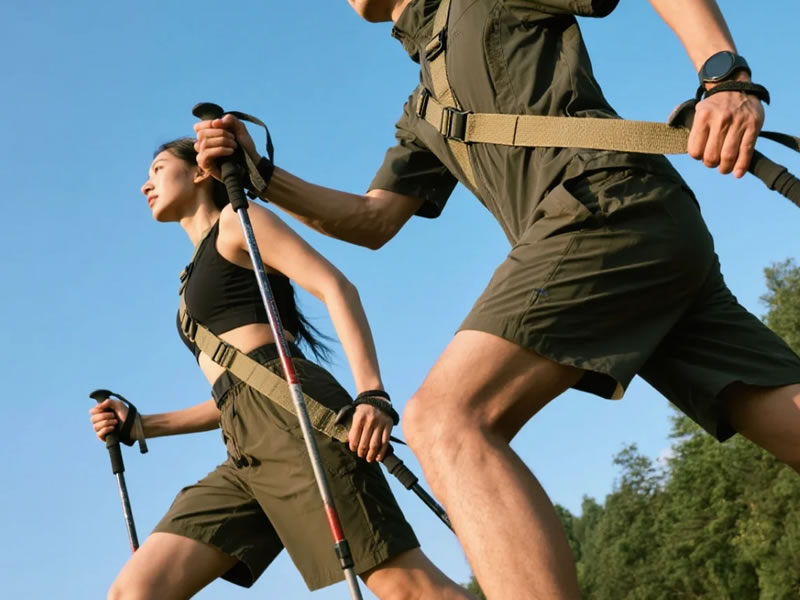
Recommended trekking pole purchase link: https://s.click.aliexpress.com/e/_c4M7OWaN
The Fundamental Principle: Straps Bear Weight, Not Your Grip
The most important concept to understand is that your grip should be relaxed. The strap, not your hand muscles, should bear the weight when you push down on the pole. This is achieved by positioning the strap correctly—across the back of your hand and wrist—so that when you push, the force is transferred through the strap directly into your skeleton.
Why this matters:
- Reduces hand fatigue: Your fingers can remain relaxed, preventing the "death grip" that tires hands within minutes.
- Prevents blisters: Less friction between grip and skin means fewer hot spots.
- Increases efficiency: Force is transferred directly from your body to the pole without muscular effort in your hand.
- Improves control: A relaxed grip allows the pole to swing naturally, enhancing rhythm and proprioception.
Step‑by‑Step: How to Put on the Strap Correctly
Step 1: Identify the Strap Orientation
Most straps have a distinct top and bottom. The larger opening is typically at the top, where your hand enters. Look for the point where the strap attaches to the grip—this will guide you.
Step 2: Insert Your Hand from Below
This is the critical step that most people get wrong. Slide your hand upward through the bottom of the strap. Your hand should enter from the palm side, with the strap crossing the back of your wrist.
Visualize: Imagine you are putting on a watch from underneath. Your hand goes through the strap, not over it.
Step 3: Grip the Handle
After your hand is through the strap, grip the handle normally. The strap should now lie across the back of your hand, between your thumb and index finger, and across your wrist.
Step 4: Adjust the Strap Tension
Tighten or loosen the strap so that:
- It is snug but not restrictive—you should be able to open your hand fully without the strap falling off.
- When you relax your grip, the strap holds the pole against the back of your hand.
- There is no pressure point digging into your wrist.
Step 5: Test the Engagement
With the strap adjusted, plant the pole and push down. You should feel the force transmitted through the strap, not through your grip. Your fingers can remain loose, simply guiding the pole.
The Biomechanics: Why This Works
When you push down through the strap, the force is transferred to the bony structures of your hand and wrist—specifically the metacarpals and the ulnar styloid process. These skeletal elements are designed to bear load without fatigue. Your hand muscles (the flexors and extensors) are free to perform their primary function: fine motor control and proprioception.
The result: You can maintain a secure, controlled connection to the pole for hours without the muscular fatigue that comes from gripping.
Common Mistakes and How to Correct Them
| Mistake | What It Looks Like | Consequence | Correction |
|---|---|---|---|
| Hand entering from above | Strap wraps around the front of the wrist, like a bracelet. | Strap cannot bear weight; you must grip tightly to control the pole. | Insert hand from below, as described. |
| Strap too loose | Pole dangles when you open your hand; you must grip to control it. | Strap provides no support; hand fatigue inevitable. | Tighten until the pole is secure with a relaxed hand. |
| Strap too tight | Strap digs into wrist; restricts circulation. | Pain, numbness, potential nerve compression. | Loosen to allow comfortable wrist movement. |
| Wearing over a watch or jewelry | Strap presses watch into wrist. | Painful pressure point; watch damage. | Remove watch or position it above the strap. |
| Death grip | White knuckles; hand muscles constantly flexed. | Rapid fatigue; blisters; poor energy transfer. | Consciously relax fingers; let the strap work. |
| Wearing on the wrong hand | Strap twisted or pulling at an angle. | Inefficient force transfer; awkward wrist position. | Verify strap orientation; swap poles if necessary. |
Advanced Technique: Adjusting Strap Tension for Terrain
While your baseline strap tension should allow a relaxed grip, you can fine‑tune for different conditions:
| Terrain | Strap Adjustment | Why |
|---|---|---|
| Flat / rolling | Snug but comfortable | Allows efficient energy transfer with relaxed grip. |
| Steep uphill | Slightly looser | Permits more aggressive, shorter-range planting motion. |
| Steep downhill | Slightly tighter | Ensures secure weight transfer when leaning heavily into poles. |
| Technical / scrambling | Consider removing straps | Prevents entanglement if you need to release poles quickly. |
| Stream crossings | Always unbuckle | Critical safety: you must be able to discard poles instantly if you fall. |
Strap Design and Quality
Not all straps are created equal. When choosing poles or replacing straps, look for:
- Width: Wider straps distribute pressure over a larger area, reducing discomfort.
- Padding: Soft, breathable padding (neoprene, mesh) enhances comfort.
- Adjustability: Easy one‑handed adjustment is valuable, especially with gloves.
- Attachment: Some systems (e.g., LEKI's Trigger Shark) allow instant detachment—a useful safety feature.
- Material: Avoid stiff, narrow nylon straps that can cut into the wrist.
When to Release the Straps
There are specific situations where you should not use the straps:
- Stream crossings: Always unbuckle straps. If you fall, you must be able to release the poles immediately to avoid entanglement.
- Technical scrambling: On terrain requiring hands‑free climbing, poles should be stowed, not strapped to your wrists.
- Avalanche terrain: In snow, straps can trap you in a slide.
- When you might need to discard poles quickly: Use judgment.
Maintenance
- Clean straps regularly with mild soap and water to remove sweat and grit that can cause chafing.
- Inspect for wear: Frayed straps or damaged adjusters should be replaced.
- Dry thoroughly after wet hikes to prevent mildew.
Conclusion: The Five‑Second Habit That Transforms Your Walk
Correct strap use is a five‑second adjustment that yields hours of dividends. It is the difference between fighting your poles and letting them work for you. Commit to the habit:
- Hand up from below.
- Grip handle.
- Adjust snug.
- Relax your grip.
- Let the strap bear the load.
Within one or two hikes, this will become automatic. Your hands will be fresher, your control will be better, and you will wonder how you ever walked any other way.
Master the straps, and your poles become extensions of your body.




