




Best Walking Poles for People with Bad Hips? A Complete Guide to Pain‑Free Mobility
Hip pain—whether from osteoarthritis, bursitis, a previous injury, or the natural wear and tear of aging—can turn a simple walk into a painful ordeal. The impact of each footstep transmits force directly through the hip joint, and for those with compromised hips, this repetitive loading can be debilitating. The right walking poles can be transformative, reducing the load on your hips, improving stability, and enabling you to walk farther with less pain. This comprehensive guide focuses on the specific needs of individuals with hip issues and recommends the best poles to keep you moving comfortably.
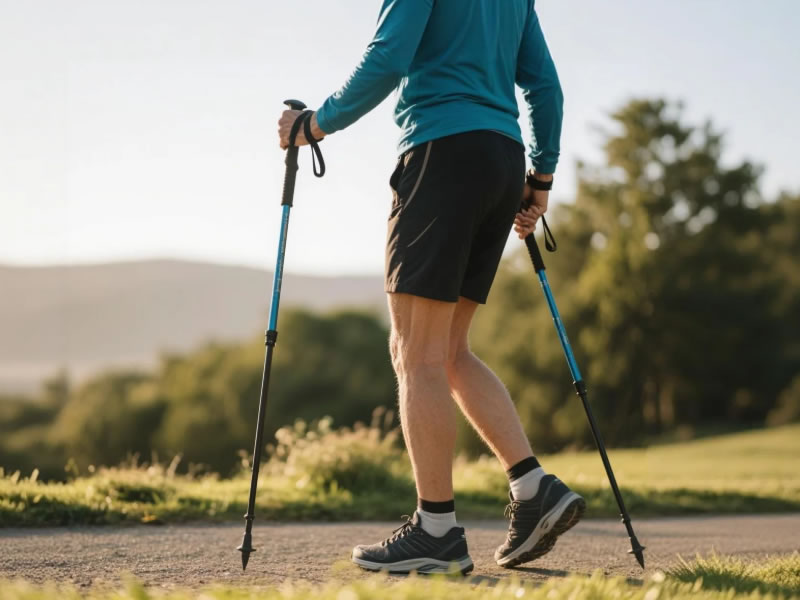
Recommended trekking pole purchase link: https://s.click.aliexpress.com/e/_c4M7OWaN
Why Walking Poles Help Bad Hips
| Problem with Walking | How Poles Help | The Mechanism |
|---|---|---|
| Impact force on hips | Reduce force by up to 25% | Poles transfer weight to upper body; shock absorption further reduces impact. |
| Instability / fear of falling | Provide four points of contact | Wider base of support improves balance, reducing compensatory muscle tension that strains hips. |
| Uneven gait | Promote symmetrical movement | Two poles encourage balanced, rhythmic walking, reducing asymmetrical stress on one hip. |
| Limited endurance | Share workload with upper body | Arms, shoulders, and back assist legs, delaying fatigue. |
Research note: Studies have shown that using walking poles can reduce the compressive forces on lower extremity joints by 20–25% during walking. For hip joints already under stress, this is a clinically significant reduction.
Part I: Essential Features for People with Bad Hips
1. Shock Absorption – The Top Priority
For hip pain, shock‑absorbing poles are highly recommended. The internal spring compresses on impact, absorbing a portion of the force that would otherwise travel up through the pole, into your arms, and—crucially—be transmitted through your skeleton to your hips. While the primary benefit is for upper body joints, the overall reduction in jarring benefits the entire kinetic chain.
- Look for: Models with built‑in springs, preferably with a lockout feature so you can disable the shock on flat terrain if desired.
- Why it matters: Every bit of impact reduction helps preserve hip joints.
2. Lightweight Construction
Heavy poles cause arm fatigue, which discourages use and can lead to poor posture, indirectly stressing hips. Aim for poles under 1 lb (450g) per pair.
- Carbon fiber is lightest and provides natural vibration dampening.
- Lightweight aluminum (7075 alloy) is a durable alternative.
3. Comfortable, Ergonomic Grips
You will be leaning into these poles, especially on descents. Grips must be comfortable for extended periods.
- Cork grips mold to your hand, wick moisture, and provide natural cushioning.
- Foam grips are soft and comfortable.
- Look for: Grips that allow a relaxed hold – you should be able to push through the strap, not grip tightly.
4. Secure, Easy‑to‑Use Locks
External lever locks (FlickLocks, Speed Locks) are vastly superior to twist locks. They:
- Require minimal hand strength.
- Provide visible confirmation of security.
- Allow quick length adjustments for changing terrain.
5. Two Poles – Absolutely Essential
For balanced weight distribution and symmetrical support, two poles are non‑negotiable. A single pole creates asymmetrical stress, which can exacerbate hip problems by encouraging an uneven gait.
6. Adjustable Length
Proper length adjustment is critical for hip protection:
- Shorten for uphill to maintain efficient posture.
- Lengthen for downhill to reduce impact on hips and knees.
- Ensure your chosen poles have a sufficient adjustment range.
Part II: Top Recommendations
🥇 Urban Poling Activator – The Clinically Certified Choice
Designed by: An occupational therapist and gerontologist.
Key Certification: The Arthritis Foundation Ease‑of‑Use Commendation.
Why It Excels for Hip Pain:
- Shock‑absorbing internal spring: Reduces impact transmitted through the body, benefiting hips.
- Proprietary ergonomic grip: The large, contoured handle reduces hand fatigue, encouraging proper technique and longer walks.
- Tool‑free length adjustment: External lever locks are easy to operate.
- Lightweight 7075 aluminum construction: Durable yet manageable.
- Interchangeable tip system: Includes rubber feet for pavement (where hip impact is highest) and carbide tips for trails.
Best For: Those with significant hip pain who want a medically endorsed, high‑confidence product.
Considerations: Premium price point ($120–$150/pair). Available online and through physiotherapy clinics.
🥈 LEKI Wanderfreund with Shock Absorbers – The Reliable Performer
Why It Excels for Hip Pain:
- Internal shock absorption (Shock Stopper version) – reduces impact on every step.
- Aergon grip: Comfortable cork molds to the hand.
- Speed Lock 2: External lever locks are exceptionally secure and easy to adjust.
- Lightweight aluminum construction: Durable 7075 alloy.
- Interchangeable tip system: Carbide tips; rubber tips included.
Best For: Active individuals who walk on varied terrain and want a reliable, high‑quality pole with proven shock absorption.
Considerations: Grip not as oversized as Activator; shock absorption must be specified when ordering.
🥉 Black Diamond Trail Pro – The Heavy‑Duty Choice
Why It Excels for Hip Pain:
- 7075 aluminum construction: Exceptionally durable and rigid – provides stable support for those who need to lean heavily on poles.
- FlickLock Pro: The industry benchmark for lock reliability; easy to adjust.
- Cork grip: Comfortable, moisture‑wicking.
- Interchangeable tip system.
- No built‑in shock absorption – but the rigid construction provides excellent support for those who prefer direct feedback.
Best For: Larger individuals or those who need maximum support and durability; those who prefer a rigid pole (some find shock absorbers "mushy").
Considerations: Heavier than carbon options; no shock absorption.
🏆 Also Worthy: Cascade Mountain Tech Carbon Fiber with Cork Grip
Why Consider: For budget‑conscious shoppers, this pole delivers remarkable value:
- Carbon fiber shaft – lightweight and vibration‑dampening.
- Cork grips – comfortable and naturally ergonomic.
- External lever locks – reliable and easy to adjust.
- Carbide tips with rubber protectors included.
- Price: Under $50.
Best For: Those who want quality features at an affordable price and do not need specialized shock absorption.
Note: No shock absorption. Consider adding rubber tip protectors for pavement walking to reduce impact.
Part III: Comparison at a Glance
| Model | Shock Absorbing | Weight (pair) | Grip | Locks | Price | Best For |
|---|---|---|---|---|---|---|
| Urban Poling Activator | Yes | ~17 oz | Oversized ergonomic | Lever | $$$ | Medical endorsement, significant hip pain |
| LEKI Wanderfreund | Optional (Shock Stopper) | ~17 oz | Cork | Lever | $$ | Active walking, varied terrain |
| Black Diamond Trail Pro | No | ~19 oz | Cork | Lever | $$ | Maximum support, durability |
| Cascade Mountain Tech | No | ~15 oz (carbon) | Cork | Lever | $ | Budget, lightweight |
Part IV: How to Choose – A Decision Framework
| If you... | Recommended Pole |
|---|---|
| Have significant hip pain and want medically endorsed shock absorption | Urban Poling Activator |
| Are an active walker on varied terrain and want reliable shock absorption | LEKI Wanderfreund (Shock Stopper) |
| Need maximum support and durability (larger individual, heavy use) | Black Diamond Trail Pro |
| Want a quality, lightweight pole on a strict budget | Cascade Mountain Tech Carbon Fiber |
Part V: Essential Tips for Hip Pain Sufferers
1. Prioritize Shock Absorption
If your budget allows, choose poles with built‑in shock absorption. The internal spring reduces the jarring impact that travels through your body with every step. This is especially beneficial on pavement, where impact forces are highest.
2. Use Rubber Tips on Pavement
Even without built‑in shock absorption, rubber tip protectors significantly dampen impact on hard surfaces. Use them whenever walking on pavement, boardwalks, or packed trails.
3. Perfect Your Technique
- Lengthen poles for downhills. This is critical for hip protection. A longer pole allows you to plant ahead and transfer weight, reducing the load on your hips with every descending step.
- Use the straps correctly. Push through the strap, not the grip. This transfers weight through your skeleton and saves your hands.
- Maintain an upright posture. Avoid leaning forward or backward, which can strain hips.
4. Two Poles Are Essential
Do not use a single pole. Two poles provide balanced support, encourage a symmetrical gait, and protect both hips equally.
5. Consult Your Physician
Before starting any new exercise program, especially if you have significant hip pathology (severe osteoarthritis, post‑surgical, etc.), consult your doctor or physical therapist. They may have specific recommendations for your condition.
6. Start Gradually
If you're new to using poles, start with short, flat walks to develop technique and build confidence. Gradually increase distance and terrain difficulty.
Part VI: Additional Considerations
Hip Replacement Patients
If you have had hip replacement surgery:
- Consult your surgeon before using poles. They can advise on appropriate timing and technique.
- Shock‑absorbing poles are generally recommended to reduce impact on the new joint.
- Ensure proper fit – a physical therapist can help with length adjustment and technique.
Osteoarthritis
For those with hip osteoarthritis:
- Consistent, low‑impact walking is beneficial. Poles enable this by reducing pain.
- Shock absorption is highly beneficial.
- Listen to your body. If a particular movement or terrain causes pain, adjust accordingly.
Conclusion: Walk Farther, Hurt Less
Hip pain does not have to mean the end of enjoyable walking. The right poles – with shock absorption, lightweight construction, comfortable grips, and reliable locks – can dramatically reduce the load on your hips, improve your stability, and restore your confidence.
Urban Poling Activator leads the field with its Arthritis Foundation certification and clinically proven shock absorption. LEKI Wanderfreund offers reliable performance for active walkers. Black Diamond Trail Pro provides maximum support for those who need it. And Cascade Mountain Tech proves that quality need not be expensive.
The investment is an investment in your mobility, your independence, and your quality of life. Choose wisely, walk comfortably, and keep moving.
Your hips will thank you.




