




Best Walking Poles for Beach Walking? A Complete Guide to Stable, Corrosion‑Resistant Support
Beach walking is one of life's simple pleasures—the sound of waves, the feel of salt air, and the gentle challenge of soft sand. But that same soft sand that makes beach walking enjoyable also presents unique challenges for your walking poles. Sand shifts, provides unstable footing, and is relentlessly abrasive and corrosive. The wrong poles will sink, jam, and deteriorate rapidly. This comprehensive guide covers everything you need to know about choosing and using walking poles for beach walking, ensuring your equipment performs and lasts.
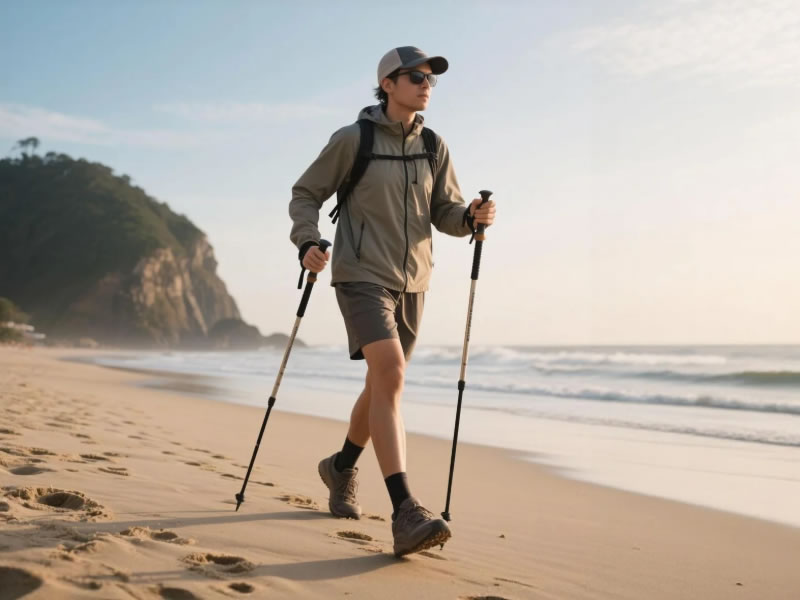
Recommended trekking pole purchase link: https://s.click.aliexpress.com/e/_c4M7OWaN
The Unique Challenges of Beach Walking
| Challenge | Why It Matters | What's Needed |
|---|---|---|
| Soft, shifting sand | Poles sink deeply; unstable support. | Large baskets for flotation. |
| Salt water and spray | Highly corrosive; destroys mechanisms. | Corrosion‑resistant materials; thorough rinsing. |
| Abrasive sand | Grits jams locks; wears down components. | Simple, cleanable mechanisms; regular maintenance. |
| Uneven, sloping surfaces | Requires stable, adaptable poles. | Secure locks; adjustable length. |
| Variable conditions | Wet packed sand near water; dry soft sand above tide line. | Versatile tips and baskets. |
Part I: Essential Features for Beach Walking
1. Material – Aluminum Is King
Aluminum poles are strongly preferred for beach walking. Here's why:
- Corrosion resistance: While aluminum can corrode, high‑quality alloys (6061, 7075) are significantly more resistant to saltwater damage than carbon fiber, which can suffer from galvanic corrosion at metal fittings.
- Durability: Aluminum bends rather than snaps—important when poles may be subjected to unexpected forces in soft, uneven sand.
- Affordability: You can replace aluminum poles more economically if they do succumb to corrosion over many seasons.
Carbon fiber note: If you must use carbon fiber, ensure all metal components (tips, baskets, locks) are high‑grade stainless steel or titanium, and be meticulous about rinsing.
2. Baskets – Large for Flotation
Standard summer baskets (1.5–2 inches) are useless in soft sand. They will sink immediately, and you'll be extracting your poles with every step.
- Large snow baskets (4–5 inches) are ideal. They provide maximum flotation, keeping your poles near the surface.
- Mud baskets (∼3 inches) are a good compromise if you also walk on trails, but for deep dry sand, snow baskets are best.
- Ensure baskets are removable so you can swap them for different conditions.
3. Tips – Carbide for Traction, Rubber for Packed Sand
- Carbide tips bite into sand, providing purchase on the unstable surface. They are essential for soft sand.
- Rubber tip protectors are useful for walking on wet, packed sand near the water's edge, where carbide might "skate." They also protect boardwalks and paved beach access paths.
Ideal setup: Carbide tips for most beach walking, with rubber tips carried for packed sand or transitions to hard surfaces.
4. Locks – Simple and Cleanable
- External lever locks are preferable. They are easier to clean sand from and less likely to jam than twist locks.
- Twist locks can become completely seized by fine sand. If you have them, be prepared for frequent, thorough cleaning.
5. Length Adjustability
- Adjustable poles allow you to fine‑tune length for walking on sloping beaches (shorten for uphill from water, lengthen for downhill).
- They also accommodate different users if sharing.
6. Two Poles – Essential for Stability
On soft, uneven sand, two poles are non‑negotiable. They provide the stable four‑point contact needed to prevent falls.
Part II: Top Recommendations for Beach Walking
🥇 Cascade Mountain Tech Aluminum with Cork Grip – The Best Value
Why It Excels for Beach Walking:
- Aluminum construction – durable and corrosion‑resistant with proper care.
- External lever locks – easy to clean; sand can be rinsed out.
- Cork grips – comfortable, moisture‑wicking, and less affected by salt than foam.
- Compatible with large snow baskets (sold separately or as accessories).
- Price: Under $40 per pair – you won't cry if they take a beating.
Best For: Budget‑conscious beach walkers who want reliable performance and don't mind swapping baskets.
Considerations: Stock baskets are summer size (too small for soft sand). Purchase large snow baskets separately.
🥈 LEKI Wanderfreund – The Premium Choice
Why It Excels for Beach Walking:
- High‑quality 7075 aluminum – excellent corrosion resistance.
- Speed Lock 2 – external lever locks that are easy to clean and adjust.
- Aergon cork grip – comfortable for long walks.
- Interchangeable tip and basket system – accepts large snow baskets.
- Durable construction – built to last many seasons.
Best For: Regular beach walkers who want a premium, long‑lasting pole.
Considerations: Higher price point ($70–$90). Requires purchase of large snow baskets separately.
🥉 Black Diamond Trail Pro – The Heavy‑Duty Option
Why It Excels for Beach Walking:
- 7075 aluminum – rugged and corrosion‑resistant.
- FlickLock Pro – reliable, easy‑to‑clean lever locks.
- Cork grip – comfortable and durable.
- Compatible with large snow baskets (sold separately).
- Excellent warranty and parts availability.
Best For: Larger individuals or those who want maximum durability and are willing to invest.
Considerations: Heavier than some options; premium price ($100+). Large baskets not included.
🏆 Also Worthy: TrailBuddy Trekking Poles
Why Consider:
- Affordable aluminum construction – under $40.
- External lever locks.
- Foam grips – comfortable, though less durable than cork.
- Includes both summer baskets and snow baskets in the package! This is rare and valuable for beach walking.
Best For: Budget shoppers who want snow baskets included.
Considerations: Heavier than premium brands; foam grips may degrade faster in sun/salt.
Part III: Essential Beach Walking Technique
1. Adjust Length
- Baseline: 90° elbow on firm ground.
- For walking on soft sand, you may find a slightly longer pole (1–2 inches) helps keep baskets from dragging as you lift.
2. Plant Firmly
- In soft sand, a tentative plant sinks. Plant firmly and decisively to compress the sand and create a stable platform.
- Use a slightly wider stance for stability.
3. Use the Double Plant on Very Soft Sand
- Plant both poles, move feet, repeat. This maintains three points of contact at all times.
4. Adjust for Slope
- Beaches often slope toward the water. Adjust pole lengths independently to keep shoulders level: downhill pole longer, uphill pole shorter.
5. Watch the Tide
- Wet, packed sand near the water's edge is much easier to walk on than dry sand above the tide line. Use it when possible, but be aware of incoming tides.
Part IV: Post‑Beach Maintenance – Critical for Longevity
Beach walking is brutal on poles. Immediate after‑walk care is essential.
Immediate Rinse
- As soon as you're done, rinse poles thoroughly with fresh water. Pay special attention to locks, joints, and baskets.
- If possible, extend sections and rinse inside as well.
Dry Thoroughly
- Wipe down all surfaces with a cloth.
- Extend sections and allow to air dry completely before collapsing.
Lubricate
- After drying, apply a dry silicone lubricant to the lower sections and lock mechanisms. This prevents sand from sticking and keeps adjustments smooth.
- Wipe off excess.
Inspect
- Check baskets for cracks—sand can accelerate wear.
- Inspect tips; replace if worn.
- Check locks for grit; clean if necessary.
Storage
- Store poles extended or loosely collapsed in a dry place.
Part V: What to Avoid
| Mistake | Consequence |
|---|---|
| Using carbon fiber without meticulous rinsing | Corrosion at metal fittings; delamination. |
| Summer baskets in soft sand | Poles sink deeply; exhausting to use. |
| Not rinsing after beach use | Salt corrosion seizes locks; degrades materials. |
| Leaving poles in hot car after beach | Heat accelerates corrosion of salt residue. |
| Using twist locks | Sand jams mechanism; impossible to adjust. |
Part VI: Quick‑Reference Checklist
Before the beach:
- Install large snow baskets (4–5 inches).
- Carbide tips for soft sand; rubber tips in pack for packed sand.
- Check locks are clean and functioning.
- Adjust length for your height and anticipated slope.
During the walk:
- Plant firmly; use double plant in very soft areas.
- Adjust for slope (downhill pole longer).
- Rinse poles in ocean occasionally to remove loose sand (but fresh water rinse still needed after).
After the walk:
- Rinse thoroughly with fresh water.
- Dry completely.
- Lubricate with dry silicone.
- Store properly.
Conclusion: Enjoy the Shore with Confidence
Beach walking with poles is a wonderful way to enjoy the coast, providing stability, reducing joint impact, and turning a simple stroll into a full‑body workout. The key is choosing poles that can withstand the unique challenges of sand and salt—aluminum construction, large baskets, and simple, cleanable locks—and committing to the essential post‑walk maintenance that keeps them functioning season after season.
Cascade Mountain Tech Aluminum offers unbeatable value. LEKI Wanderfreund provides premium performance. Black Diamond Trail Pro delivers maximum durability. And TrailBuddy includes snow baskets right in the box.
Whichever you choose, the combination of the right equipment and proper care will have you striding confidently along the shoreline, poles providing stable support as waves lap at your feet.
Happy beach walking!




