




Best Walking Poles for Winter Hiking? The Complete Guide to Cold‑Weather Stability and Safety
Winter transforms familiar trails into a wonderland of snow and ice—but it also introduces unique challenges: hidden obstacles, deep drifts, icy patches, and bone‑chilling cold. Your three‑season poles may suffice for a light dusting, but serious winter hiking demands specialized equipment. The right poles provide critical flotation in deep snow, reliable grip on ice, and dependable operation in freezing temperatures. This comprehensive guide covers the essential features of winter‑optimized poles and recommends the best models to keep you safe and stable on every snowy adventure.
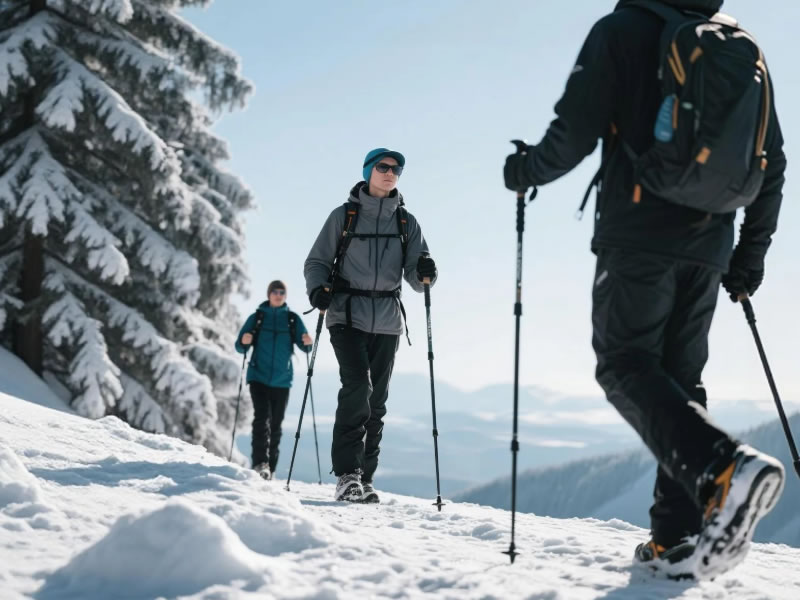
Recommended trekking pole purchase link: https://s.click.aliexpress.com/e/_c4M7OWaN
Why Winter Demands Specialized Poles
| Winter Challenge | Why It Matters | What's Needed |
|---|---|---|
| Deep, soft snow | Poles sink, providing no support. | Large snow baskets for flotation. |
| Icy surfaces | Tips slip, causing falls. | Aggressive carbide tips for grip. |
| Freezing temperatures | Locks freeze; mechanisms jam. | External lever locks (avoid twist locks). |
| Cold hands / gloves | Difficult to adjust poles. | Easy‑to‑operate locks; extended grips. |
| Hidden obstacles | Rocks, logs beneath snow. | Probing capability; durable shafts. |
| Variable terrain | Steep climbs, descents, traverses. | Adjustable length for optimal positioning. |
Part I: Essential Features for Winter Hiking
1. Snow Baskets – The Most Critical Upgrade
Standard summer baskets (1.5–2 inches) are useless in deep snow. They allow the pole to sink past the grip, forcing you to stoop and rendering the pole ineffective.
- What you need: Large snow baskets (4–5 inches in diameter). These distribute your weight over a wider area, keeping the pole near the surface.
- Material: Flexible plastic that can withstand impact with hidden rocks.
- Attachment: Ensure they are compatible with your poles and easy to swap.
Note: Many poles require you to purchase snow baskets separately. They are not always included.
2. Carbide Tips – For Traction on Ice
- Aggressive, long‑life carbide tips are essential. They bite into ice and packed snow, providing secure purchase.
- Replace tips when they become rounded—traction on ice diminishes rapidly with wear.
3. Locking Mechanism – Lever Locks Are Non‑Negotiable
Avoid twist locks at all costs in winter. Moisture can freeze inside the mechanism, locking it shut or making it impossible to tighten.
- External lever locks (FlickLocks, Speed Locks) are the only reliable choice. They:Are mechanically simple.Can be operated with thick gloves.Are far less likely to freeze solid.Can be freed with a firm tap if they do ice up.
4. Shaft Material – Aluminum for Durability
While carbon fiber is lighter, aluminum (particularly 7075 alloy) is the superior winter choice:
- Impact resistance: Aluminum handles impacts with hidden rocks better.
- Cold performance: Carbon can become more brittle in extreme cold.
- De‑icing: Easier to de‑ice without damaging the shaft.
Verdict: The slight weight penalty of aluminum is worth the gain in durability and reliability.
5. Grips – Insulation and Extended Foam
- Cork and foam grips are still good, but ensure they are not soaked before a cold outing.
- Extended foam grips (running down the shaft) allow you to "choke up" on the pole for steep sections without gripping cold metal. This is a highly valuable feature in winter.
- Wool or insulated glove liners are essential with any grip in freezing temperatures.
6. Adjustability and Length
You will likely need to lengthen your poles from your summer setting to account for:
- The added height of snowshoes or bulky winter boots.
- The need for greater reach when planting poles in deep, soft snow on side slopes.
Ensure your poles have sufficient adjustment range (typically up to 135 cm or more).
7. Two Poles – Absolutely Essential
For balanced support and stability on uneven, slippery terrain, two poles are non‑negotiable.
Part II: Top Recommendations for Winter Hiking
🥇 Black Diamond Trail Pro – The Heavy‑Duty Winter Champion
Why It Excels for Winter:
- 7075 aluminum construction: Rugged, durable, and impact‑resistant.
- FlickLock Pro: The industry benchmark for lock reliability. Easy to operate with gloves; can be adjusted with a hex key if needed.
- Cork grip: Comfortable, moisture‑wicking. Available with extended foam grip on some models.
- Interchangeable baskets: Accepts large snow baskets (sold separately).
- Carbide tips: Aggressive and replaceable.
Best For: Serious winter hikers, snowshoers, and those who demand maximum durability.
Considerations: Heavier than carbon options; snow baskets not included.
🥈 LEKI Wanderfreund – The Versatile Performer
Why It Excels for Winter:
- High‑quality aluminum (Superferritic alloy) – durable and cold‑resistant.
- Speed Lock 2: External lever locks that are secure and glove‑friendly.
- Aergon grip: Comfortable cork; extended foam grip available on some models.
- Interchangeable tip and basket system: Accepts large snow baskets (sold separately).
- Optional shock absorption (Shock Stopper) – reduces impact on hardpack and ice.
Best For: Winter hikers who want a reliable, high‑quality pole with excellent adjustability.
Considerations: Snow baskets not included; shock absorption adds weight.
🥉 Komperdell Explorer – The Budget‑Friendly Winter Option
Why It Excels for Winter:
- 7075 aluminum – durable and affordable.
- Power Lock 3: External lever locks – simple and reliable.
- Foam or cork grip options.
- Accepts large snow baskets (sold separately).
- Carbide tips.
Best For: Budget‑conscious winter hikers who need reliable performance.
Considerations: Heavier than premium options; may not have extended foam grips.
🏆 Also Worthy: Black Diamond Distance Carbon Z (with Snow Baskets)
Why Consider:
- Ultralight carbon fiber – if weight is your absolute priority and you accept the trade‑offs.
- Folding design – packs small for travel.
- Compatible with snow baskets (sold separately).
- Fixed length – choose carefully; not adjustable on trail.
Considerations: Carbon is more brittle in cold; fixed length limits terrain adaptability. Not recommended for rugged, technical winter routes.
Part III: Winter‑Specific Technique
1. Lengthen for Snow Depth
- Increase pole length by 5–10 cm from your summer baseline to account for snow depth and snowshoes.
- On very deep snow, you may need even longer poles to reach the surface.
2. Use the "Probe and Plant" Method
- Before each step in deep snow, probe ahead with your pole to check for depth, hidden rocks, or logs.
- Plant firmly once you've found secure footing.
3. Double Plant for Stability
- On steep, icy, or uncertain terrain, plant both poles before moving your feet. This guarantees three points of contact.
4. Adjust for Side Slopes
- When traversing a slope, shorten the uphill pole, lengthen the downhill pole to keep your shoulders level.
5. Wrist Strap Caution
- In avalanche terrain or very deep snow, consider not using wrist straps. If you fall, you need to be able to discard your poles quickly to self‑arrest or "swim" in moving snow.
Part IV: Post‑Hike Maintenance – Preventing the Freeze‑Up
Winter maintenance is critical to longevity:
- Immediately after your hike:Fully extend poles and wipe them dry.Pay special attention to locking mechanisms – remove any ice or snow.If locks are frozen, do not force them. Warm gently (body heat, not direct flame) to thaw.
- At home:Dry thoroughly before storing. Moisture trapped inside will freeze and can weld sections together.Lubricate with a dry silicone lubricant on the lower shaft sections. Avoid wet oils that attract grit and moisture.Store uncollapsed or only partially collapsed in a dry, warm place.
Part V: Essential Winter Accessories
| Accessory | Why It's Needed |
|---|---|
| Large snow baskets | Prevent sinking in deep snow. |
| Carbide tips | Grip on ice and packed snow. |
| Rubber tip protectors | For transitions to pavement or icy surfaces where carbide may skate. |
| Extended foam grips | Allow choked‑up holds on steep terrain. |
| Insulated gloves | Essential for hand comfort and grip operation. |
Part VI: Safety Considerations
Avalanche Terrain
- Do not use wrist straps. You must be able to release poles instantly.
- Carry an avalanche beacon, probe, and shovel – poles are not a substitute.
Ice Crossing
- Test ice thickness with your pole before committing weight.
- Use carbide tips for grip; rubber tips may slip.
Visibility
- In whiteout conditions, poles help you feel the terrain when you can't see it.
- Consider poles with reflective elements for low‑light visibility.
Part VII: Comparison at a Glance
| Model | Material | Locks | Grip | Snow Baskets Included? | Best For |
|---|---|---|---|---|---|
| Black Diamond Trail Pro | 7075 Al | FlickLock Pro | Cork | No | Maximum durability, serious winter use |
| LEKI Wanderfreund | Superferritic Al | Speed Lock 2 | Cork | No | Versatile performance, reliable |
| Komperdell Explorer | 7075 Al | Power Lock 3 | Foam/Cork | No | Budget‑friendly, reliable |
| Black Diamond Distance Carbon Z | Carbon | Fixed | Foam | No | Ultralight, travel (not for rugged terrain) |
Note: All require separate purchase of snow baskets.
Part VIII: Conclusion – Prepare for the Cold
Winter hiking is a sublime experience—crisp air, silent forests, and stunning vistas. But it demands respect for the conditions. The right walking poles, equipped with large snow baskets, reliable lever locks, durable aluminum shafts, and aggressive carbide tips, are essential tools for safety and enjoyment.
Black Diamond Trail Pro and LEKI Wanderfreund lead the field with their rugged construction and winter‑ready features. Komperdell Explorer offers reliable performance on a budget. And for those willing to accept trade‑offs, Black Diamond Distance Carbon Z provides ultralight packability.
The investment is an investment in safe, confident winter exploration. Equip your poles properly, master winter techniques, and maintain them diligently. Then step into the snow, knowing your poles will support you every step of the way.
Happy winter trails!




