




Best Walking Poles for Mountain Trekking? The Complete Guide to Rugged, Reliable Support
Mountain trekking is the ultimate test of walking poles. Steep ascents, knee‑jarring descents, loose scree, rocky trails, and sudden weather changes demand equipment that is absolutely reliable, durable, and adaptable. The wrong poles will slip, bend, or fail when you need them most. This comprehensive guide focuses on the specific demands of mountain terrain and recommends the best poles to keep you safe, stable, and efficient on every high‑altitude adventure.
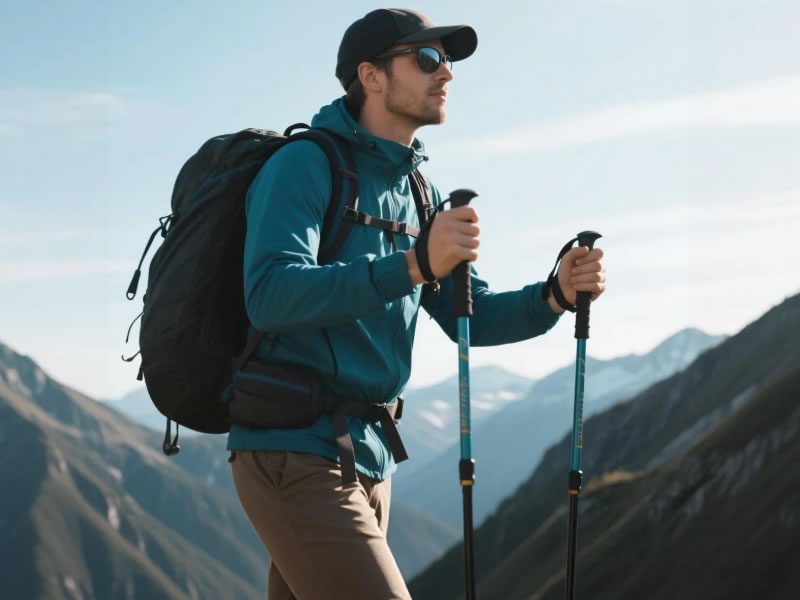
Recommended trekking pole purchase link: https://s.click.aliexpress.com/e/_c4M7OWaN
Why Mountain Trekking Demands Specialized Poles
| Mountain Challenge | Why It Matters | What's Needed |
|---|---|---|
| Steep ascents | Need powerful push‑off; poles must not slip. | Secure locks; lightweight for efficiency. |
| Technical descents | High impact on knees; need braking. | Shock absorption (optional); reliable length adjustment. |
| Loose scree / talus | Poles must bite into unstable surface. | Aggressive carbide tips; sturdy shafts. |
| Rocky terrain | Lateral impacts can break poles. | Durable material (7075 aluminum preferred). |
| Variable conditions | Snow, ice, mud, rock in one trek. | Interchangeable baskets; versatile tips. |
| High altitude | Reduced strength; gear must perform. | Lightweight; reliable mechanisms. |
| Exposure / fall risk | Poles are critical for balance. | Two poles; secure locks; confident grip. |
Part I: Essential Features for Mountain Trekking
1. Material – 7075 Aluminum Is the Gold Standard
While carbon fiber is lighter, 7075 aluminum is the preferred choice for serious mountain trekking.
| Material | Strength | Failure Mode | Weight | Best For |
|---|---|---|---|---|
| 7075 Aluminum | Excellent | Bends (rarely snaps) | Moderate | Rugged, technical terrain; maximum durability |
| 6061 Aluminum | Good | Bends | Moderate | General mountain use, budget |
| Carbon Fiber | High (axial) | Brittle (can snap) | Lightest | Weight‑conscious; established trails only |
Why aluminum wins for mountains:
- Impact resistance: On rocky terrain, poles get jammed between rocks, caught in crevices, and subjected to lateral forces. Aluminum bends; carbon can snap catastrophically.
- Repairability: A bent aluminum section can often be straightened in the field. A cracked carbon pole is finished.
- Cold performance: Aluminum's properties are consistent in extreme cold; carbon can become more brittle.
2. Locking Mechanism – External Lever Locks Are Non‑Negotiable
Avoid twist locks at all costs in mountain terrain. They slip under load, jam with grit, and freeze in cold.
- External lever locks (FlickLocks, Speed Locks) provide:Visible, secure clamping – you can see and feel when they're engaged.Easy operation with gloves – critical at altitude.Field adjustability – can be tightened with a hex key if they loosen.Reliability – unaffected by dirt, moisture, or cold.
Top systems: Black Diamond FlickLock Pro, LEKI Speed Lock 2, Komperdell Power Lock.
3. Grips – Cork for Comfort and Control
- Cork grips are preferred for mountain trekking. They:Mold to your hand over time for a custom fit.Wick moisture, preventing slippage when sweaty.Provide natural vibration dampening.Perform well in all temperatures.
- Extended foam grips (running down the shaft) are valuable for "choking up" on steep sections without gripping cold metal.
4. Tips – Aggressive Carbide
- Long‑life, replaceable carbide tips are essential. They must bite into rock, ice, and hardpack.
- Check tips before every major trek; replace when rounded.
5. Baskets – Interchangeable for Conditions
Mountain terrain varies from snow to scree to mud. Interchangeable baskets allow you to adapt:
- Small summer baskets for packed trails and rocky terrain (less snagging).
- Large snow baskets for snowfields and glaciers.
- Mud baskets for boggy sections.
Ensure your poles accept baskets that can be swapped easily, without tools.
6. Adjustability – Continuous and Sufficient Range
You will constantly adjust pole length on a mountain trek:
- Shorten for steep climbs to maintain efficient posture.
- Lengthen for descents to reduce knee impact.
- Independent adjustment for sidehills – uphill pole shorter, downhill longer.
Ensure your poles have a wide adjustment range (typically 110–135 cm or more) to accommodate all situations.
7. Two Poles – Absolutely Essential
For balanced support, symmetrical joint protection, and maximum stability on exposed terrain, two poles are non‑negotiable.
Part II: Top Recommendations for Mountain Trekking
🥇 Black Diamond Trail Pro – The Heavy‑Duty Mountain Standard
- Material: 7075 aluminum
- Lock: FlickLock Pro – the industry benchmark; rock‑solid, field‑serviceable
- Grip: Cork; comfortable, moisture‑wicking
- Tips: Interchangeable carbide; replacement widely available
- Baskets: Interchangeable; snow baskets sold separately
- Weight: ~19 oz per pair – reflects durability
- Best For: Serious mountain trekkers, alpine climbers, anyone demanding maximum durability and lock reliability.
Why it wins: The Trail Pro is engineered for alpine guides and heavy‑duty use. The 7075 shaft shrugs off impacts that would bend lesser poles. The FlickLock Pro provides unshakeable security, easy operation with gloves, and can be adjusted with a hex key if it ever loosens. Cork grip ensures all‑day comfort.
Considerations: Heavier than carbon options; snow baskets not included.
🥈 LEKI Makalu – The Precision German Engineering Choice
- Material: Superferritic (proprietary high‑strength aluminum alloy)
- Lock: Speed Lock 2 – external lever; very secure, easy to adjust
- Grip: Aergon – ergonomic cork; available in regular and small (women's) sizes
- Tips: Carbide flextip; accepts interchangeable baskets
- Weight: ~19 oz per pair
- Best For: Trekkers who prioritize grip comfort and precision engineering.
Why it excels: The Makalu series has been a mainstay for mountain guides for decades. The Speed Lock 2 is virtually slip‑proof, and the Aergon grip is among the most comfortable for sustained use. The alloy is exceptionally durable. Optional shock absorption (Shock Stopper) available.
Considerations: Slightly heavier than some competitors; snow baskets not included.
🥉 Komperdell Explorer – The Rugged Value Choice
- Material: 7075 aluminum
- Lock: Power Lock 3 – robust external lever
- Grip: Foam or cork options
- Tips: Carbide; interchangeable baskets
- Weight: ~19 oz per pair
- Best For: Budget‑conscious trekkers who refuse to compromise on core features.
Why it's included: Komperdell often undercuts the big brands on price while maintaining high‑quality 7075 shafts and reliable lever locks. The Explorer series is a legitimate contender for rugged mountain use.
Considerations: Heavier than premium options; grips less refined than LEKI/Black Diamond.
🏆 Also Worthy: Black Diamond Alpine Carbon Cork – The Carbon Option
- Material: Carbon fiber (high‑modulus)
- Lock: FlickLock Pro
- Grip: Cork
- Weight: ~15 oz per pair – significantly lighter
- Best For: Weight‑conscious trekkers on established mountain routes where lateral impacts are less likely.
Why consider: If you are absolutely committed to saving weight and accept the trade‑offs, this is the premium carbon choice. It retains the FlickLock Pro reliability and cork grip comfort.
Considerations: Carbon is more brittle; not recommended for off‑trail scrambling or rocky terrain where poles may be jammed.
Part III: Comparison at a Glance
| Model | Material | Locks | Grip | Weight (pair) | Baskets Included? | Best For |
|---|---|---|---|---|---|---|
| Black Diamond Trail Pro | 7075 Al | FlickLock Pro | Cork | ~19 oz | Summer only | Maximum durability, alpine use |
| LEKI Makalu | Superferritic Al | Speed Lock 2 | Cork | ~19 oz | Summer only | Precision engineering, comfort |
| Komperdell Explorer | 7075 Al | Power Lock 3 | Foam/Cork | ~19 oz | Summer only | Budget, rugged use |
| Black Diamond Alpine Carbon Cork | Carbon | FlickLock Pro | Cork | ~15 oz | Summer only | Weight‑conscious, established trails |
Note: All require separate purchase of snow baskets for glacier travel or deep snow.
Part IV: Mountain‑Specific Techniques
1. The "Double Plant" on Steep, Loose Terrain
- On extremely steep or unstable slopes, plant both poles simultaneously ahead of you, then take one or two steps. This guarantees three points of contact at all times.
2. Sidehill Traverses – Independent Adjustment
- When traversing a slope, shorten the uphill pole and lengthen the downhill pole to keep your shoulders level and maximize stability.
3. Probing Hidden Terrain
- Use your poles to probe snow bridges, crevasses, and hidden holes before committing your weight. In glacier travel, this is a critical safety technique.
4. Self‑Arrest (with caution)
- While not a replacement for an ice axe, poles can assist in self‑arrest on snow. Remove wrist straps first to avoid entanglement.
5. Anchoring on Exposed Ridges
- On narrow, exposed ridges, plant poles firmly to create a stable three‑point stance before moving.
Part V: Essential Maintenance for Mountain Poles
Mountain terrain is punishing. After every trek:
- Rinse thoroughly to remove grit from locks and joints.
- Dry completely – moisture causes corrosion and can freeze at altitude.
- Inspect for damage – check for bends, cracks, or worn tips.
- Lubricate with dry silicone spray on lower sections.
- Check lock tension – tighten if necessary with hex key.
Before a major trek:
- Replace worn tips.
- Ensure you have appropriate baskets for expected conditions.
- Carry spare tips and a small hex key for lock adjustment.
Part VI: Safety Considerations
Lock Failure
- A slipping lock under load can cause a fall. Check locks before every descent.
- Carry a small hex key to adjust lever lock tension.
Tip Failure
- A worn carbide tip loses traction on rock and ice. Replace before it becomes rounded.
Basket Loss
- Losing a basket in deep snow renders your pole nearly useless. Carry a spare.
Falls
- In the event of a fall, let go of the poles. Do not try to arrest a fall with poles—you risk wrist and shoulder injury.
Part VII: Conclusion – Invest in Reliability
Mountain trekking is not the place for compromise. The poles that carry you up steep passes, support you on exposed ridges, and save your knees on long descents must be absolutely trustworthy.
Black Diamond Trail Pro and LEKI Makalu represent the pinnacle of mountain‑worthy design—durable, reliable, and field‑serviceable. Komperdell Explorer offers exceptional value without sacrificing core features. And Black Diamond Alpine Carbon Cork provides a lightweight option for those who accept the trade‑offs.
The investment in quality poles is an investment in your safety and enjoyment. Choose wisely, maintain diligently, and your poles will carry you through a lifetime of mountain adventures.
Happy trekking!




