




What Is the Best Grip Shape for Walking Poles? Complete Ergonomic Guide
Your hands are your primary connection to your walking poles. They transmit every bit of force, every subtle adjustment, and every ounce of stability. Yet many hikers grab whatever poles are on sale without considering grip shape. The question "What is the best grip shape for walking poles?" has a complex answer—because the "best" shape depends on how you use your poles, your hand anatomy, and the terrain you tackle. This comprehensive guide explores grip ergonomics, materials, and designs to help you find your perfect match.
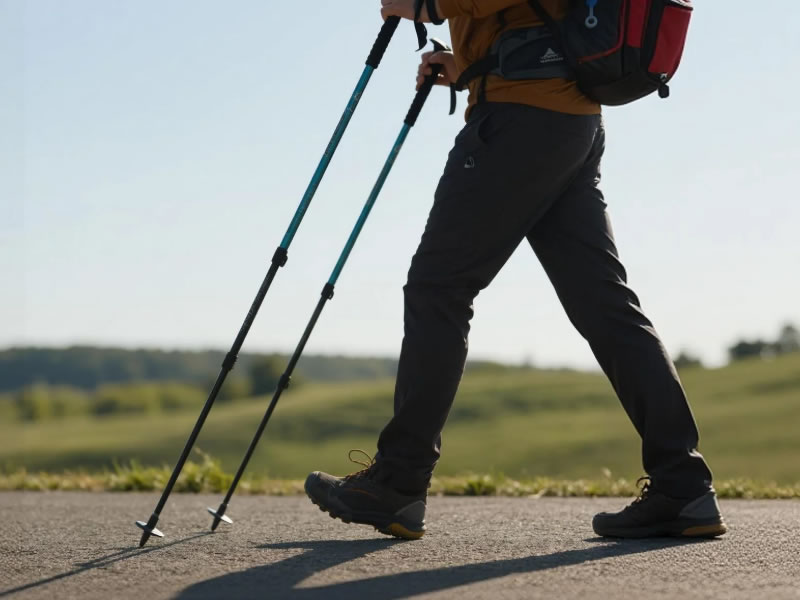
Recommended trekking pole purchase link: https://s.click.aliexpress.com/e/_c4M7OWaN
The Short Answer
For most recreational hikers, ergonomic angled grips with a neutral wrist position offer the best combination of comfort, efficiency, and reduced fatigue. However, straight cylindrical grips provide versatility for changing hand positions, and specialized shapes serve specific activities like Nordic walking or steep mountaineering. Ultimately, the best grip shape is the one that feels natural in your hand during hours of use.
Understanding Grip Ergonomics
Before comparing shapes, it helps to understand how your hand and wrist work during pole use:
Natural Wrist Position
When you stand with arms relaxed at your sides, your wrists assume a slightly angled position—not perfectly straight, and not sharply bent. This is your neutral wrist angle. Grips designed to maintain this angle during pole planting reduce strain on tendons and muscles.
Grip Pressure Points
Your hand has pressure-sensitive areas. The ideal grip distributes force across:
- The padded base of your thumb (thenar eminence)
- The fleshy part of your palm below your pinky (hypothenar eminence)
- The finger contact areas
Poor grip shapes concentrate pressure on bony areas or sensitive nerves, leading to discomfort and numbness.
Grip and Arm Alignment
The grip connects to the shaft at a specific angle. This shaft-to-grip angle affects how force transfers from your arm to the pole. Standard angles range from straight (0°) to 15° forward cant.
Major Grip Shape Categories
1. Ergonomic Angled Grips (The Popular Choice)
Description: These grips feature a forward-angled top surface that matches your hand's natural position when the pole is planted. Many include a rounded palm rest and textured finger grooves.
Best for: Most hikers, especially those covering varied terrain with consistent pole technique.
Advantages:
- Maintains neutral wrist position
- Reduces fatigue on long days
- Allows relaxed grip with less tension
- Often includes comfortable palm support
- Works well with strapless techniques
Disadvantages:
- Less versatile for changing hand positions
- May feel awkward if you use unusual gripping styles
- Learning curve for traditional pole users
- Usually more expensive
Top examples: Leki Aergon, Black Diamond Distance Ergo Cork, Komperdell Ergo Grip
2. Straight Cylindrical Grips (The Traditional Choice)
Description: Simple, round or slightly oval grips without significant contouring. Similar in shape to ski poles.
Best for: Hikers who frequently change hand positions, budget-conscious buyers, traditionalists.
Advantages:
- Most versatile—grip anywhere along the length
- Inexpensive to manufacture (lower pole cost)
- Familiar feel for skiers
- Easy to regrip if damaged
- Works well with full-strap techniques
Disadvantages:
- Requires more grip tension to hold
- Can cause hand fatigue on long days
- Less wrist support on steep terrain
- May not fit hand contours as naturally
Top examples: Many budget poles, classic trail designs
3. Anatomic/Pistol Grips
Description: Highly contoured grips with pronounced palm rests and finger grooves, resembling pistol handles. Often found on dedicated Nordic walking poles.
Best for: Nordic walking, fitness walking, users with hand arthritis or weakness.
Advantages:
- Maximum hand support
- Reduces grip strength requirement
- Excellent for pushing motions (Nordic walking)
- Good for users with hand pain
- Promotes proper technique
Disadvantages:
- Very specific hand positioning required
- Not versatile for changing grips
- Can be uncomfortable if hands don't match contours
- Heavy and bulky
- Expensive
Top examples: Exel Nordic Walking Grips, some Leki Nordic models
4. T-Shape/Touring Grips
Description: Grips with a horizontal top section, similar to a walking cane handle. Less common on modern trekking poles.
Best for: Casual walkers, those transitioning from canes, specific medical needs.
Advantages:
- Familiar cane-like feel
- Easy to grip without thought
- Good for light support
- Often comfortable for arthritic hands
Disadvantages:
- Poor for technical terrain
- Limited grip positions
- Not efficient for power transfer
- Heavy and bulky
5. Asymmetrical Grips
Description: Left and right grips are shaped differently to match each hand's natural position. More common on high-end poles.
Best for: Hikers who notice hand fatigue, those with hand asymmetry issues, performance-focused users.
Advantages:
- Optimized for each hand
- Maximum ergonomic benefit
- Reduces cumulative strain
- Often paired with excellent strap systems
Disadvantages:
- Can't swap poles hand-to-hand
- More expensive
- Learning curve for setup
- Not all brands offer this
Top examples: Some Leki models with right/left specific grips
How Grip Material Interacts with Shape
The best grip shape means nothing without appropriate material. Different materials affect how the shape performs:
Cork Grips
Best shapes: Ergonomic and straight grips both work well with cork.
Cork molds to your hand over time, effectively customizing the shape to your unique anatomy. It's lightweight, breathable, and absorbs sweat. For ergonomic grips, cork enhances the fit by conforming to pressure points. For straight grips, cork creates a personalized contour after hours of use.
Ideal for: Hikers with sweaty hands, those seeking custom fit, warm-weather use.
EVA Foam Grips
Best shapes: Ergonomic and anatomic shapes benefit from foam's cushioning.
EVA foam provides excellent shock absorption and softness. On ergonomic shapes, it reduces pressure on bony areas. However, foam wears faster than other materials and can deteriorate in sunlight.
Ideal for: Hikers seeking maximum comfort, those with arthritis, cool-weather use.
Rubber Grips
Best shapes: Straight and T-shapes work with rubber's durability.
Rubber offers exceptional durability and grip in wet conditions. It's heavier than other materials and less breathable. Rubber maintains its shape well, so the original contour persists.
Ideal for: Wet climates, rugged use, those who prioritize durability over weight.
Plastic/Rubber Composite
Best shapes: Often found on budget ergonomic designs.
These materials offer reasonable durability at lower cost but lack the comfort and conforming properties of cork or quality foam.
Grip Shape by Activity
Day Hiking
Recommended: Ergonomic angled grips with cork or foam
Day hikers benefit from comfort over many hours. Ergonomic shapes reduce fatigue, and quality materials prevent hot spots.
Backpacking
Recommended: Ergonomic or straight grips, personal preference
With heavier loads, grip comfort becomes critical. Many backpackers prefer ergonomic shapes for descents but appreciate straight grips' versatility for changing hand positions during long days.
Nordic Walking
Recommended: Anatomic/pistol grips with specialized straps
Nordic walking requires powerful forward pushes. Anatomic grips transfer force efficiently and work with glove-like straps.
Trail Running
Recommended: Slim ergonomic or straight grips, minimal padding
Runners need lightweight, secure grips that allow quick hand changes. Simple shapes with good texture work best.
Mountaineering
Recommended: Straight grips with robust materials
Cold, gloved hands need simple shapes that work with thick gloves. Straight grips accommodate various glove thicknesses and allow multiple hand positions.
Medical/Rehabilitation Use
Recommended: Ergonomic or T-shape with maximum support
Users with hand weakness or pain benefit from highly supportive grips that require minimal grip strength. Anatomic shapes often help.
Strap Integration: The Other Half of Grip
The best grip shape integrates seamlessly with strap design. The strap and grip work as a system:
Traditional Straps
Attach at the grip top, wrap around wrist. Work well with straight grips where you grip firmly.
Ergonomic Straps
Designed to position your hand correctly on ergonomic grips. Often adjustable and padded. Essential for proper ergonomic function.
Trigger/Snap-in Straps
Quick-release systems (like Leki's Trigger system) integrate with specific grip shapes. These require compatible grips and offer convenience for removing/attaching poles.
Strapless Grips
Some ergonomic grips work without straps, relying on shape alone to maintain hand position. Good for quick hand changes but less secure on steep terrain.
How to Test Grip Shape
Before committing to a shape, test if possible:
- Hold for 5+ minutes: Initial comfort can fade. Hold the grip continuously while doing other tasks.
- Simulate use: Make planting motions, apply pressure, change angles.
- Check pressure points: Any area of concentrated pressure will become painful over distance.
- Try with gloves: If you hike in cold weather, test with your typical gloves.
- Consider your hands: Larger hands need longer grips; smaller hands need slimmer diameters.
Common Grip-Related Problems
Numbness or Tingling
Often caused by grips that are too small, putting pressure on ulnar nerve. Try larger diameter or ergonomic shapes that distribute pressure.
Hand Fatigue
May result from gripping too tightly to maintain control. Ergonomic shapes that require less grip tension often help.
Blisters and Hot Spots
Caused by friction against grip texture. Smoother materials or glove use may help. Cork naturally reduces friction.
Cold Hands
Rubber and plastic conduct cold. Foam and cork insulate better for winter use.
Grip Maintenance for Longevity
Once you've found the best grip shape, maintain it:
- Clean regularly with mild soap and water
- Avoid prolonged sun exposure (UV damages materials)
- Replace worn grips (many brands offer replacement)
- Check strap attachment points for wear
- Consider grip covers for storage
Grip Shape and Pole Length Interaction
The effective grip shape changes with pole length. At correct length, ergonomic benefits maximize. Too-long poles force awkward wrist angles, negating ergonomic design. Always adjust pole length before evaluating grip comfort.
Special Considerations
Left and Right Hands
If you buy asymmetrical grips, ensure you receive correct left/right pairs. Labeling isn't always clear.
Children's Poles
Smaller hands need proportionally smaller grips. Adult-sized grips on kids' poles cause poor technique and discomfort.
Rehabilitation Users
Consult with physical therapists about grip shape. Medical needs may require specific ergonomic features.
Double-Pole Users
Those using two poles for mobility support (rather than propulsion) may prefer different shapes than recreational hikers.
Top Grip Recommendations by Category
Best Overall Ergonomic: Leki Aergon (multiple material options, excellent shape)
Best Budget Ergonomic: Cascade Mountain Tech Carbon Fiber with Cork Grip
Best Traditional Straight: Black Diamond Trail Cork (simple, effective)
Best for Nordic Walking: Exel Nordic Walking Grips (specialized design)
Best for Large Hands: Komperdell Ergo Grip (extra length option)
Best for Small Hands: Leki Speed Nose (slim profile)
Best Cork Option: Black Diamond Distance Carbon Cork (ergonomic shape in cork)
Best Foam Option: Gossamer Gear LT5 (lightweight foam, straight shape)
The Future of Grip Design
Manufacturers continue innovating:
- Moldable grips that heat-form to your hand
- Biodegradable materials for environmental concerns
- Integrated electronics for fitness tracking
- Advanced composites combining materials for specific zones
- Custom 3D-printed grips based on hand scans
Conclusion
What is the best grip shape for walking poles? For most hikers, ergonomic angled grips with cork construction offer the best balance of comfort, efficiency, and durability. They maintain natural wrist position, reduce fatigue, and mold to your hand over time. However, straight grips remain excellent choices for those who value versatility and simplicity.
The perfect grip shape depends on your specific needs—terrain, duration, hand size, and personal anatomy. Test different shapes when possible, pay attention to how your hands feel after long days, and don't hesitate to replace grips if they cause discomfort. Your hands carry you through miles of trail; they deserve the best support you can provide.
Remember that grip shape works in concert with strap design, pole material, and length adjustment. A holistic approach to pole selection yields the best results. Take time to find grips that disappear into your experience—poles you use without thinking about them. That's when you've found your perfect match.




