




Are Walking Poles Good for Self-Defense? A Balanced Look at Safety on the Trail
When you are hiking alone on a remote trail, it is natural to wonder about personal safety. Whether your concern involves aggressive off-leash dogs, wildlife encounters, or the unfortunate possibility of human threats, the question arises: are walking poles good for self-defense? The answer is nuanced. While trekking poles can offer some defensive capability in an emergency, they have significant limitations that every hiker should understand.
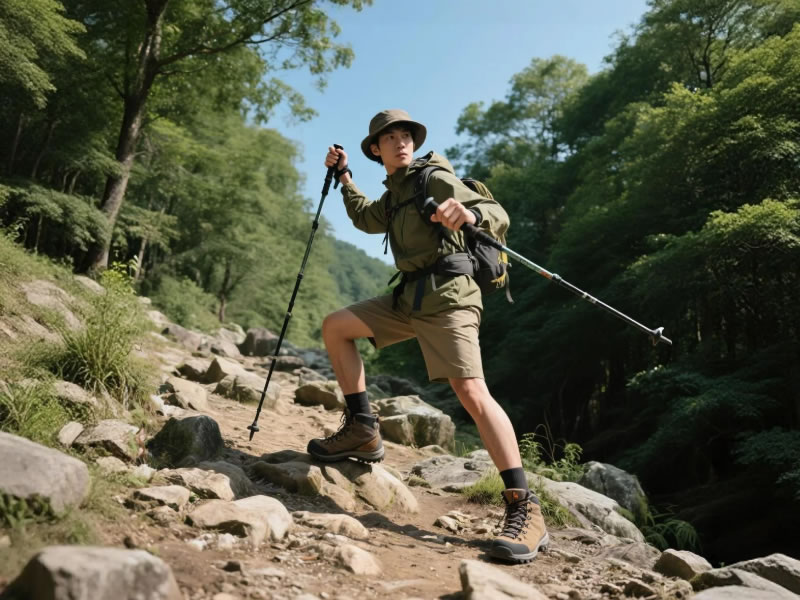
Buy Link: https://www.aliexpress.com/item/1005008165853427.html
The Case for Walking Poles as Defensive Tools
At first glance, walking poles possess qualities that could be useful in a self-defense situation. Their length keeps a threat at a distance, which is a fundamental principle of personal safety. A solid strike with a pole to sensitive areas like the nose, throat, or knees could temporarily deter an attacker or animal, creating an opportunity to escape.
Additionally, walking poles are already in your hands while hiking. You do not need to fumble through a backpack to access them—they are readily available. For hikers who already carry poles for mobility and stability, this represents a potential advantage over other defensive tools that might be packed away.
The material of your pole matters. A solid aluminum pole is more robust for striking than a lightweight carbon fiber model, which could shatter under heavy impact. If self-defense is a genuine concern, opting for durable aluminum poles provides more structural integrity.
Significant Limitations and Risks
Despite these theoretical advantages, walking poles are not designed or optimized for self-defense. Several critical limitations exist:
- Locking Mechanism Failure: Most adjustable poles rely on flick-locks or twist-locks to maintain length. Under the stress of a forceful strike, these mechanisms can slip or fail, causing the pole to collapse unexpectedly. A collapsing pole not only loses effectiveness but could also leave you off-balance in a critical moment.
- Structural Weakness: Trekking poles are engineered for vertical loads—planting and pushing—not lateral impact. Striking with the side of a pole risks bending aluminum or snapping carbon fiber. A broken pole leaves you without your hiking aid and without your defensive tool.
- Lack of Training: Effective self-defense requires training. Swinging a pole wildly is unlikely to stop a determined threat and may escalate the situation. Without practice, you are unlikely to use the tool effectively under extreme stress.
- Legal Considerations: In some jurisdictions, carrying an item specifically for self-defense may have legal implications. While walking poles are clearly hiking equipment, using them defensively could still invite legal scrutiny depending on the circumstances.
Better Alternatives for Trail Safety
If personal safety is a priority, dedicated tools designed for self-defense are more reliable than repurposing trekking poles:
- Pepper Spray/Bear Spray: Specifically formulated to deter both animal and human threats, pepper spray provides a non-lethal option with significant stopping power. It works at a distance and does not require physical strength or precision. Check local regulations before carrying.
- Personal Alarms: A small device that emits a deafening siren can attract attention and startle an attacker. These are legal everywhere and provide a low-risk option for drawing help.
- Tactical Flashlights: A high-lumen flashlight can temporarily blind and disorient a potential threat while allowing you to see clearly. Combined with strobe functions, these are effective deterrents.
- Fixed-Blade Knives: For those trained in their use, a fixed-blade knife offers serious defensive capability. However, this option requires legal compliance, training, and a willingness to use lethal force if necessary.
The Role of Awareness and Avoidance
The most effective self-defense strategy remains prevention. Situational awareness—scanning your surroundings, avoiding high-risk areas at dusk, letting others know your itinerary—prevents most encounters before they begin. Walking poles can contribute to this strategy by improving your stability and reducing fatigue, keeping you alert and capable of avoiding threats.
Wildlife Encounters
When considering wildlife specifically, walking poles have a more established role. Making yourself appear larger by raising your poles can deter curious animals. Banging poles together creates noise that may alert bears to your presence, preventing surprise encounters. In the rare event of an aggressive animal, a pole might help you maintain distance, but bear spray remains the proven deterrent for serious wildlife threats.
Psychological Factors
There is also a psychological dimension to consider. Simply holding a pole can increase your confidence on the trail, which may project less vulnerability. However, over-reliance on a tool that is not truly defensive could create a false sense of security. Confidence should come from preparation—carrying appropriate safety tools, knowing basic self-defense principles, and practicing awareness—not from hoping your hiking gear will save you.
What the Experts Say
Self-defense professionals generally advise using tools designed for their intended purpose. While improvisation is better than nothing in a life-threatening situation, relying on trekking poles as your primary defense is not recommended. The potential for mechanical failure, combined with the lack of training most hikers have in using poles as weapons, makes this an unreliable strategy.
The Bottom Line
Are walking poles good for self-defense? They are better than empty hands, but only marginally. In a genuine emergency, a pole might buy you a moment to escape, but they are not reliable defensive tools. Their locking mechanisms can fail, their materials can break, and using them effectively requires training most users lack.
For dedicated personal protection on the trail, carry tools specifically designed for safety: pepper spray for wildlife and human threats, a personal alarm for attracting attention, and a bright flashlight for disorientation and visibility. Let your walking poles do what they do best—improve your stability, reduce joint impact, and help you cover miles comfortably. When it comes to self-defense, leave it to the tools built for the job.




